

Have you ever wondered about the vital role water plays in your body? It’s more than just quenching your thirst; it’s about the fundamental essence of human body composition. Your body is a complex system where water content plays a critical role, maintaining everything from your cells to major organs. On average, around 60% of your body is composed of this life-giving element called water, but this isn’t a static number – it changes with age, sex, body type, and most importantly, hydration levels.
Understanding the fluctuations and needs of your body’s water content isn’t just academic trivia; it’s integral to staying healthy and vibrant. Water is the invisible driver for myriad physiological processes, from maintaining your body temperature to facilitating cellular functions essential for life. So grab that glass of water, and let’s dive into the significance of hydration and the water content in your body.
Key Takeaways
- The human body’s water content is a dynamic figure, averaging around 60%.
- Factors such as age, sex, and body type are crucial determinants of an individual’s hydration levels.
- Infants have a higher water percentage in their bodies, which declines over time.
- Muscle tissues are rich in water, influencing the total water composition in the body.
- Adequate hydration is vital for bodily functions including temperature regulation and waste elimination.
- Maintaining proper hydration is essential to support your body’s overall health and well-being.
Understanding the Vital Role of Water in Our Bodies
The liquid essence of life, water, is not only a mere thirst quencher but also an integral element for the survival and optimal functioning of our bodily systems. The hydration benefits extend far beyond preventing dry mouth; they are key to maintaining the complexity of physiological processes that keep you healthy and active. Let’s delve into the essential bodily functions that are powered by water and the importance of drinking water for sustaining health.
Essential Functions Requiring Water
Water is a cornerstone for various critical functions within your body. It’s a thermoregulator, meaning it keeps your body temperature stable despite fluctuating external conditions. Often overlooked, water’s role in enabling cells to perform their duties, from producing energy to communicating signals, is paramount. Moreover, water acts as a transport medium, whisking away toxins and facilitating the seamless travel of essential nutrients throughout your system.
But the list doesn’t stop there; water is crucial for lubricating joints, protecting sensitive organs and tissues, and even aiding digestion. It’s the lubricant that keeps the gears of your body moving smoothly, cementing its status as a fundamental nutrient for life.
Importance of Hydration for Health
Think of your body as a complex machine that functions flawlessly when well-oiled; in this metaphor, water is that oil. Hydration benefits your health by making sure each component of your body works harmoniously. A well-hydrated body is resilient, quickly bouncing back from physical exertion and efficiently flushing out metabolic waste.
While the significance of water in the diet is clear, the consequences of neglecting hydration are profound. Every cell, tissue, and organ in your body calls for consistent water supply to maintain these essential bodily functions. Lack of adequate hydration can lead to dehydration, negatively impacting everything from cognitive performance to physical endurance.
Drinking water is your baseline defense against the breakdown of these vital processes. It fortifies your immune system, primes your physical performance, and supports your metabolism. So remember, to tap into the importance of drinking water is to unlock the secret to a harmonious, healthful life.
What Percentage of the Human Body Is Water?
Understanding your body’s water percentage is more than a numerical curiosity—it’s a reflection of your body composition and hydration levels. Your body’s water content is a dynamic marker of your overall health, crucial to numerous physiological processes. Let’s explore the factors that determine how much of your body is made up of this essential element.
Your body water percentage signifies the amount of water you carry relative to your total weight. While an average adult boasts around 60% water, variations occur due to differences in age, sex, and overall health. For instance, males typically report a higher percentage than females, linked to generally lower body fat and higher muscle mass which contains more water.
| Category | Body Water Percentage Range | Notes |
|---|---|---|
| Infants | ~75% | Highest due to lower body fat |
| Adult Males | ~60-65% | Influenced by muscle mass |
| Adult Females | ~45-60% | Impacted by higher average body fat |
| Elderly | Reduction corresponds with age and muscle mass |
The fluctuations in your body’s water content highlight the evolution of your hydration needs across the lifespan. Maintaining balanced hydration is key, as both your cellular health and systemic functions are intricately tied to proper fluid levels. Remember, keeping tabs on your hydration can empower you to make more informed, health-supporting decisions.
Anatomy of Hydration: How Water Is Distributed in the Body

Understanding the body’s water distribution is essential for grasping how hydration affects our overall well-being. Dive into the details of organ hydration and cellular water content, and you’ll discover how integral water is to sustaining life, from the smallest cell to the body as a whole.
Water Content in Various Organs
Your body’s organs each have their own unique level of hydration, integral for their function. The brain and heart, for instance, are incredibly water-rich, largely dependent on hydration for performance. Here’s a glimpse into how water is allotted within various organs:
| Organ | Water Content (%) | Importance of Hydration |
|---|---|---|
| Brain | 73 | Vital for neuron function and nutrient transport |
| Heart | 73 | Ensures efficient blood flow and cardiac health |
| Kidneys | 79 | Crucial for filtering blood and expelling waste |
| Lungs | 83 | Facilitates proper gas exchange and respiration |
| Skin | 64 | Maintains elasticity and serves as a barrier to pathogens |
| Bones | 31 | Provides structure and leverages minerals |
Cells: The Basic Unit of Life and Water
Each cell in your body can be seen as a microscopic engine, tirelessly working to keep you alive. As the basic building blocks of life, these cells are made up of approximately 60% water. This cellular water content is pivotal for countless biochemical reactions, from DNA replication to energy production. It’s this microscopic scale of hydration that underwrites the health and vitality of the entire body.
Whether it’s through the form of a refreshing glass of water or the foods you eat, every sip and every bite contribute to maintaining this critical balance. Hydration, at its core, is not about quenching simply thirst—it’s about sustaining life down to each minuscule cell.
The Factors That Influence Body Water Percentage

Understanding what influences your body’s water percentage is just as crucial as knowing the amount of water you should drink daily. The elements that determine how much water you retain are not solely within your control but are shaped through a combination of genetic and physiological variables. Let’s explore the critical factors affecting hydration, noting the particularly pronounced age-related hydration changes and sex-based water weight differences.
Age and Body Water Composition
As you age, your body undergoes significant transformations, which include alterations in hydration. Infants, blessed with a high metabolic rate and low body fat, boast a greater percentage of body water. However, this water percentage gradually declines as you progress through the phases of life. The elderly, meanwhile, often experience a more considerable decline in hydration due to a natural decrease in renal function and other age-associated changes in body composition.
Gender Differences in Water Weight
The battle of the sexes extends to water weight differences as well. Generally, men have a higher percentage of water weight than women—thank muscle mass and lower average body fat rates for that. Estrogen can cause women to hold more subcutaneous fat, which contains less water compared to muscle, thus impacting the total water content in their bodies.
Now, let’s visually break down how these factors manifest themselves across different ages and between genders:
| Age Group | Typical Water Percentage Range (Men) | Typical Water Percentage Range (Women) |
|---|---|---|
| Newborns | 70-78% | 70-78% |
| Adults | 55-65% | 45-60% |
| Seniors (65+) | 50-55% | 40-50% |
Factors like hormonal balancing acts, fluctuations in body fat, and changes in lean mass all play into the complex narrative of hydration needs. By acknowledging these factors, you can fine-tune your approach to maintaining optimal hydration tailored to respond to the ever-evolving demands of your body.
The Dynamic Water Composition From Infancy to Adulthood

Water composition changes are intrinsic to the journey of life, beginning at infancy when your water levels are at their peak. Have you ever wondered how these levels adapt as you grow older? Understanding this fluid transition not only underscores the importance of monitoring your hydration but also sheds light on the biological marvel that the human body is.
Infancy water levels set the stage for an individual’s hydration needs. In your earliest days, you’re composed of approximately 74% water, a number that gradually decreases as you navigate childhood into adolescence. The shift in your body’s water composition reflects growth patterns, the development of organs, and the evolution of your body’s cellular structure.
As you reach adulthood, these changes in water composition level off, leading to a relatively stable water content. However, it’s essential to remain vigilant about adult hydration. The balance shifts again as you pass the milestone of 60 years, accentuating the need for mindful hydration practices.
Your body’s ability to hold water is influenced by your physique, which includes body size, shape, and the critical muscle-to-fat ratio. Maintaining an active lifestyle and a balanced diet can help support an optimal muscle-to-fat ratio, promoting a healthy water percentage in your body.
Remember, water is your body’s principal chemical component and a vital resource that you cannot afford to overlook at any life stage.
| Age Range | Average Water Composition |
|---|---|
| Infancy (0-1 year) | Approximately 74% |
| Childhood (1-12 years) | Varies with growth |
| Adolescence (13-19 years) | Decreases steadily |
| Adulthood (20-60 years) | Stabilizes near 60% |
| Senior Years (60+ years) | Gradual Decline |
By understanding the ebbs and flows of your body’s water composition from infancy to adulthood, you can better appreciate the complexities of your hydration needs. Whether it’s ensuring that infants have ample fluids to support their rapid growth or recognizing the importance of continued hydration as an adult, keeping an eye on your water intake is a lifelong responsibility.
Assessing Water Levels: Indicators of Overall Health

Water is the essence of life and understanding your body’s hydration levels is a direct indicator of your overall health. With modern advances in technology, precise tools are available to monitor your hydration more easily than ever before.
Measuring Hydration through Bioelectrical Impedance Analysis (BIA)
One cutting-edge technology for hydration assessment is Bioelectrical Impedance Analysis, or BIA. By sending a painless electrical current through your body, BIA measures the resistance to the flow of the current, which varies depending on the amount of water in your body. Since muscle tissue, which contains a high percentage of water, is more conductive than fat, BIA can estimate your body’s water content and your overall body composition.
Here’s a simplistic breakdown of how BIA can categorize body composition:
| Component | Description | Role in Hydration Analysis |
|---|---|---|
| Fat Mass | Non-water-containing tissue | Increases resistance in BIA; more fat mass typically means less body water percentage |
| Lean Mass | Water-rich muscle tissue | Decreases resistance in BIA; more lean mass generally indicates greater body water percentage |
| Total Body Water | Sum of all fluids | Primary component measured by BIA to assess body water balance |
Understanding Body Water Balance Ratios
It is crucial to understand the balance between intracellular and extracellular water because it can signal various health states. This balance—a reflection of your body water balance—can indicate whether you’re well-hydrated, retaining water, or dehydrated.
- Intracellular Water (ICW): The water held within your cells; essential for cellular function.
- Extracellular Water (ECW): The water outside your cells; encompasses plasma and interstitial fluids.
- Total Body Water (TBW): The sum of ICW and ECW; a critical marker of hydration status.
A harmonious balance means that your cells can function optimally, waste products are removed efficiently, and nutrients are transported effectively. Conversely, an imbalance might be an early warning sign of certain health issues such as inflammation or renal disease and may warrant a more in-depth health evaluation.
Understanding these components and their balance plays a vital role in maintaining good health and preventing disease. By incorporating BIA and being mindful of your water intake, you can take charge of your hydration and overall well-being. Now that’s a proposition that is hard to resist, much like the current flowing through the water in your body.
A Closer Look at Body Water: Intracellular vs. Extracellular
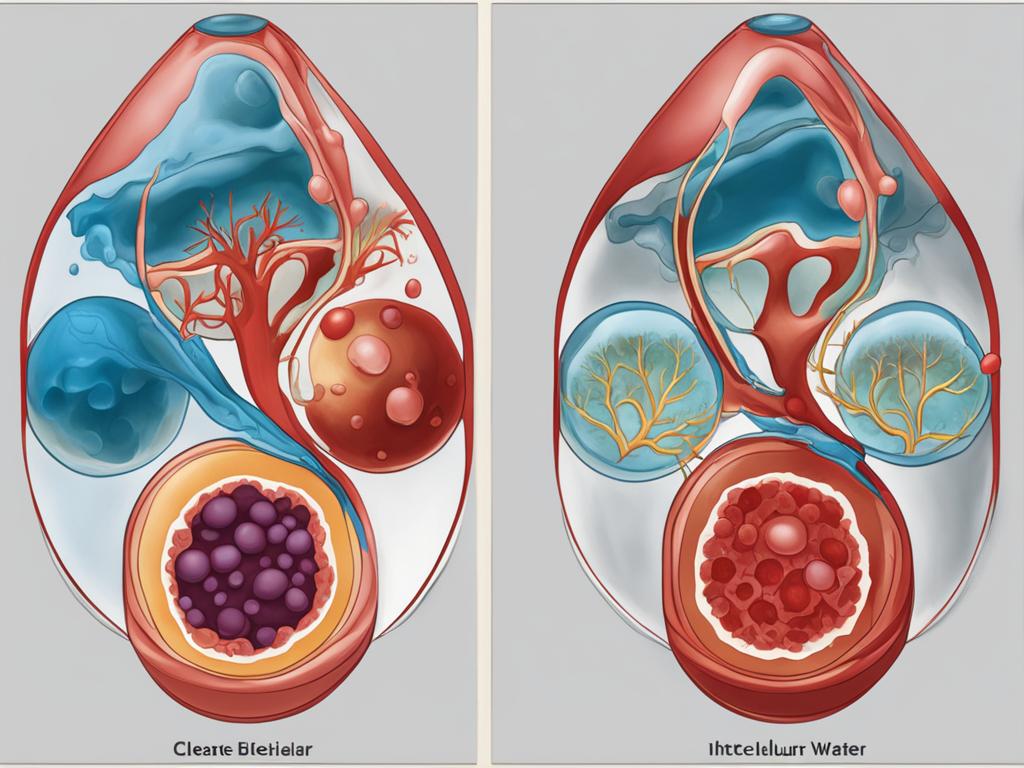
When you delve into the specifics of body water types, it’s fascinating to note that your body’s hydration status is a complex interplay between intracellular water (ICW) and extracellular water (ECW). As the primary components in the fluid balance of the body, these two types of water serve distinct yet crucial roles for maintaining health.
Intracellular water, which comprises about two-thirds of your body water, is vital for the myriad of molecular processes that occur within cells. It affects cell volume, function, and even the process of energy production. On the other hand, extracellular water includes the fluids in your blood and the spaces between cells and accounts for the remaining one-third of your body water. This type of fluid is essential for transporting electrolytes, delivering oxygen to cells, and removing metabolic waste.
| Type of Body Water | Location | Functions | Percentage of Total Body Water |
|---|---|---|---|
| Intracellular Water (ICW) | Inside Cells | Transporting molecules, cellular processes, energy production | ~66% |
| Extracellular Water (ECW) | Outside Cells | Electrolyte transport, oxygen delivery, waste removal | ~33% |
To put it into perspective, imagine your body as a bustling city where intracellular water is akin to the indoor plumbing of homes and businesses, integral to their internal functioning. Extracellular water, comparable to the city’s waterways and canals, is necessary for transportation and the removal of waste. Both are essential, and any disruption in their balance can potentially lead to health issues. Understanding your body’s water types and their functions may not only help you better appreciate the complexities of your own physiology but also underscore the importance of proper hydration for your well-being.
Remember, staying aware of hydration needs and recognizing the signs of any imbalance could be key to managing your health effectively.
How Lifestyle Choices Impact Your Body’s Water Content
Lifestyle choices extend beyond mere habits; they are critical determinants of your body’s water balance. As you navigate through the decisions that shape your diet and exercise routines, it’s imperative to understand the profound effects these choices have on your hydration—and ultimately on your health.
The Role of Diet in Body Hydration
Every sip and bite could be influencing your body’s water content. A diet with excessive amounts of high-sodium foods can prompt your body to retain water, causing an increase in extracellular fluid that may lead to swelling and hypertension. On the flip side, fruits and vegetables, abundant in water and potassium, encourage proper hydration and help maintain electrolyte balance. Consider these dietary components as you strategize your hydration and diet.
Exercise and Its Effect on Hydration Levels
Engaging in physical activities does more than just strengthen muscles and improve cardiovascular health; it also challenges your water balance. Whether you’re an athlete undergoing rigorous training or someone who enjoys a daily jog, anticipating exercise-related fluid loss is crucial. To compensate for the water expelled through sweat and respiration, increasing fluid intake is necessary to aid recovery and maintain optimum hydration levels.
| Exercise Intensity | Fluid Loss | Replenishment Strategy |
|---|---|---|
| Low (Yoga, stretching) | Minimal | Standard water intake; focus on hydration before and after session |
| Moderate (Cycling, running) | Moderate | Increased water intake; possible electrolyte supplement |
| High (Marathon, high-intensity interval training) | Significant | Greater water intake with electrolyte-rich fluids; pre- and post-exercise hydration |
Staying aware of how lifestyle impacts on hydration is more than a mere health suggestion—it’s a proactive way to ensure your body’s water content supports your wellness and vitality. So next time you sit down for a meal or lace up your sneakers for a workout, remember you’re not just fueling your body, you’re also nurturing your hydration.
Staying Hydrated: How Much Water Should You Really Drink?

Understanding your body’s need for hydration is key to maintaining good health. While you’ve likely heard the old adage of eight glasses a day, the truth is that hydration guidelines are not a one-size-fits-all scenario. Various factors such as your age, activity level, and the climate you live in can influence your daily water intake. It’s crucial to tailor your hydration habits to your personal needs.
Recommendations for Daily Fluid Intake
General guidelines suggest that men aim for about 3.7 liters (125 ounces) of water from all beverages and foods each day and women about 2.7 liters (91 ounces). Yet, these amounts can vary. For instance, if you lead a highly active lifestyle or reside in a hot climate, your needs may increase. Here are some hydration tips to help you meet your body’s demands:
- Start your day with a glass of water to jumpstart your system.
- Carry a reusable water bottle and take sips throughout the day.
- Eat fruits and vegetables with high water content like cucumbers and oranges.
- Set reminders on your phone or computer to take hydration breaks.
- Replace lost fluids after exercise, illness, or exposure to heat.
Hydration Strategies for Different Climates and Activities
Whether hiking in the mountains, braving the urban heat, or hitting the gym, staying adequately hydrated is vital for your health and performance. Below is a helpful table providing a quick reference for adjusting fluid intake according to climate and activity levels.
| Climate/Activity | Additional Daily Fluid Intake | Tips |
|---|---|---|
| Hot/Humid Weather | 30-50% more than usual intake | Drink water, even if not thirsty, to prevent dehydration. |
| Moderate Exercise | 500-700ml per hour of activity | Include electrolyte-enhanced water for prolonged sessions. |
| High Intensity/Endurance Sports | 700ml to 1L per hour of activity | Consider a sports drink with carbohydrates and electrolytes. |
| Cold Climates | Maintain regular intake | Warm fluids can aid in maintaining body temperature. |
Remember, these are general estimates. Listening to your body’s signals, like the color of your urine, can be a good indicator of your hydration status. Dark urine generally means you need more fluids, while clear to light yellow suggests you’re well-hydrated.
Ultimately, balancing your daily water intake with your personal health goals and environmental factors is the best path to proper hydration. Staying informed about hydration guidelines and making adjustments as needed can help you achieve peak wellness.
Avoiding Extremes: Dehydration and Water Intoxication
Staying properly hydrated is a delicate balance, one that requires awareness of both dehydration risks and the dangers of water intoxication. As you maintain your active lifestyle and manage the temperature swings, it’s crucial to understand safe hydration practices to keep your body functioning at its best.
Dehydration is more than just feeling thirsty; it can lead to serious health complications if not addressed promptly. It often creeps in during prolonged physical activity or exposure to high heat, where your body loses fluids faster than you can replenish them. The symptoms can range from mild discomfort to severe impairments, highlighting the need for consistent fluid intake.
Conversely, too much water intake in a short period of time can result in water intoxication. This can cause a dangerous condition known as hyponatremia, where the sodium levels in your bloodstream are diluted, impacting brain function and cellular processes.
- Recognize the signs of dehydration, such as dizziness, fatigue, and dry mouth.
- Consume fluids regularly, not just when you feel thirsty.
- Moderate your water intake during exercise and hot weather conditions.
- Include foods with high water content in your diet for balanced hydration.
- Listen to your body and adjust your fluid intake based on your activity level and external temperatures.
Remember, the aim is to achieve an equilibrium where your body is neither deficient nor overloaded with water. By adopting safe hydration practices, you can protect against both dehydration risks and water intoxication, ensuring your health remains optimal.
The Relationship Between Obesity, Inflammation, and Body Water Disruption
If you are grappling with obesity, it’s essential to understand how it may be affecting your body water balance and overall health. Obesity is intrinsically linked to an increase in extracellular water, which can result in a state of chronic inflammation. Chronic inflammation is not just a temporary reaction by the immune system; it’s a lingering condition that can set the stage for a number of serious diseases, such as cancer, heart disease, and kidney failure. Let’s dive deeper into how these factors interrelate and what that means for your body’s water composition and your health.
Hydration and Obesity: When you carry excess weight, especially visceral fat around your abdominal area, it can disrupt the natural distribution of body water. This imbalance is more than just a matter of hydration—it’s a health concern that can impact the function of your internal organs and even exacerbate obesity-related conditions. Understanding the connection between obesity and hydration can offer insights into managing obesity more effectively.
Impact of Inflammation: The inflammation impacts of being overweight go beyond mere discomfort. Inflammation caused by obesity can compromise your body’s metabolism and immune response, acting as a catalyst for a host of chronic ailments. The excess extracellular water associated with obesity can contribute to this inflammatory state, making it imperative to address both weight and hydration management to reduce health risks.
Therefore, finding a balance in body water and health is critical, not only to alleviate the symptoms associated with obesity but also as a preventive measure against long-term health issues. By nurturing your body with proper nutrition and maintaining hydration, you can counteract some of the adverse effects of obesity on body water balance and inflammation.
Remember, your body is a complex system that thrives on balance, and understanding how obesity affects this equilibrium is a significant step towards enhancing your well-being. Take proactive steps to manage your hydration, especially if you’re dealing with obesity, as it can have a substantial influence on your overall health.
Conclusion
The intricate dance of molecules within your body eloquently illustrates the pivotal importance of water in maintaining health and vitality. The percentage of water in your form is something that shifts with the seasons of life, flavored by your individual characteristics, such as age, gender, and body composition. It’s a dance that requires maintaining hydration, effortlessly shaping the way every single one of your cells operates and communicating life’s ebb and flow within you.
To uphold this equilibrium, your daily venture must involve conscious decisions that promote a healthy body fluid balance. The subtle yet powerful force of water is a testament to its crucial role in supporting life, where even a minor disturbance can ripple through the body’s systems—unbalancing the harmony. Hence, it is essential to listen to your body’s thirst signals, understand its unique demands, and cater to them with a dedicated commitment to sustain the vitality that water bestows.
Your journey towards optimal health hinges upon the simple yet profound act of drinking water. With each sip, you’re not just quenching thirst but reinforcing the foundation of life itself. Imbibe wisely, understand the cues ofs your temple, and let the fluid that sustains stars, also sustain you. After all, maintaining hydration is more than a necessity; it is an ode to the very essence of being alive.
FAQ
What functions in our bodies require water?
Water is critical for several functions in our body such as regulating body temperature, facilitating cellular processes, aiding in waste elimination, protecting sensitive tissues, promoting joint lubrication, and aiding nutrient absorption.
How much of the human body is made up of water?
On average, about 60% of the human body is water, but this can range from about 45% to 75% based on factors like age, sex, hydration levels, and body composition.
Which organs have the highest water content?
The brain and kidneys are among the organs with the highest water content, while bones and teeth have the lowest. Overall, cells, as the basic units of life, contain a majority of the body’s water.
Does age affect body water percentage?
Yes, age is a significant factor in body water composition. Infants have a higher water percentage, which decreases with age, and this continues to decline with the progression into older adulthood.
Are there gender differences in water weight?
Men typically have a higher percentage of body water compared to women, largely due to having more muscle mass and less body fat, which influence the body’s water content.
How does water composition in the body change from infancy to adulthood?
Water composition experiences dynamic changes after infancy, which has the highest levels, through to adulthood where it stabilizes, only to begin declining once more as individuals age past their sixties.
What is bioelectrical impedance analysis and how does it relate to hydration?
Bioelectrical impedance analysis (BIA) is a method for assessing body composition, including hydration levels. It estimates the total body water by measuring the electrical resistance as it travels through the body’s water content.
What’s the difference between intracellular and extracellular water?
Intracellular water is located inside cells and facilitates internal cellular processes. Extracellular water exists outside of cells and is crucial for transporting electrolytes, delivering oxygen, and removing wastes from the body.
How do diet and exercise affect body hydration?
Diet, especially salt intake, can affect extracellular water retention, while exercise increases fluid loss through sweat and respiration, which highlights the importance of replenishing fluids to maintain hydration levels.
What are the recommendations for daily fluid intake?
Recommendations for daily fluid intake vary by individual due to different factors such as age, weight, health, and activity levels, but it’s important to drink enough water to meet your specific needs, possibly following guidelines tailored to your demographic group.
What are dehydration and water intoxication?
Dehydration is the condition where the body loses more fluids than it consumes, while water intoxication occurs from excessive water intake beyond what the kidneys can excrete, diluting the blood’s electrolyte balance.
How does obesity affect the body’s water balance?
Obesity can disrupt the body’s water balance by increasing extracellular water, which is linked to health risks such as chronic inflammation, affecting internal organs and overall health.
Leave a Reply
You must be logged in to post a comment.