
Have you ever wondered how a single drop of rain makes its journey from the vast oceans to your faucet? It’s a fascinating process that involves the Earth’s own recycling system—none other than the water cycle. Gaining a clear understanding of the water cycle basics not only feeds your curiosity but also deepens your hydrologic cycle understanding. As you delve into the mysteries of the water circulation process, you’ll discover how integral this cycle is to life on our planet.
Key Takeaways
- The water cycle is a complex yet essential ecological process that sustains life on Earth.
- Mastering the basics of the water cycle empowers you with knowledge about Earth’s natural systems.
- A thorough understanding of the water cycle is key to grasping how water moves through the environment.
- Exploring the stages of the hydrologic cycle reveals the intricate ways in which water is purified and circulated.
- By learning about the water circulation process, you contribute to the conservation and sustainable management of this vital resource.
The Significance of the Water Cycle
Envision the Earth without its most precious resource—water. Difficult, isn’t it? That’s because water is the lifeblood of our planet, constituting about 70% of Earth’s surface and playing a pivotal role in sustaining life as we know it. An extraordinary process, known as the water cycle significance, ensures the movement and renewal of this vital substance, making every drop count in maintaining biodiversity, human health, and the environment at large.
At the heart of this life-sustaining cycle is Earth’s water replenishment—an integral system that cleanses and recirculates our finite water supply. Through a series of natural processes, water is constantly in motion, traveling from the depths of the oceans to the heights of the atmosphere. This circulation not only ensures the availability of fresh water across various ecosystems but also regulates our climate by managing the Earth’s temperature and weather patterns.
“Water is the driving force in nature,” Leonardo da Vinci once observed, and this rings true as we examine the profound impact of the water cycle on shaping the physical geography of our world. From majestic mountain ranges carved by erosion to the life-giving river delta, water is the architect of the planet’s diverse landscapes.
As you reflect on the continuing journey of water through its various stages, consider the intrinsic value of the water cycle—a testament to the resilience and adaptability of nature. With each transformation from liquid to vapor, from ice to streams, it carries essential minerals, nurturing life and sculpting Earth’s countless wonders.
Your understanding of these processes enables a deeper appreciation for every clean sip of water you enjoy and every rainfall that nourishes the crops. It’s a reminder that our actions can impact this delicate balance, reinforcing the duty we share to preserve and protect our planet’s waterways for future generations.
Let’s dive deeper into the mechanics of this hydrological marvel in the next sections and uncover how each stage contributes to the perpetuity of this Earth’s water replenishment system.
What Is the Water Cycle?

Embark on an exploration of the hydrologic cycle explanation, a fascinating and continuous movement that defines the essence of our planet’s water cycle. This perpetual procession of moisture in various forms is pivotal to life, ensuring every drop of water on Earth is part of a grand and efficient cycle.
Water Cycle Overview
At the heart of the water cycle continuous movement is a sequence of changes—each drop of water undertaking an epic journey. This odyssey enables water to transform, travel, and traverse the planet, a cycle that has endured through the ages, shaping and sustaining the environment you enjoy today.
The Elements of the Hydrologic Cycle
The hydrologic cycle stages are a series of interconnected steps that circulate water throughout the environment:
- Evaporation: Water is heated and rises as vapor.
- Condensation: Vapor cools to form clouds.
- Precipitation: Water falls from clouds as rain or snow.
- Infiltration: Water soaks into the soil replenishing groundwater.
- Runoff: Water flows over the surface to rivers and oceans.
Role of Solar Energy
Solar energy in the water cycle is the protagonist—driving evaporation with its warmth, dictating the pace of condensation with its rays, and ultimately guiding the modalities of precipitation. The heat energy exchange, facilitated by the sun, is the scriptwriter for this globe-trotting narrative of water.
| Stage | Process Description | Driven by Solar Energy |
|---|---|---|
| Evaporation | Liquid to vapor transition | Yes |
| Condensation | Vapor to liquid transition in clouds | Influenced by solar energy |
| Precipitation | Rain or snow falling to the ground | Temperatures impacted by sunlight play a role |
| Infiltration | Water soaking into earth’s surface | Moderately affected |
Breaking Down the Steps
Understanding the water cycle phases is akin to unlocking the rhythm of our planet’s water movement. Imagine each phase as a dancer in the elaborate performance of the hydrologic sequence, where every step is crucial to the fluidity and grace of the entire choreography. Let’s explore these steps together and witness the majesty of Earth’s water cycle in action.
It begins with evaporation, the act of water transforming into vapor. The oceans serve as vast stages where this initial dance starts, under the choreography of the sun’s heat. Then, condensation gathers this vapor into clouds, like performers clustering for the next act. Precipitation follows, the grand descent of water in various forms—rain, snow, or hail—to the surface. Each water droplet is a performer landing on Earth’s vast canvas.
Infiltration then takes the stage, guiding some of this water into the underground layers, quenching the thirst of the soil and the life that it supports. What remains is runoff, the overland flow that joins rivers and eventually returns to the oceans. These dancers—the droplets and moisture—loop back, ready to begin the next movement in this unending ballet. To highlight these phases, consider the following table:
| Water Cycle Phase | Description | Significance |
|---|---|---|
| Evaporation | Conversion of water from liquid to vapor | Initial step in water’s atmospheric journey |
| Condensation | Transformation of vapor into clouds | Formation of potential precipitation |
| Precipitation | Release of water from clouds as rain, snow, etc. | Delivery of water back to Earth’s surface |
| Infiltration | Downward movement of water into the soil | Replenishment of aquifers and groundwater |
| Runoff | Water flowing over land to bodies of water | Distribution of water across landscapes |
By understanding these stages, you’re not just witnessing the wonders of Earth’s workings but becoming a conscious participant in the sustainable interaction with our environment. Remember, the water we depend on for life performs in an endless loop, each phase a critical performance for the stability of our world’s hydrologic sequence.
Natural Factors Impacting the Hydrologic Cycle

As you delve deeper into the influences on the hydrologic cycle, it’s evident that natural factors play a pivotal role. These elements constitute the dynamic essence of the water cycle, making the movement and availability of water on our planet a complex and variable system.
Temperature Variations
The temperature influence on the water cycle cannot be overstated. Higher temperatures boost the evaporation process, which, in return, increases the amount of water vapor in the atmosphere. This leads to more significant cloud formation and the potential for increased precipitation, underscoring the profound impact of temperature changes. Climate variability also introduces shifts in these patterns, leading to either more intense weather events or extended periods of drought.
Geographical Differences
The geographical impact on the water cycle results in regional water cycle variations that are quite pronounced. The water cycle does not operate uniformly; it varies greatly with the landscape. For instance, mountainous regions may experience more runoff, while arid areas may have high evaporation rates with minimal precipitation.
Seasonal Changes
The seasons bring about a seasonal effect on the hydrologic cycle that is easy to observe. In temperate zones, you might notice higher runoff during spring due to snowmelt, while tropical regions have distinct wet and dry seasons that profoundly affect their water cycle dynamics. These seasonal rhythms impact agriculture, water storage, and management practices.
| Season | Impact on Evaporation | Impact on Precipitation |
|---|---|---|
| Spring | Increased with warming temperatures | Varies; often increased in temperate regions |
| Summer | Peak rates due to higher temperatures | Can lead to thunderstorms and extreme weather events |
| Fall | Decreases as temperatures drop | Transition phase, can be unpredictable |
| Winter | Lowest rates due to cold temperatures | Snow, sleet, or freezing rain predominant in many regions |
Human Interference and the Water Cycle
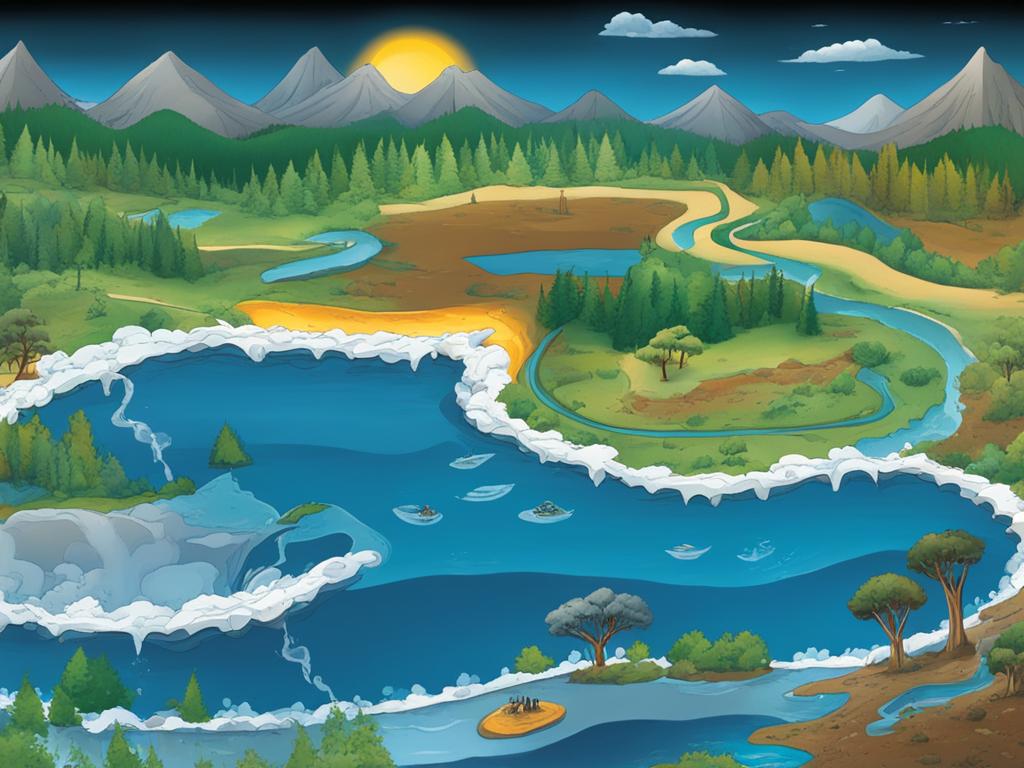
When you consider the water cycle, it’s easy to picture a natural and untouched process. However, the ongoing anthropogenic changes greatly alter this precious cycle. It’s not just a phenomenon that occurs in a vacuum; your day-to-day actions can have ripple effects on the environment. Let’s delve into how human impact on the water cycle has become a significant environmental concern and what anthropogenic changes mean for our planet’s hydrological balance.
| Human Activity | Impact on Water Cycle | Potential Consequences |
|---|---|---|
| Urbanization | Increases runoff, reduces infiltration | Flooding, reduced groundwater replenishment |
| Deforestation | Decreases evapotranspiration, alters precipitation patterns | Regional climate change, loss of biodiversity |
| Agricultural Irrigation | Alters local water distribution and consumption | Soil salinization, water scarcity |
| Industrial Waste Disposal | Contaminates water sources | Health hazards, ecosystem disruption |
| Climate Change | Intensifies droughts and extreme weather events | Altered global water distribution, increased desertification |
The impacts are profound and diverse, affecting not just the availability of water, but its quality, the health of ecosystems, and the well-being of societies around the globe. You’re now aware that the choices we make, from the industries we support to the products we consume, all contribute to the health of the water cycle. It’s crucial to recognize these connections and strive towards more sustainable practices.
The water cycle is resilient, yet sensitive. It needs to be protected from excessive human impact. By understanding the human impact on the water cycle, you are empowered to make informed decisions, advocate for responsible policies, and take actions that help restore the delicate balance of this essential, life-sustaining cycle.
The Role of Evaporation in Earth’s Water Cycle
Evaporation stands as a central pillar in the Earth’s water cycle, a phenomenon where heat energy leads to the water conversion from liquid to gas. This quintessential process not only moves vast volumes of water from water bodies to the atmosphere but also plays a pivotal role in our planet’s climate regulation. As you discover this vital transformation, you’ll gain an appreciation for how evaporation sources contribute to atmospheric moisture, affecting everything from local weather to global climate systems.
Heat Energy and Water Transformation
It’s the infusion of solar heat energy that instigates the evaporation process. As sunlight bathes the Earth, it empowers water molecules to escape into the air as vapor. This conversion from a tranquil liquid state to dynamic vapor involves tremendous volumes of energy, a fundamental facet of the Earth’s energy budget that steers meteorological phenomena on a global scale.
Sources of Evaporation
The primary evaporation sources stretch across the planet’s surface—oceans, lakes, rivers, and streams. Each body of water, whether a mighty sea or a humble pond, acts as a reservoir, contributing to the cycle by continuously feeding vapor into the atmosphere. The extensive surface area of these water bodies maximizes evaporation, serving as nature’s vast distilleries.
Evaporation’s Effect on Climate
Indisputably, evaporation has a profound effect on climate, shaping atmospheric conditions and, hence, the weather patterns we experience. This silent engine works ceaselessly to regulate temperature and foster the formation of clouds, an intricate dance that balances moisture levels across different regions, playing a vital part in the global climate puzzle.
| Evaporation Source | Role in Water Cycle | Contribution to Climate |
|---|---|---|
| Oceans | Massive vapor generation | Temperature moderation and cloud formation |
| Lakes and Rivers | Continuous water vapor supply | Influences local humidity and rainfall patterns |
| Soil Moisture | Water release through plant transpiration | Fine-tunes regional climatic conditions |
Understanding Condensation and Its Consequences

The condensation process plays an understated yet pivotal role in sustaining life on our planet. When you gaze up at the sky and observe the majestic dance of clouds drifting across the horizon, you are witnessing the intricate ballet of the water vapor, cooling and transforming into tiny droplets or ice crystals. This stage is crucial for cloud formation and the continuation of the water cycle. It regulates weather patterns and ultimately brings precipitation to the ground, nourishing ecosystems and replenishing our precious water sources.
Condensation is not just a random occurrence; specific conditions in the atmosphere make it possible. As water vapor rises, the temperature plummets, prompting the vapor to condense around dust particles or sea salts in the air. This leads to the accumulation of countless droplets that conglomerate to form clouds. Could there be a more mesmerizing natural marvel?
Clouds formed by the condensation are more than just artistic inspirations or children’s games of imagination. They are the harbingers of rain, snow, and other forms of precipitation that play essential roles in our daily weather. The journey from water vapor to a drop of rain on your windowpane is one of nature’s most crucial processes for sustaining life as we know it.
| Cloud Type | Description | Condensation Level |
|---|---|---|
| Cirrus | Wispy, feathery clouds formed at high altitudes | Above 20,000 feet |
| Cumulus | Fluffy, heaped clouds indicating fair weather | 1,000-4,000 feet |
| Stratus | Flat, gray clouds covering the sky like a blanket | Near the ground up to 6,500 feet |
Remember, the next time you see a cloud, it’s not just a random accumulation of water droplets or ice particles. It’s a crucial step in the condensation process, an essential link between the oceans and the land, between the sky and your water glass. So, take a moment to appreciate the miraculous cloud formation that decorates our skies and sustains life on Earth.
Sublimation: A Lesser-Known Water Cycle Contributor

When you explore the complexities of the water cycle, you’ll find a fascinating process at work in the colder corners of our planet. This is sublimation, a phase transition that defies the norm by skipping the liquid phase entirely. The sublimation process directly transforms ice into water vapor, which plays a surprising role in the Earth’s water systems.
Sublimation Defined
Sublimation might sound like a concept from a science fiction novel, but it is very real. Imagine sheets of ice in the polar regions sublimation at work, where the cold temperature and low air pressure combine to enable this direct state change. Unlike melting, where ice changes to liquid and then to gas, sublimation bypasses the liquid stage completely.
Sublimation vs. Evaporation
Comparing sublimation to a more well-known process, evaporation, reveals stark differences. Evaporation is familiar to us; we observe it as puddles dry up or clothes hang to dry. However, sublimation compared to evaporation is less visible but occurs more frequently than you might think, especially in those high-altitude locales where temperatures remain low year-round.
Sublimation’s Role in Polar Regions
It’s in the Earth’s polar expanses and atop its lofty peaks where sublimation has its most significant impact. The ice sheet contribution to atmospheric humidity via sublimation is crucial to the water cycle, despite being a much slower process than evaporation. This contribution is essential for understanding climate patterns and predicting changes in those fragile terrestrial ecosystems.
| Process | Phase Change | Typical Location | Importance in Water Cycle |
|---|---|---|---|
| Evaporation | Liquid to Gas | Oceans, lakes, rivers | Primary source of atmospheric moisture |
| Sublimation | Solid to Gas | Polar ice caps, mountain glaciers | Adds moisture to the atmosphere in cold regions |
Precipitation: From Clouds to Earth

Imagine looking up at a cloud-heavy sky and feeling the first drops of rainfall delicately splash against your skin. It’s a moment where you witness one of the most familiar precipitation types completing its Earth-bound journey. But the story of precipitation is as diverse as the climates it graces; from the gentle rain to the picturesque blanket of snow, each form plays a fundamental role in Earth’s water cycle.
Precipitation is essentially the Earth’s method of returning water from the atmosphere back to the surface. It forms when water droplets or ice particles in the clouds grow in size, becoming too heavy to remain suspended in the air. Consequently, they fall to the ground, not just as rain or snow, but also in forms like sleet and hail, depending on the temperature and environmental conditions both in the air and on the ground.
- Rainfall: This is the most common type of precipitation, resulting from water droplets converging within warm clouds.
- Snow: Formed in cold clouds, snowflakes are unique ice crystals that descend to the Earth, covering landscapes in white.
- Sleet: Often a winter wonder, sleet occurs when raindrops freeze into ice pellets before hitting the surface.
- Hail: More common during thunderstorms, hailstones are solid chunks of ice that can range widely in size.
Understanding the different precipitation types is not just academically fascinating, it’s also critical for preparing for the weather patterns that impact our everyday life. Whether you’re a farmer relying on timely rain for crops, a city planner designing drainage systems for runoff, or simply an individual planning your weekly activities, acknowledging these various forms shed light on the intricate balance of our hydrological system.
So the next time you reach for that umbrella or marvel at a snowfall, remember—you’re a witness to a vital chapter of the water cycle’s tale, one that ensures the Earth remains a nurturing home for all its inhabitants.
The Essential Processes of Infiltration and Runoff

Understanding the holistic nature of the hydrological cycle, you’ll find the infiltration process and runoff effects as integral to maintaining the health of our planet’s water bodies. As rain falls to Earth, it embarks on one of two distinct journeys: seeping into the ground to recharge our aquifers or traveling over the surface to join rivers and lakes. Let’s delve into these crucial processes and their contributions to the hydrological balance.
Water’s Journey through Infiltration
Infiltration is the Earth’s natural method for groundwater recharge. As rainfall penetrates soil, it filters through layers of sediment, refilling underground reservoirs and providing us with potable water. This seemingly simple infiltration process plays a pivotal role in ensuring that our wells and springs remain bountiful and healthy.
Runoff and its Implications
When rainwater doesn’t infiltrate, it becomes runoff, flowing across landscapes. Runoff can be both a carrier and a sculptor; not only does it contribute to water bodies replenishment, but it can also lead to erosion and sediment transport, reshaping the very surface of our Earth. Managing runoff is critical to reduce its potentially destructive effects while harnessing its hydrological contributions.
Impact on Water Bodies
Both infiltration and runoff are indispensable in the replenishment and sustenance of lakes, rivers, and wetlands. They grant fresh water to our ecosystems, thus securing the ecological balance. From replenishing groundwater to feeding streams that ripple towards the oceans, the cycle continues, rendering these processes undeniably essential for life.
| Process | Benefits | Challenges |
|---|---|---|
| Infiltration | Recharges groundwater, filters contaminants, supports ecosystems | Can be reduced by urban development, requires permeable surfaces |
| Runoff | Fills water bodies, transports nutrients, shapes landscapes | Can cause flooding, erosion, and carry pollutants |
Whether it’s the gentle seepage of water into the ground or the hasty cascade over land, your awareness of these dynamics is key to fostering stewardship for the environment. By comprehending and respecting these natural processes, you aid in securing a sustainable future for our planet’s water resources.
How Water Filtration Sustains the Cycle
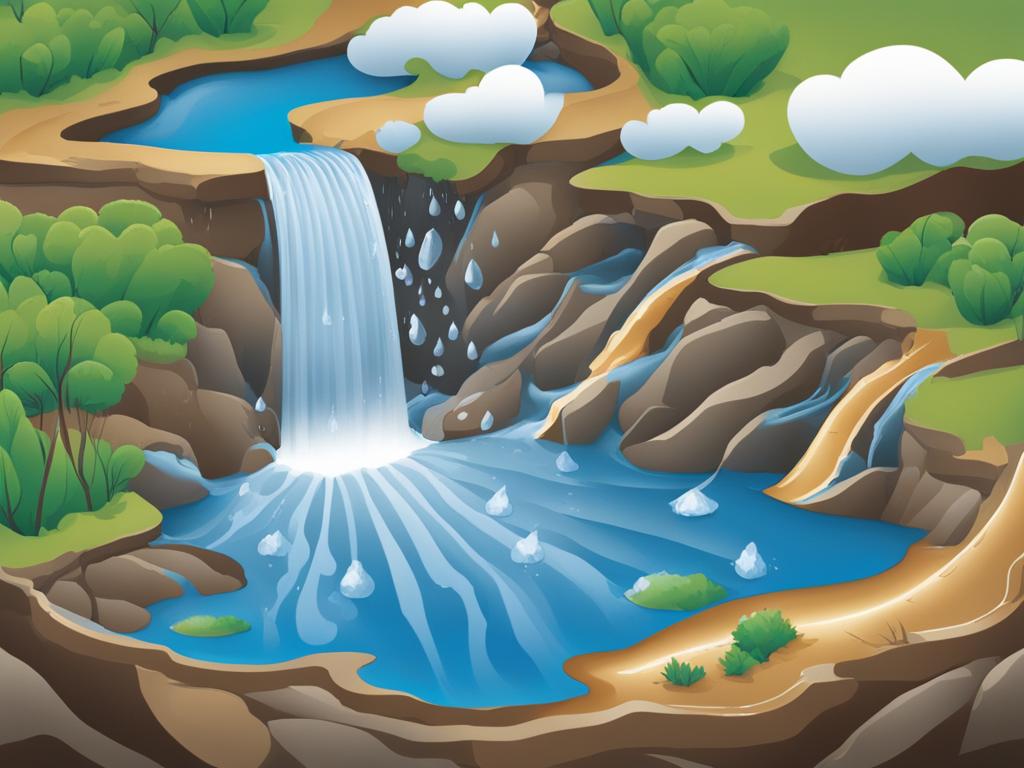
The importance of water filtration cannot be overstated when it comes to maintaining the health of our planet’s water cycle. Just as the Earth naturally purifies water through its hydrologic systems, modern filtration technologies play a crucial role in enhancing the purifying water cycle before consumption. By integrating advanced water treatment methods, communities ensure that water remains safe and clean, supporting both human health and the environment.
Effective water filtration removes harmful contaminants such as chemicals, bacteria, and toxins that can accumulate as water travels through urban and industrial landscapes. This process not only guarantees the safety of drinking water but also helps to prevent pollutants from re-entering natural water bodies, hence protecting ecosystems and maintaining biodiversity.
Let’s look at some ways in which water filtration systems contribute to the sustainability of the water cycle:
- Filtration prevents the buildup of pollutants in rivers and oceans, safeguarding aquatic life and water quality.
- By treating wastewater, filtration systems reduce the demand for freshwater extraction, thus contributing to water conservation.
- Advanced filtration methods such as reverse osmosis and UV treatment ensure contaminants are removed effectively, aligning with the process of natural purification found in the environment.
Below is a table illustrating the filtering agents and what they remove from water, depicting the water filtration importance in ensuring the purity and safety of our water supply:
| Filtering Agent | Contaminants Removed | Role in Water Cycle |
|---|---|---|
| Activated Carbon | Chlorine, pesticides, organic compounds | Improves taste and removes odors, making water more palatable |
| Reverse Osmosis | Salts, bacteria, viruses | Purifies water to a high degree, suitable for drinking and industrial use |
| UV Treatment | Microorganisms such as E.coli, Giardia | Disinfects water without the use of chemicals |
| Mechanical Filters | Sediment, rust, heavy metals | Eliminates visible impurities and improves clarity |
| Ion Exchange | Calcium, magnesium (hard water) | Softens water, preventing scale buildup in piping systems |
By understanding and supporting the water filtration importance, you help sustain the ongoing cycle that purifies water, ensuring that it remains a life-giving resource for all species inhabiting this planet. So, the next time you take a sip of clean water, remember the sophisticated treatment processes it has undergone and the vital role they play in the never-ending purifying water cycle.
Conclusion
As we reach the end of our exploration, your understanding of the water cycle’s complexities should now paint a clearer picture of its critical importance. This remarkable hydrological cycle has been shaping our planet, recycling water relentlessly for over 4 billion years. It’s not merely a sequence of stages; the water cycle embodies a life-sustaining system that intricately marries the fate of our natural world to the rhythms of Earth’s climatic heartbeat. Each droplet’s journey from the deepest ocean trenches to the loftiest cloud formations is a testament to the cycle’s indefatigable role in maintaining life as we know it.
Your grasp of the hydrological cycle’s understanding is imperative, more so when one considers the scale at which human actions intersect with natural processes. The delicate balance maintained by the water cycle is increasingly susceptible to disruptions, from irrigation schemes to industrial water usage. Fully comprehending how these interventions impact the cycle helps us recognize our responsibility towards this revered process and the necessity for sustainable practices, safeguarding the essence of our blue planet.
In sum, the water cycle’s conclusion is an ongoing narrative of resilience and interdependence, a cycle where every phase is crucial, every transition meaningful. By valuing and cherishing this complex system, you contribute to preserving the very cycles that ensure our survival. So armed with a robust hydrological cycle understanding, let’s collectively endeavor to be caretakers of this extraordinarily vital resource, for our generation and those to follow.
FAQ
What are the basics of the water cycle?
The basics of the water cycle, also known as the hydrologic cycle, involve the continuous movement of water on, above, and below the Earth’s surface. This includes the processes of evaporation, condensation, precipitation, infiltration, and runoff, which allow water to circulate and sustain life.
Why is the water cycle significant?
The water cycle is significant because it replenishes Earth’s water supply, maintains life, and regulates climate. It’s also responsible for distributing nutrients across the planet and shaping the geography through the creation of various landforms.
How does solar energy influence the water cycle?
Solar energy drives the water cycle by providing heat energy, which is necessary for evaporation. It influences temperature and weather patterns, which in turn affect the rate and efficiency of water transitions between states within the cycle.
How do temperature variations impact the hydrologic cycle?
Temperature variations have a profound effect on the hydrologic cycle. They alter evaporation rates, the ability for the air to hold water vapor, and consequently, the formation and type of precipitation that falls to Earth, influencing the overall efficiency of the water cycle.
What human activities interfere with the natural water cycle?
Human activities such as deforestation, urbanization, and intensive agricultural practices interfere with the water cycle. These actions change land cover, affect the infiltration rates of water, and contribute to climate change, thus disrupting the natural balance of water resources.
What is the role of evaporation in the water cycle?
Evaporation’s role in the water cycle involves the transformation of liquid water into water vapor, which then rises into the atmosphere. This process cools water bodies, regulates climate by controlling atmospheric moisture levels, and is critical for precipitation development.
What is condensation, and how is it connected to precipitation?
Condensation is the process where water vapor transforms into liquid droplets or tiny ice particles, which cluster in the atmosphere to form clouds and fog. These droplets grow heavier and eventually fall to the ground as precipitation in various forms, such as rain, snow, or hail.
How does the filtration of water contribute to the water cycle?
Filtration of water contributes to the water cycle by removing pollutants from water as it moves through natural systems and treatment facilities. This ensures the maintenance of water quality, which is essential for supporting ecosystems and providing safe drinking water. Filtration sustains the cycle by keeping the water clean and suitable for reuse in various forms.
Leave a Reply
You must be logged in to post a comment.