

If you’re delving into the intricacies of high purity water systems, it’s crucial to get to grips with the pH level of deionized water. This type of water, so critical in industries from pharmaceuticals to microelectronics, is revered for its lack of dissolved ions, which are the usual suspects in influencing a solution’s pH. But have you ever thought about what happens when this high purity water meets its most common contaminant, something as ubiquitous as the air we breathe?
Indeed, although deionized water might start off with a neutral pH of 7, its high reactivity as a solvent means it’s like a sponge for substances like carbon dioxide (CO2). This ability to absorb CO2 from the atmosphere and form carbonic acid is not just fascinating chemistry—it’s a phenomenon that can lower the pH of your deionized water to around 5.6, affecting water quality and the outcome of your processes. That’s why a deeper understanding of pH in water treatment is more than just academic—it’s essential.
Key Takeaways
- Deionized water is highly reactive and can absorb CO2, altering its pH.
- Pure deionized water has a neutral pH, but when exposed to air, its pH may decrease.
- Even slight changes in pH due to contamination can impact water quality for sensitive applications.
- Carbon dioxide absorption leads to the formation of carbonic acid in deionized water, dropping the pH below neutral.
- Understanding and monitoring the pH level is vital in water treatment and high purity water systems.
Exploring the Nature of pH in High Purity Water Systems
As we delve into the intricacies of maintaining water purity, it’s essential to comprehend the significance of pH measurement within high purity water systems. These measurements are pivotal in the continual optimization of water treatment systems, playing a major role in the efficiency and reliability of processes that require water of the highest purity.
Defining pH and Its Measurement Challenges
Understanding pH starts with recognizing its role as an indicator of the hydrogen ion concentration in water, the foundation upon which water purity can be assessed. However, accurate pH assessment in high purity water like deionized water is fraught with challenges due to its low ion count and consequently its minimal buffering capacity. This lack of ions makes deionized water highly susceptible to alterations in pH from even the slightest of contaminations or changes in environment.
The Logarithmic Nature of the pH Scale
The pH scale is not linear but logarithmic, meaning that a single unit change reflects a tenfold difference in hydrogen ion concentration. This logarithmic scale ensures that a pH change from, say, 7 to 6 indicates that the water’s acidity has increased tenfold, showcasing the critical importance of precision in pH measurement when managing water treatment systems.
Importance of Accurate pH Measurement in Water Treatment
Accurately measuring the pH value is a cornerstone for optimal operation of water treatment systems. Not only does it prevent the potential for corrosive or scaling conditions, but it also provides a barometer for the overall efficacy of the water treatment process. When dealing with high purity water, such precision becomes even more crucial, as these systems are often utilized in sensitive applications where water purity cannot be compromised.
As you navigate through the various aspects of water purity, remember that reliability in pH monitoring is a testament to the integrity of high purity water systems. With the right tools and knowledge, you can ensure the consistency and safety of water in your critical processes.
Insights into the pH Scale and Its Inverse Relationship

When you delve into the world of chemistry and aqueous solutions, understanding the pH scale is fundamental. This scale, ranging from 0 to 14, is not only a measure of acidity levels and basicity, but it also presents an inverse relationship that is crucial in various scientific and practical applications. Here, we’ll explore the intriguing dynamics of the pH scale pertinent to aqueous solutions and how this understanding impacts the functionality of systems relying on specific pH conditions.
Understanding the 0 to 14 pH Range
The pH scale is an excellent indicator of whether a solution is acid, neutral, or alkaline. A pH less than 7 denotes acidity, with lower numbers indicating a greater level of acidity. Solutions with a pH greater than 7 are considered basic, where higher values reflect increased basicity. This pH scale is an invaluable tool in gauging chemical properties, especially when dealing with high purity and deionized water crucial for specialized equipment.
Implications of a Low vs High pH Reading
Understanding the implications of pH readings is vital, as each end of the pH scale affects materials and biological systems differently. A low pH signifies a high concentration of hydrogen ions, which can lead to corrosiveness, while a high pH implies a high concentration of hydroxide ions, which can be just as caustic. Whether you’re fine-tuning the pH for industrial processes or ensuring the safety of drinking water, knowledge of these pH dynamics is essential.
Now that you’re equipped with these insights, think about how the inverse relationship of the pH scale applies to your specific needs. Whether it’s for maintaining the delicate balance required for high-tech manufacturing or honoring precision in scientific research, your ability to manage acidity levels and basicity in aqueous solutions will pave the way for successful endeavors.
The pH of Deionized Water and Its Instability
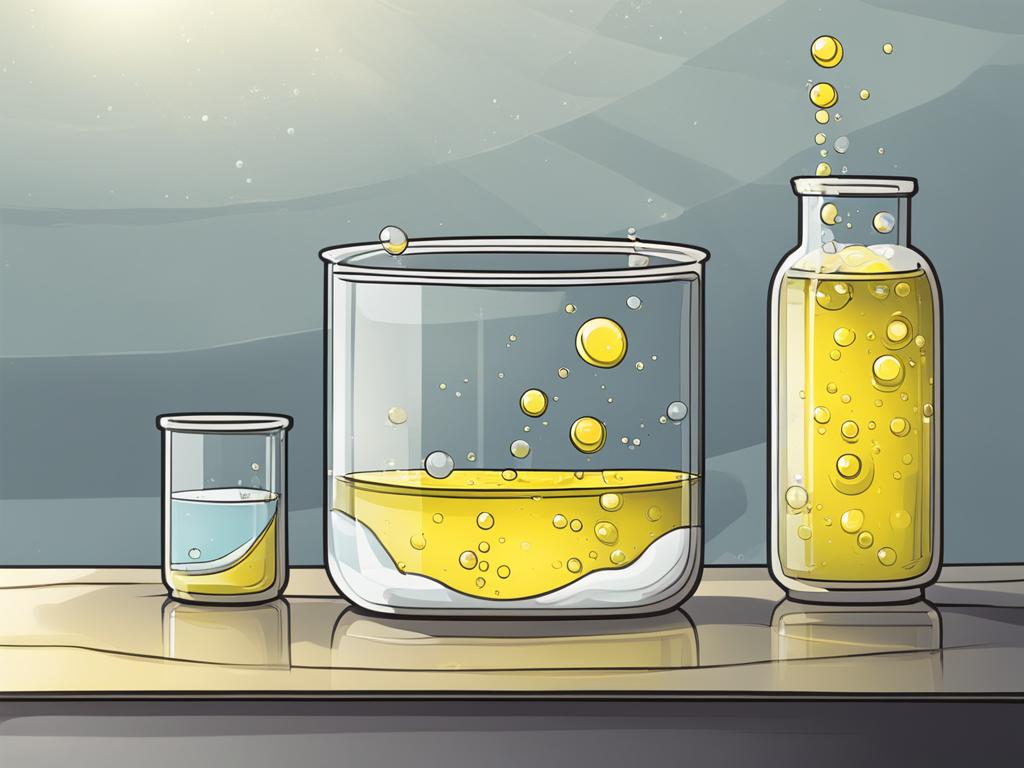
Despite the common misconception that deionized water is always neutral, in reality, its pH stability is a delicate balance that’s easily disrupted. You may have encountered the term pH instability before, and it’s particularly relevant when discussing the characteristics of deionized water. The lack of ionic substances bestows upon it a unique volatility, as its pH can shift significantly with minimal influence.
When you expose deionized water to the air, you’re introducing it to the risk of carbon dioxide absorption. This is no minor concern; as CO2 dissolves into the water, it forms carbonic acid – an event that nudges the pH scale downward, illustrating the deionized water volatility we speak of. What this means for industries and laboratories relying on its purity is a constant battle against time and exposure.
Consider the following scenario: you have a container of deionized water left open in a room. The initial pH is roughly 7, emblematic of pure water. However, as CO2 from the surroundings permeates the liquid, a chemical reaction ensues, tipping the scales of pH and thereby affecting the water’s suitability for sensitive applications. It’s a perfect demonstration of why so much emphasis is placed on maintaining sealed systems when working with deionized water.
- Minimal ionic content: Allows rapid pH changes
- Lack of buffering capacity: No resistance to acidic or basic shifts
- Atmospheric exposure: Even a slight exposure to air can lead to notable pH drops
The next logical question might be how to mitigate these risks. The answer lies in minimizing the water’s exposure to air, and where exposure is unavoidable, ensuring rapid usage or thorough recalibration of pH levels is undertaken. By understanding the nature of this instability, you can better prepare to maintain the purity and integrity of your deionized water supplies.
Challenges of Measuring the pH of Deionized Water
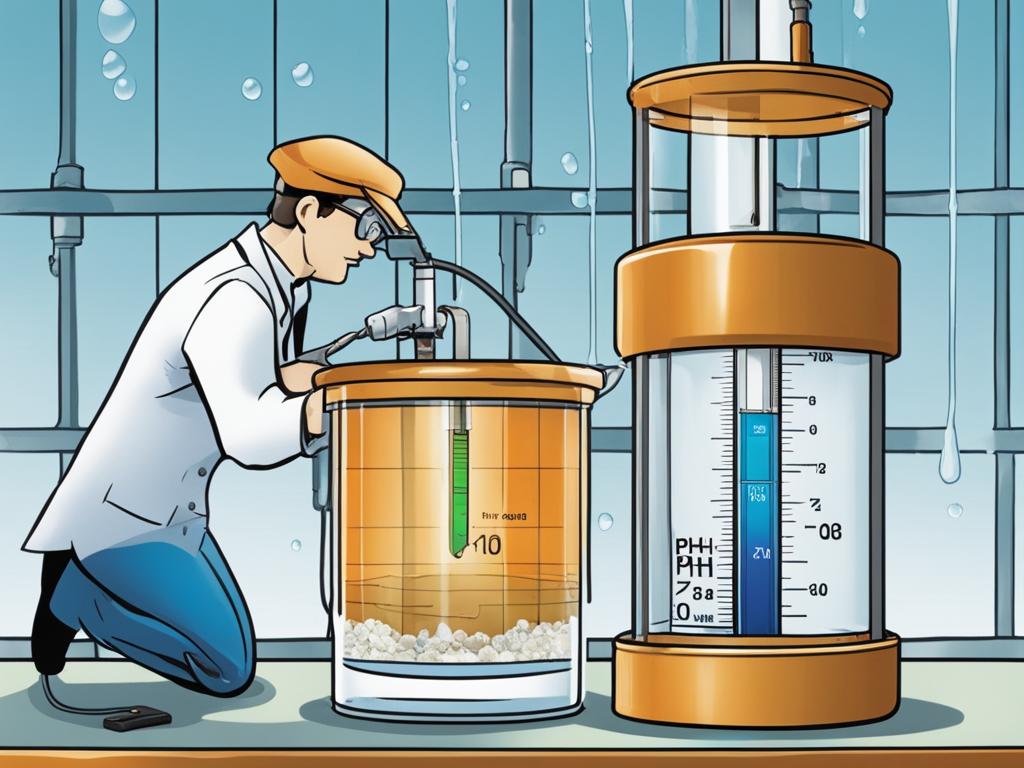
When you’re dealing with deionized water, accurate pH measurement becomes a task riddled with technical hurdles. The essence of the problem lies within the very nature of this high purity water—its low ion concentration leads to significant pH measurement challenges that can befuddle even seasoned professionals. Puzzled about how this impacts your readings? Imagine trying to tune an instrument with no sound to guide you; that’s the kind of conundrum we’re untangling here.
Diving deeper, one central issue is that most pH meters are calibrated with solutions that have considerably higher ionic strengths compared to deionized water. This discrepancy can cause your equipment to return readings that are misleading at best. To compound matters, any electrode contamination—and it does happen more often than we’d wish—can skew the results further.
- Inherent Low Ionic Strength:
- Risk of Atmospheric CO2 Absorption:
- Calibration Difficulties:
- Electrode Contamination:
Put it all together, and the argument for specialized care in handling and measuring the pH of deionized water becomes self-evident. It’s an intricate dance of keeping an eye on potential contaminants while gently coaxing the right reading from your instruments.
“Remember, deionized water is like a blank canvas – even minor impurities can leave a significant mark on the pH scale.”
| Challenge | Description | Impact on pH Measurement |
|---|---|---|
| Low Ionic Strength | Deionized water’s lack of ions | Unreliable pH meter readings |
| Electrode Contamination | Buildup of impurities on the electrode surface | Inaccurate pH levels and potential equipment damage |
| Calibration Issues | Mismatch between sample and calibration solutions’ ionic strength | Compromised calibration and distorted measurements |
| Atmospheric CO2 | CO2 absorption altering water chemistry | Decreased pH value, deviating from true neutrality |
Your best bet? Stay vigilant about these variables. It’s crucial to use appropriate calibration standards and to follow stringent procedures for maintaining your equipment—because when it comes to pH measurement, precision is not just a goal; it’s a necessity.
How Deionized Water Responds to Contamination
It’s essential to recognize how delicate deionized water is to various environmental factors, especially when considering how it’s used in sensitive applications. You might be surprised to learn the extent to which deionized water contamination can influence the overall quality and chemistry of this pure substance. Let’s delve into some of the changes that can occur when deionized water interacts with everyday elements.
Effects of Air Exposure on Deionized Water pH
The influence of air exposure effects on deionized water is more pronounced than you may realize. When deionized water comes into contact with the atmosphere, it rapidly absorbs carbon dioxide (CO2), leading to a series of chemical reactions that form carbonic acid—a process that significantly alters the water’s pH level. This change exemplifies the vulnerable nature of deionized water’s pH—how a simple brush with air can turn a neutral pH of 7 into a more acidic one.
Understanding Buffering Capacity of Pure Water
The term buffering capacity refers to a solution’s ability to resist pH changes when acidic or basic components are introduced. Typically, solutions with a variety of dissolved ions can better maintain their pH when facing contamination. However, deionized water, which is free from those ions, has minimal buffering capacity. This means that when deionized water encounters contaminants, its pH is prone to more drastic pH changes because it cannot counteract the added acidity or alkalinity as effectively as solutions with higher ionic concentrations.
| Parameter | Deionized Water | Tap Water (Average) |
|---|---|---|
| Original pH level | 7 (Neutral) | 7.5 to 8.5 (Slightly Basic) |
| Buffering Capacity | Low | Medium to High |
| pH After CO2 Exposure | ~5.6 (Acidic) | 7 to 8 (Remains Slightly Basic) |
| Contaminant Sensitivity | High | Low to Moderate |
Understanding these changes is critical, especially if you’re working within processes that require precise pH conditions. By keeping the susceptibility of deionized water to deionized water contamination in mind, you can take appropriate measures to protect its purity and ensure its suitability for your specific uses.
Innovative Approaches to Assessing pH in Deionized Water

As you explore the complexities of maintaining the purity of deionized water, it’s essential to understand the role of resistivity meters in pH determination. These instruments are critical in environments where even minuscule amounts of dissolved salts can significantly impact the reliability of deionized water assessment. Here’s how resistivity meters can be a game-changer in the realm of water quality monitoring.
The Role of Resistivity Meters in pH Determination
Resistivity meters are invaluable in determining the ionic purity of water. High resistivity readings, which approach 18.2 Megaohm, suggest that the water is close to pure H2O, with a neutral pH expected. It’s a sophisticated yet straightforward way to assess the pH without direct measurement, especially when dealing with ultra-pure or deionized water types that can challenge traditional pH meters.
Correlation Between Resistivity and pH Levels in the Absence of Dissolved Salts
Understanding the relationship between resistivity readings and pH is vital when interpreting water quality data. In the absence of dissolved salts, the correlation is quite clear: higher resistivity signifies fewer ions and a neutral pH value. However, as dissolved ions creep in, the resistivity decreases, and the pH starts to veer away from neutral. This change is a tell-tale sign that the deionized water is under assault from contaminants.
| Resistivity (Megaohm) | Expected pH Range | Implications |
|---|---|---|
| > 16 Megaohm | Close to 7 (Neutral) | Water is highly purified, suitable for sensitive applications |
| 10 – 16 Megaohm | 6.5 – 7.5 | Minor contamination, monitoring required |
| Variable | Potential contamination, further investigation needed | |
| Highly variable, likely acidic or basic | Water purity compromised, unsuitable for critical use |
By integrating resistivity meters in your deionized water assessment regimen, you can steer clear of unseen variables that might elude traditional pH tests. Remember, while deionized water is remarkably pure, it is also highly susceptible to changes in its environment, making your vigilant monitoring efforts all the more crucial.
Impacts of Ionic Strength on pH Readings

When you’re working with deionized water, understanding the ionic strength is crucial for obtaining accurate pH readings. You may know that ionic strength refers to the measure of the concentration of ions in a solution. But did you consider how this affects pH measurements? The lower the ionic strength, which is common in deionized water, the more challenging it becomes to measure pH accurately.
In typical solutions, ions facilitate the transfer of electrons necessary for pH electrodes to function correctly. However, in deionized water, the lack of these charged particles hampers this electron transport, leading to potential inaccuracies in pH determination. It’s not just a scientific concern; industries that depend on precise electrolyte concentration measurements also feel the impact.
| Parameter | Deionized Water | Regular Water |
|---|---|---|
| Electrolyte Concentration | Low | Varies (typically higher) |
| Ionic Strength | Very Low | Higher |
| pH Electrode Response | Possibly Inaccurate | Reliable |
| pH Reading Stability | Unstable | Relatively Stable |
Arming yourself with this knowledge is imperative, especially if your field requires stringent water purity standards. Realizing the implications of ionic strength can guide you in choosing the right methods and tools for pH measurement in deionized water.
Optimizing pH Measurements for High Purity Water Applications

Ensuring that your high purity water remains uncontaminated and chemically balanced compels precision in **pH optimization**. The significance of **accurate pH readings** in high purity systems cannot be overstated; they are instrumental in **water quality monitoring** and overall system performance. Let’s delve into various strategies that aid in achieving the most reliable pH values for your critical applications.
Remember, monitoring and controlling the pH of high purity water isn’t merely a part of routine maintenance—it’s a cornerstone for the stability and effectiveness of entire systems.
One approach to improve pH measurement accuracy involves the dilution of your water samples with a potassium chloride solution. This method enhances the ionic strength of the sample, which in turn provides a more stable reading. Moreover, to circumvent the issue of atmospheric CO2 absorption, you might want to consider utilizing inline pH meters. These devices are designed to provide in-process readings, effectively reducing exposure to ambient air and thus delivering more dependable pH measurements.
To provide you with a more comprehensive understanding, consider the following table, which outlines key considerations when measuring the pH of high purity water:
| Consideration | Recommendation | Benefit |
|---|---|---|
| Ambient CO2 absorption | Use inline pH meters | Minimizes misreadings associated with CO2 interference |
| Low ionic strength | Dilute with potassium chloride | Improves the reliability of pH electrodes |
| Water sample exposure | Employ closed-loop systems | Preserves water purity by preventing contamination |
| Calibration validity | Regularly recalibrate pH meters with appropriate standards | Ensures sustained accuracy of readings over time |
While addressing the intricacies of high purity water systems, it’s crucial to note that each application may require a tailored approach depending on specific criteria and usage. However, the above techniques provide a solid foundation for maintaining accurate pH control in most scenarios. Always stay proactive in your pH optimization strategies to guarantee the integrity of your water quality.
Why Accurate pH Readings Matter: The role of pH in Environmental and Biological Systems

The importance of maintaining the balance in environmental and biological systems cannot be overstated, and one of the most precise ways to monitor this equilibrium is by analyzing water quality through pH levels. The pH, which stands for ‘potential hydrogen’, has emerged as a significant pH as an indicator, offering a window into the health and safety of ecosystems and the efficacy of various water treatment protocols.
The pH of Water in Various Scientific and Industrial Contexts
In environments ranging from pristine natural reserves to high-tech industrial arenas, the pH level of water is closely observed and rigorously managed. In the laboratory, delicate experiments require precise conditions, where even the slightest deviation in pH could lead to a cascade of errors. Similarly, in industrial settings, incorrect pH levels could lead to equipment damage, poor product quality, and unsafe working conditions.
Using pH as an Indicator of Water Quality and Purity
When it comes to assessing the environmental systems, the pH of water is an effective marker for detecting pollutants and determining the overall purity. Be it in aquaculture, where the water’s pH impacts the health of marine life, or in drinking water systems, where safety standards are paramount, understanding and controlling pH is essential.
| Application | pH Desired Range | Significance of pH |
|---|---|---|
| Aquaculture | 6.5 – 9.0 | Ensures the health and growth of aquatic organisms |
| Drinking Water | 6.5 – 8.5 | Prevents corrosion, safeguards public health |
| Pharmaceuticals | Varies | Crucial for drug formulation and stability |
| Wastewater Treatment | 6.0 – 9.0 | Facilitates effective treatment processes and discharge compliance |
Given this complex tapestry of biological applications, accuracy in pH measurement is more than a technical requirement—it’s a responsibility. By ensuring precise control over the pH levels, we support not just immediate operational needs but also fulfill our duty to future generations, preserving water quality and the integrity of natural and engineered systems alike.
Conclusion
Throughout this article, you’ve gained valuable insights into the many facets of deionized water, a critical player in the arenas of science, medicine, and industry. You now understand that despite deionized water’s seemingly stable neutral pH at the outset, it can be easily swayed by external factors, diving into acidic realms upon the invasion of carbon dioxide. This delicate balance highlights the importance of vigilant monitoring for anyone who relies on the purity of this substance for their operations.
Summary of Key Takeaways on the pH of Deionized Water
Your journey has taken you from the basics of what constitutes the pH of deionized water to the implications of maintaining a precise pH in various high-stakes applications. The pH summary underscores how the water’s low ionic strength presents unique challenges for accurate pH readings, thereby necessitating the use of innovative technologies such as resistivity meters to ensure dependable results.
Final Thoughts on Maintaining the Integrity of High Purity Water
Finally, you’ve learned that safeguarding the integrity of deionized water is not merely a matter of following protocol—it’s about recognizing the critical role that this high purity water maintenance plays in the broader context of technological advancements and health-related achievements. By applying diligence and precision in the monitoring of deionized water, you uphold the standard of excellence required in your field, making every measure of pH far more than a number—it’s a commitment to quality and reliability.
FAQ
What exactly is deionized water?
Deionized water is water that has had its ions removed, including minerals and salts, resulting in high purity water. This makes it a very reactive solvent, often used in scientific experiments, medical applications, and industrial processes.
How is the pH level of deionized water normally measured?
Measuring the pH level of deionized water is challenging due to its low ionic strength and high reactivity. However, it can be done using specialized pH meters or resistivity meters, which can infer the pH based on water resistivity levels.
Why does deionized water absorb CO2 from the air?
Deionized water absorbs CO2 from the air because it has high purity and is free of dissolved ions, which makes it actively able to react and absorb other substances like carbon dioxide, forming carbonic acid, which lowers the pH.
Can you explain the logarithmic nature of the pH scale?
Certainly! The pH scale is logarithmic, which means each whole number change on the scale represents a tenfold increase or decrease in the hydrogen ion concentration. This makes small numerical changes in pH represent significant chemical changes in a solution’s acidity or basicity.
Why is accurate pH measurement important in water treatment systems?
Accurate pH measurement is critical in water treatment systems because it allows for monitoring of water quality, ensures the effectiveness of the treatment process, and helps prevent issues like corrosion or scaling within the system.
What challenges affect the measuring of deionized water’s pH?
The challenges come from the water’s low ionic strength, which causes issues with electron transport across pH electrode interfaces. In addition, exposure to air can contaminate the sample with CO2, making the measurement even more complex.
What is the buffering capacity of deionized water, and why is it important?
Buffering capacity refers to water’s ability to maintain a stable pH when acids or bases are added. Deionized water has a very low buffering capacity, meaning its pH can change easily with contamination, which can be critical for its purity in various applications.
How does resistivity relate to the pH of deionized water?
As resistivity meters gauge the ion-free nature of water, high resistivity often corresponds with neutral pH in deionized water. Variations in resistivity can signal the presence of contaminants, which may alter the pH level.
What is ionic strength, and how does it affect pH readings in deionized water?
Ionic strength refers to the concentration of ions in a solution. Deionized water has low ionic strength, making traditional pH readings unreliable. Since accurate pH measurement is essential, this necessitates alternative methods or adjustments to achieve reliable readings.
How can pH measurements be optimized for high purity water applications?
To optimize pH measurements in high purity water, one can use dilution techniques, employ pH meters designed for low ionic strength, or install inline meters to prevent atmospheric contamination, thus achieving more accurate readings.
Why is it crucial to maintain an accurate pH reading in different scientific and industrial contexts?
An accurate pH reading is vital because it can affect a range of factors, including environmental behavior like corrosion control, biological integrity for medical preparations, and the overall effectiveness of water treatment systems.
What is the significance of using pH as an indicator of water quality and purity?
pH serves as a primary indicator of water quality and purity because it provides a measurable value that reflects the chemical balance of water. This information is important for assessing the suitability of water for various applications and for ensuring compliance with health and safety standards.
Leave a Reply
You must be logged in to post a comment.