
Are you looking to master the art of purifying water at home? Perfecting your own distilled water recipe not only ensures you have access to clean water, but it can also save you money and provide the satisfaction of DIY success. Whether you’re using it for precise measurements in recipes, seeking to prolong the life of your appliances, or ensuring the highest quality of water for health and beauty products, DIY distilled water is the way to go. Rest assured, the process is straightforward and requires no special equipment, just a few simple tools you likely already have in your kitchen.
Key Takeaways
- Creating distilled water at home is cost-effective and simple.
- DIY distillation ensures a constant supply of pure water for various domestic uses.
- Homemade distilled water is highly versatile, ideal for medical devices, cosmetic products, and preventing mineral buildup.
- Learn about the materials needed and the basic steps to purify water at home.
- Discover the self-reliance and peace of mind that come with learning how to distill your own water.
What Makes Distilled Water the Purest Form?
When you’re exploring the world of water purification, distilled water frequently stands out as the hallmark of purity. This isn’t by coincidence. The distillation process strips away virtually everything except for pure hydrogen and oxygen. It manages something that even the best filters struggle to achieve: the virtually complete mineral removal from H2O. Unlike tap, filtered, or regular purified water, distilled water undergoes a transformation that returns it to its most basic elements — two parts hydrogen and one part oxygen.
So, how does this happen? Let’s break it down. The process of transforming your regular tap water into distilled water involves heating it until it turns into vapor. Once it’s airborne, it says goodbye to all the impurities—like minerals and contaminants—that were once dissolved in it. These impurities have no ticket to ride on the vapor train, so they’re left behind. Then, as the vapor cools, it condenses back into a liquid form. But not just any liquid form: it’s the clean, untouched-by-contaminants form that makes distilled water the poster child of purity in the hydration world.
“`markdown
### Benefits of Distillation:
– **Health and Safety**: Without impurities, distilled water reduces the risk of waterborne diseases and the ingestion of potentially harmful substances.
– **Appliance Longevity**: By using distilled water, you can ensure that appliances such as irons, humidifiers, and medical devices last longer because they are not exposed to mineral buildup.
– **Consistency**: It provides consistent quality, making it ideal for scientific applications and culinary uses where precise measurements are crucial.
Why You Should Consider Using Distilled Water

As you dive deeper into the aspects of distilled water, it’s hard to overlook its profound significance in healthcare and household maintenance. Not only does distilled water support safe cosmetic practices and healthcare necessities, but it also serves as a hard water remedy to safeguard your appliances and accessories.
Medical and Cosmetic Uses
The use of sterilized water in the medical field is a testament to its importance. Distilled water is free from pollutants that can cause irritation or infection, thereby bolstering safe cosmetic practices. Whether you’re undergoing a medical procedure or applying a daily facial cream, distilled water acts as a trusty companion, ensuring that your health and hygiene are never compromised by water-borne contaminants.
Preservation of Appliances and Accessories
Turning to your home, distilled water’s ability to prevent corrosion and lime-scale reduction is nothing short of impressive. Its mineral-free quality is the perfect solution to combat the adverse effects of hard water, extending the lifespan of everything from coffee makers to steam irons. Say goodbye to the woes of lime-scale and rust, as distilled water ushers in an era of efficient and enduring appliances.
Importance for CPAP Machines and Humidifiers
When it comes to managing sleep apnea treatment, distilled water is a non-negotiable element for CPAP machines. Incorporating safe humidifier use into your routine is crucial for those who rely on such health-augmenting devices. By using distilled water, not only do you guarantee the performance of your CPAP machine, but you also safeguard your health, making every breath a pure and healthy one.
Here’s a closer look at how distilled water impacts various aspects of our daily lives:
| Usage | Benefits | Considerations |
|---|---|---|
| Medical Equipment | Prevents bacterial contamination | Requires regular supply for continuous use |
| Cosmetic Products | Ensures purity of product formulations | May affect shelf-life and stability of ingredients |
| Household Appliances | Averts mineral buildup and corrosion | Cost-effectiveness in long-term maintenance |
| Humidifiers/CPAP Machines | Enhances device efficiency and cleanliness | Crucial for users with respiratory conditions |
In conclusion, distilled water is not just a lifestyle choice but a health and maintenance imperative. Its myriad uses, from CPAP machines to safe cosmetic practices, position distilled water as an indispensable household and healthcare necessity. Embrace the purity of distilled water, and ensure that both you and your belongings reap the benefits of its remarkable properties.
Various Types of Water Demystified

When you’re looking to quench your thirst or use water for household purposes, understanding the types of water differences is essential. Your choice can impact not only your health but also the longevity of your appliances and the taste of your food and drinks. In this section, we’ll break down the key distinctions between tap water, filtered water, and other forms of water to help guide your decisions.
Let’s start with tap water. It’s the most readily available and convenient option for most households. However, the quality and content of tap water can vary significantly depending on your geographic location. It may contain varying levels of minerals and treatment chemicals like chlorine, which can affect its taste and suitability for certain uses.
On the other hand, filtered water has gone through a cleansing process to reduce contaminants. This often includes chlorine and heavy metals like lead or mercury. Filtered water can come from a variety of sources, but the goal is always to make it safer and more pleasant to drink.
Now, to clarify the nuances further, let’s consider a comparative table highlighting the characteristics of these water types:
| Water Type | Taste | Usage | Cost | Environmental Impact |
|---|---|---|---|---|
| Tap Water | Varies with location; may have slight chlorine flavor | Drinking, cooking, bathing, cleaning | Lowest | Low, unless bottled |
| Filtered Water | Improved taste; less mineral/chlorine flavor | Drinking, culinary uses | Higher due to filtration systems | Varies based on filter type and water source |
| Distilled Water | Flat or bland, as minerals are removed | Medical devices, some culinary uses, preventing mineral buildup | Higher due to distillation process | Higher energy consumption |
While tap and filtered water are more common for everyday use, distilled water serves a special purpose. It’s gone through an intensive purification process that removes nearly all impurities. It’s particularly crucial for certain medical equipment and can prevent mineral buildup, albeit with a higher cost and energy footprint.
By understanding these key points concerning tap water, filtered water, and their differences, you can make an informed decision that suits your needs and supports your wellbeing. Whether you’re filling up your drinking glass, cooking a meal, or using water in your appliances, knowledge is power—and it’s especially refreshing when it comes to water.
Step-by-Step Guide: How to Make Distilled Water
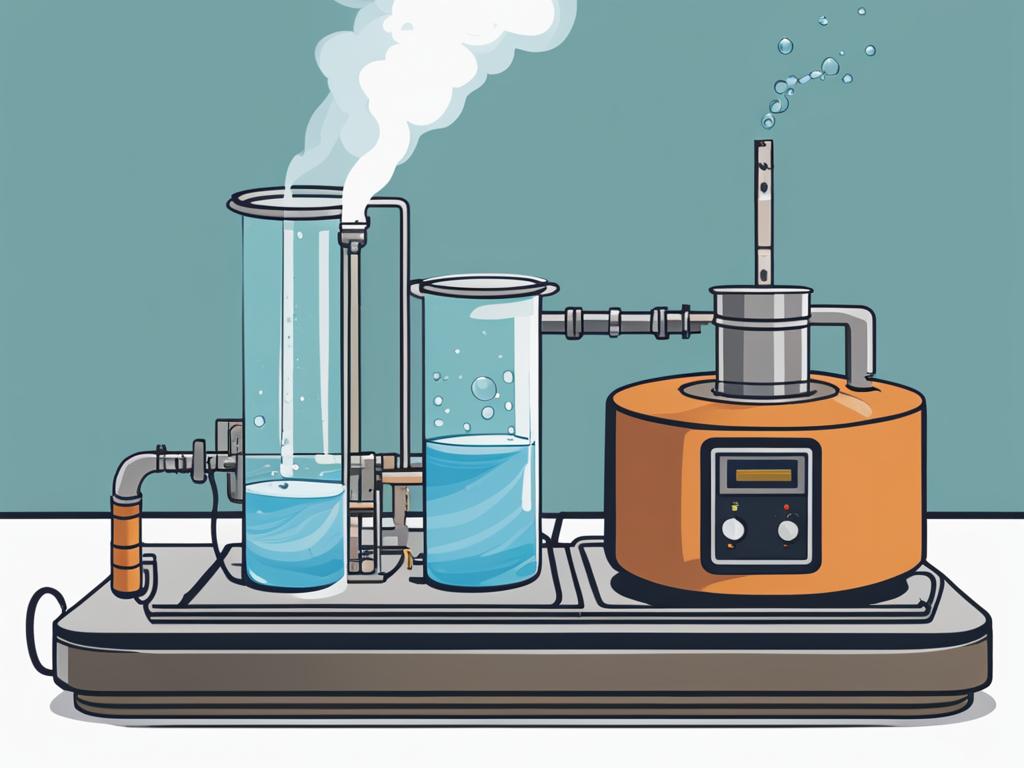
Embarking on your home distillation setup for water purification is both an educational and practical pursuit. Below, discover the distillation technique for creating your very own distilled water.
Assembling the Materials
Starting with the basics, ensure you have the right distillation equipment on hand:
- A large pot with a concave lid
- A smaller pot or heat-resistant bowl
- Cleanwater (as the source for distillation)
- Ice (to accelerate condensation)
- Oven mitts (for safety handling hot materials)
Setting Up the Distillation Process
The core of DIY water distillation revolves around heating and condensation. Here is a step-by-step breakdown:
- Fill the large pot with water and begin to heat.
- Place the smaller pot inside, ensuring it’s floating or elevated above the water level.
- Invert the lid of the large pot to create a surface for the vapor to condense on.
- Add ice on top of the inverted lid to encourage condensation.
Collecting the Distilled Water
After a sufficient distillation yield, you’re ready to harvest distilled water. This final stage requires careful handling:
- Once condensation occurs, droplets will gather and eventually drip into the smaller pot.
- After the collection is complete, use your oven mitts to remove the smaller pot.
- Transfer the water to a clean container for storage, preserving the purity of your water distillation process.
Table: Equipment Checklist for Home Distillation Setup
| Equipment | Purpose | Notes |
|---|---|---|
| Large Pot with Lid | For boiling water and condensing steam | Lid should be convex to direct condensation |
| Smaller Pot/Bowl | To collect distilled water | Should be made of heat-resistant material |
| Clean Water | Source for distillation | Free from pre-existing contaminants |
| Ice | To enhance condensation on lid | Ensure a significant amount for continual use |
| Oven Mitts | User safety during process | Must withstand high temperatures |
Home distillation isn’t just about saving on costs; it’s an achievable water purification at home technique. Not only are you equipped to produce drinking water, but you’re also utilizing an ancestral skill that converts a simple DIY water distillation project into a self-sufficient practice.
The Pros and Cons of Drinking Distilled Water
When contemplating the health benefits of distilled water, it’s essential to weigh both sides of the spectrum. Distillation provides mineral-free water which can be advantageous in certain health and dietary situations. On the flip side, the taste of distilled water might not appeal to everyone due to its lack of minerals, often described as flat or bland.
Health Pros
- Eliminates contaminants and harmful organisms
- It may help in detoxifying the body
- Useful for those with specific dietary mineral restrictions
Health Cons
- Lacks essential minerals like calcium and magnesium
- May cause a mineral imbalance if consumed exclusively
- Potential for increased body acidity due to removal of alkalizing minerals
While distilled water removes substances that can be harmful to your health, it also removes the beneficial minerals that your body needs. For those considering distilled water for regular consumption, it’s critical to ensure that these minerals are sourced from other dietary means. Now, let’s look at a comparison of distilled versus tap water in terms of taste and mineral content.
| Distilled Water | Tap Water | |
|---|---|---|
| Mineral Content | None | Varies by location |
| Taste Profile | Blander, flat | Can range from neutral to earthy, depending on minerals and treatment |
| Contaminant Level | Minimal | Dependent on local water treatment and source |
| Safety for Home Appliances | Safe, prevents scaling and buildup | May cause buildup over time, depending on mineral content |
In essence, distilled water is a safe and clean option, albeit with a distinct taste profile that might not suit everyone. It serves well in circumstances where purity is essential, but it’s equally important to consider the potential gaps it may leave in your daily mineral intake. As a part of a balanced approach to hydration and nutrition, distilled water can indeed have a place in your health regimen.
Storing Distilled Water the Right Way
Keeping your distilled water pure is crucial, whether you’re storing it short-term or planning for the long haul. You’ve gone to the effort of distilling your water; now, let’s ensure it stays pristine in safe water storage. Selecting the proper distilled water containers can mean the difference between maintaining distilled water purity and having to distill all over again. But don’t worry, with the right knowledge, you can easily navigate the best water storage solutions for your needs.
Choosing the Right Containers
For distilled water to retain its purity, especially for short-term use, it’s essential to find containers that act as a barrier against contamination. While short-term storage can be flexible, for keeping that H2O impeccably clear for longer durations, not all containers will do. Glass or high-quality stainless steel containers are your best bet here—these materials are non-reactive and work as an excellent safeguard against water leaching prevention.
Considerations for Long-term Storage
Long-term water storage requires additional vigilance. You don’t want the very container designed to protect your water to be the cause of its contamination. Pondering the properties of the materials you use to store your distilled water is non-negotiable; the wrong one can cause leaching and jeopardize maintaining distilled water purity. The following table outlines which materials are suited for sustaining the safety and purity of your distilled water over time.
| Material Type | Safety | Leaching Prevention | Recommended Use |
|---|---|---|---|
| Glass | Excellent | High | Long-term Storage |
| High-Quality Stainless Steel | Very Good | High | Long-term Storage |
| Plastic #1 (PET) | Good for single use | Low | Short-term Storage |
| Plastic #2 (HDPE) | Good | Moderate | Varies |
| Plastic #7 (Other) | Varies | Low to Moderate | Not Recommended |
Innovative Methods to Distill Water Without a Stove
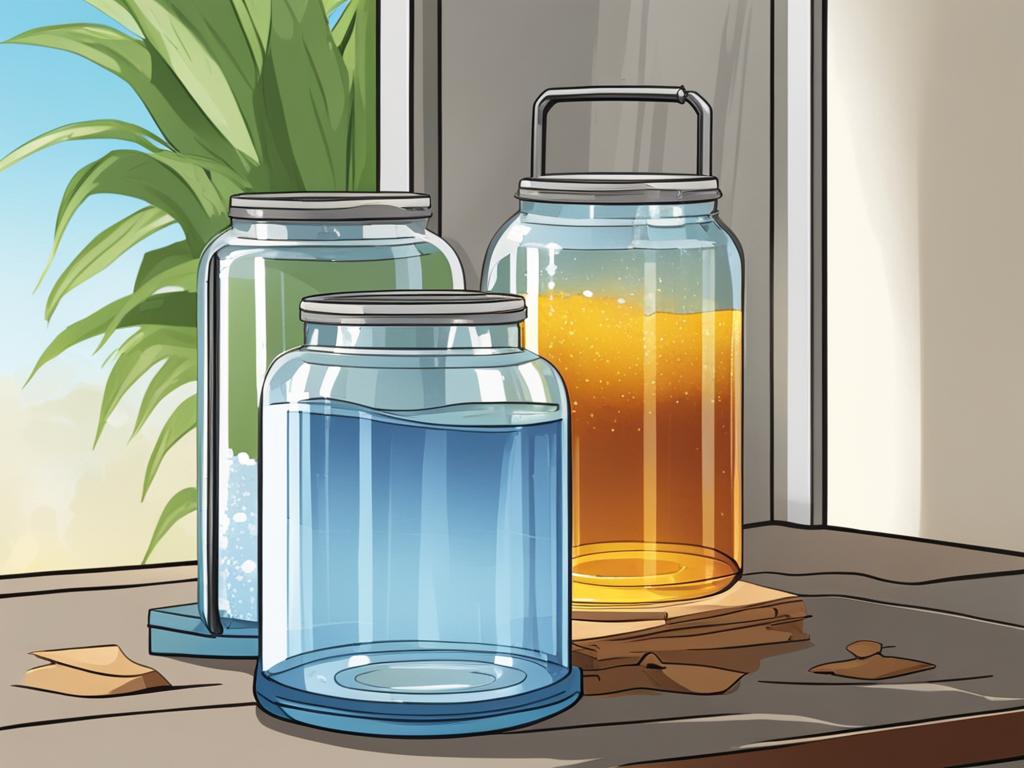
Discovering alternative distillation methods can be an exciting and environmentally friendly way to produce clean water. You don’t always need modern conveniences; you can embrace the ingenuity of non-electric distillation techniques that harness the power of nature. Whether you’re camping, living off-grid, or simply curious about natural water purification, these methods outlined below can be both practical and gratifying.
One popular method, solar distillation, leverages the sun’s energy to evaporate and condense water. The process is quite simple: clear water is placed in a container with a clear slope-top, collecting sun rays and heat to facilitate evaporation. The vapor then condenses on the sloped surface and drips into a separate clean container, effectively distilled. This method does not require any electricity and is a testament to the ingenuity behind solar-powered solutions.
Another ingenious approach involves using ice as a surface for condensation. In this setup, water is brought to room temperature in an enclosed space. Above it, a surface chilled by ice draws the pure water vapor as it rises and causes it to condense into droplets that can be collected. With time and patience, a significant amount of distilled water can be harvested.
| Solar Distillation | Ice Condensation |
|---|---|
| Utilizes the greenhouse effect | Depends on cold surface for vapor condensation |
| No moving parts or electricity required | Only a cold temperature source like ice needed |
| Can produce water passively throughout daylight hours | Best utilized in cooler climates or with consistent access to ice |
| Ideal for sunny climates with ample solar exposure | Perfect for emergency situations or in environments where ice is readily available |
While these methods might seem unconventional, they are both excellent examples of alternative distillation methods that align with sustainable practices and self-sufficiency. It’s a reminder that with a bit of creativity, you can ensure your access to clean, purified water without relying on electricity or modern gadgets.
Science of Distillation: Fun Facts and Tips
Embarking on the journey of distilling your own water at home immerses you in the intriguing world of distillation science. It’s a process that’s steeped in the basic concepts of the earth’s natural water cycle, transforming everyday water into its purest form. As you engage with this method, you recreate a miniaturized version of the cycle that involves three crucial states: the solidity of ice, the liquidity of water, and the gaseous form of steam.
Whipping out your distillation kit not only puts a valuable skill into practice but turns your kitchen into a real-time classroom for water cycle education. Through the simple act of boiling water, you’ll observe firsthand the transition of water to steam (evaporation) and, upon cooling, the return to its liquid form (condensation). This experiential learning process can feel like a nostalgic throwback to those exciting middle school science classes, where every experiment felt like a new adventure.
Furthermore, diving deeper into the mechanics of distillation will uncover a treasure trove of purification facts. Each drop of distilled water is a testament to the meticulous separation of H2O from its dissolved impurities, such as minerals, bacteria, and chemicals. This reinforces why distilled water is so revered in both scientific and medical fields for its unmatched purity and consonance with sensitive equipment.
FAQ
What materials do I need for a DIY distilled water recipe?
To make distilled water at home, you’ll need a large pot with a lid, a smaller pot or heat-safe bowl, clean water, ice, and oven mitts for safe handling of the equipment.
Why is distilled water considered the purest form of water?
Distilled water is made up of pure hydrogen and oxygen after a rigorous purification process that removes 99.9% of minerals, chemicals, and contaminants, making it exceptionally pure.
What are the benefits of using distilled water in medical and cosmetic applications?
Distilled water is free of impurities, which makes it ideal for sterilized water needs in medical equipment like CPAP machines and for safe cosmetic practices, as it prevents contamination.
How does distilled water contribute to the preservation of appliances and accessories?
The mineral-free nature of distilled water helps prevent corrosion in automobile engines and reduces lime-scale buildup from hard water in various household appliances and accessories.
Is distilled water necessary for CPAP machines and humidifiers?
Yes, using distilled water in CPAP machines and humidifiers is essential for minimizing mineral deposits and ensuring that these healthcare devices function properly, especially for individuals dealing with sleep apnea.
Can you explain the difference between tap water, filtered water, and distilled water?
Tap water varies by location in mineral content and can contain treatment chemicals. Filtered water has removed contaminants such as chlorine and metals. Distilled water goes through an intensive process to remove nearly all impurities, setting it apart as a specialized form of purified water.
How does the process of distillation work?
Basically, you’ll heat water to create vapor, use cold temperatures to condense the vapor back into water, and collect this purified water, leaving most impurities behind in the heating process.
How should distilled water be collected during the distillation process?
After heating and condensation, collect the distilled water from the smaller pot that captures the condensed vapor, ensuring it remains pure during transfer to a clean storage container.
What are the advantages and disadvantages of drinking distilled water?
Distilled water is prized for its purity, being free from harmful contaminants, but it also lacks minerals that contribute to taste and nutritional value. It’s not advised as the sole source of drinking water due to the absence of beneficial minerals like calcium and magnesium.
How should I store distilled water properly?
For short-term use, standard containers are sufficient, but for long-term storage, glass or high-quality stainless steel containers are recommended to prevent any leaching of chemicals that could contaminate the water.
Are there any ways to distill water without using a stove?
Yes, alternatives such as solar distillation or using ice-cold surfaces to create condensation can be employed to distill water without relying on conventional heat sources.
Can you share some interesting facts on the science behind water distillation?
Distillation imitates the natural water cycle, involving the transition of water through its solid, liquid, and gas states. This experiential process highlights the principles of evaporation and condensation, making it a practical and educational activity.
Leave a Reply
You must be logged in to post a comment.