

Have you ever paused to consider your water use in showers, or pondered over the gallons per shower flowing down the drain? You’re not alone. As environmental and economic factors converge, the topic of average shower water consumption is becoming increasingly relevant for households across the United States. It’s about more than just standing under a soothing stream; it’s about adopting sustainable water use habits.
Let’s dive into the figures—did you know that the average American shower utilizes approximately 17.2 gallons and lasts roughly 8.2 minutes? With a flow rate clocking in at 2.1 gallons per minute, you begin to grasp the scope of shower water savings that could be actualized with a few mindful adjustments. Couple this with rising water utility bills, and every drop saved becomes financially beneficial, not just eco-friendly.
Key Takeaways
- Understanding your shower’s average water consumption can lead to significant environmental and economic benefits.
- Simple changes in water use in showers can contribute to sustainable water use practices at home.
- Awareness of gallons per shower can help forecast and manage monthly utility expenses.
- Shower water savings aren’t just good for the planet; they’re beneficial for your wallet too.
- Being more efficient with shower usage plays a critical role in the broader context of water conservation efforts.
The Significant Impact of Showers on Water Consumption
When considering the water consumption impact of residential buildings and homes, showers undeniably draw a significant amount of attention. For those in property management, understanding and managing this key area is crucial not just for cost control but also for promoting sustainability in real estate. The provision of heated water in showers is a visible area where practical measures can lead to water bill savings and establish a reputation for environmental stewardship. Let’s delve a bit deeper into these issues.
The Role of Property Managers in Water Consumption
In the realm of multi-unit dwellings, property managers are the stewards of resource management and have the unique position of being able to influence water consumption patterns. For many properties where water bills are included in the rent, every gallon saved is a direct saving for the manager or owner. Hence, implementing water-conservation initiatives can dramatically affect the property’s overall heated water expense.
The Environmental and Financial Cost of Heated Water
The environmental and financial costs interlink closely when we look at water consumption – especially the use of heated water. With the right approach, property managers can reduce these costs significantly. Below is a breakdown of how focusing on the most impactful areas can lead to major savings:
| Initiative | Environmental Impact | Financial Impact |
|---|---|---|
| Installing low-flow showerheads | Reduction in water wastage | Decrease in water bill and energy costs |
| Tenant education on water usage | Long-term behavioral changes leading to sustained savings | Progressive decline in utility bills over time |
| Upgrading to energy-efficient water heating systems | Lower carbon emissions due to reduced energy consumption | Reduced expenses for heating water |
| Regular maintenance on plumbing and fixtures | Prevention of leaks leading to conservation of water resources | Cost avoidance by pre-empting major repairs and water loss |
Each of these initiatives not only reflects well on a property’s commitment to sustainability in real estate but also makes good financial sense. As a property manager, you’re in a unique position to significantly mitigate the water consumption impact while simultaneously enhancing your property’s value and attractiveness to current and potential residents who value sustainability.
Understanding Shower Gallons per Minute

If you’re keen on efficient shower consumption and looking to understand shower flow rates, a critical figure to know is the gallons per minute (gpm) your showerhead emits. While the possibility of water-saving showers exists, actual average water usage can be influenced by various factors including showerhead efficiency and individual habits.
Breaking Down the Average Flow Rate in American Showers
The current federal standard sets a cap on shower flow rates at a maximum of 2.5 gpm to promote water conservation. However, some households may still have older models or inefficient showerheads leading to higher rates of water flow. It’s imperative that you check your showerhead’s gpm rating which is often inscribed on the device itself. This can be the starting point for efficient shower consumption strategies.
Calculating Water Usage for Different Shower Lengths
Calculating your water usage during showers isn’t complex. Start with the flow rate (gpm) and multiply by your average shower duration in minutes. For example, a 2.5 gpm showerhead will use 20.5 gallons in an 8.2-minute shower. If you’re using a more efficient shower with a lower gpm or taking shorter showers, your average water usage can decrease significantly.
| Shower Duration (minutes) | 2.0 gpm Showerhead | 2.5 gpm Showerhead | 3.0 gpm Showerhead |
|---|---|---|---|
| 5 | 10 gallons | 12.5 gallons | 15 gallons |
| 8.2 (Average) | 16.4 gallons | 20.5 gallons | 24.6 gallons |
| 10 | 20 gallons | 25 gallons | 30 gallons |
| 12 | 24 gallons | 30 gallons | 36 gallons |
It’s clear that being aware of your gallons per minute calculation is a great leap towards water-saving showers. Such knowledge not only helps in reducing your average water usage but also contributes to the broader goal of conservation.
Does Hot Water Equal More Money?
It’s no secret that hot water costs can quickly become a significant portion of your monthly utility bills. The necessity to heat water contributes substantially to energy consumption, which, in turn, reflects as increased water heating expenses on your statement. For landlords, the challenge is twofold: ensuring tenants have adequate hot water while encouraging efficient hot water use to keep costs down.
While you might not think twice about enjoying a long, hot shower, it’s worth noting that this daily comfort comes with a price. Not only are there environmental considerations, but the financial repercussions can be considerable, especially in a multi-tenant living situation where the landlord is often responsible for the water heating bill. Beyond individual habits, the shower systems themselves can be a culprit for high costs, particularly if they exceed the standard flow rate of 2.5 gallons per minute.
Did you know? About 18% of the energy consumed in your home is used for heating water, making it a major contributor to your overall energy consumption.
Here’s a closer look at where you might be losing money and how to potentially cut back on those hot water-related expenses:
- Reduce Shower Length: Shorter showers mean less water heated and, consequently, lower energy bills.
- Check Insulation: Properly insulated hot water pipes keep water hotter for longer, reducing the need to reheat as frequently.
- Upgrade Fixtures: Installing water-efficient shower heads and tap fixtures can help reduce water flow and conserve energy.
Below is a table illustrating different scenarios of energy usage for heating water based on various shower lengths and flow rates:
| Shower Length (minutes) | Flow Rate (gpm) | Gallons Used | Est. Energy Cost (USD) |
|---|---|---|---|
| 5 | 2.5 | 12.5 | $0.25 |
| 10 | 2.5 | 25 | $0.50 |
| 5 | 3.5 | 17.5 | $0.35 |
| 10 | 3.5 | 35 | $0.70 |
Ultimately, saving on hot water is not just about cutting costs, but it’s also about adopting sustainable habits that benefit everyone. By understanding and managing your hot water usage, you can ensure that each drop is used as efficiently as possible—leading to savings in your wallet and a healthier planet.
Evaluating the Costs: How Many Gallons of Water Does a Shower Use

When considering shower water costs, it’s important to understand both your water consumption evaluation and your shower expense calculation. The figures can be surprising. Did you know that the average family’s daily shower usage could be costing you more than you think? Let’s break down the figures together.
The first step in your water use assessment is to know the cost of water per gallon. This can usually be found on your monthly water bill. Then, look at your shower’s flow rate – typically between 2.1 and 2.5 gallons per minute depending on your showerhead’s efficiency. Multiplying this rate by the average shower length in your household will give you an average daily water use. For instance:
| Average Shower Time (minutes) | Flow Rate (gallons per minute) | Total Water Usage per Shower (gallons) | Estimated Daily Cost* |
|---|---|---|---|
| 8 | 2.5 | 20 | $0.30 |
| 10 | 2.5 | 25 | $0.38 |
| 12 | 2.5 | 30 | $0.45 |
*Note: Estimated costs are for illustration purposes based on a hypothetical cost of $0.015 per gallon of water.
Once you have these figures, consider the energy costs to heat this water. Heating water can count for a significant portion of your utility bill. For precise calculations regarding energy costs, using an online calculator provided by Energy.gov can streamline the process and provide a more accurate estimation.
Adding these numbers to your water costs will give you a clearer picture of how showers are impacting your annual budget. Efficient showerheads and mindful showering habits can play a pivotal role in managing these expenses.
Take a minute to look at the following visualization, which clearly highlights how much an average shower can add to your household costs:
By conducting this comprehensive water consumption evaluation, you can identify opportunities for savings and become more aware of your household’s environmental impact. It’s a simple yet effective exercise that can lead to substantial savings over time.
Money Down the Drain: The Real Expense of Lengthy Showers
When you linger under the spray, savoring the warmth of a long shower, it’s not just water swirling into the drain—you’re also watching money and precious resources slip away. Shower duration costs are a concerning factor in the household budget as well as environmental sustainability efforts. The true expense involves more than just the water waste, but also the excessive showering expense associated with heating this water.
Sustainable shower practices are not about restricting your comfort but about optimizing and being aware of the resources consumed. If you think about the average shower water usage per person, those extra minutes in the shower multiply across days and months, leading to large volumes of wasted water and energy.
Let’s unpack the cost of this daily ritual. Suppose a ten-minute extension to your shower doubles your water consumption; this decision doesn’t just affect your utility bills, but also stresses our water supply systems and the environment. By simply reducing your shower time, you can make a tangible impact on both your finances and the planet.
- Consider the cost of heating water – Reducing shower time saves on both electricity and water.
- Take note of the cumulative effect – Several household members extending their showers can lead to considerable excessive showering expense.
- Practice sustainable shower practices – Shortening shower duration and turning off the water while soaping up can contribute to meaningful conservation.
Being mindful of your water usage and seeking ways to create a more sustainable lifestyle are crucial steps towards conservation. And remember, every drop saved during your daily shower not only helps protect the environment but also keeps your wallet from taking an unnecessary hit.
Saving Options for Property Owners

As a property owner, the ability to realize effective water conservation not only contributes to the environment but also translates to real savings on utility bills. Two influential water-saving strategies include the implementation of low-flow showerheads and tenant education on water savings. These water conservation solutions are critical as they lead to a reduced demand on water supply and an important step towards sustainable living.
The Benefits of Low-Flow Showerheads
When considering water-saving strategies, one can’t overlook the value of low-flow showerheads. These fixtures have come a long way in design and functionality, ensuring that water conservation does not sacrifice user experience. Installing these can cut water flow to significantly less than the federal standard without impacting water pressure. This could result in substantial savings annually, not only in water usage but also by lowering the demand on your water heating system. Let’s look at some compelling data commemorating their efficiency:
| Showerhead Type | Flow Rate (gpm) | Water Savings (%) | Perceived Shower Quality |
|---|---|---|---|
| Standard | 2.5 | 0 | High |
| Low-Flow | 1.5 | Up to 40 | Comparable |
| Ultra Low-Flow | 1.0 | Up to 60 | Good |
The table showcases how, by choosing the right low-flow showerhead, you could potentially reduce water consumption by up to 60% without detracting from the comfort of your tenants.
Educational Efforts and Their Impact on Water Savings
In addition to the hardware solutions, successful water-saving strategies often entail tenant educational programs. While this method may seem less tangible than the installation of devices, it’s equally important. A few well-placed reminders about the importance of water conservation and how to achieve it could foster a community committed to sustainable practices. Educational outreach can include:
- Workshops detailing easy water-saving techniques
- Informative posters in communal areas
- Regular newsletters with tips for conserving water
- Incentives for tenants who demonstrate a significant reduction in water use
Collectively, with technology and tenant education, you can deploy a multipronged approach to water conservation tailored to your property’s needs, ensuring both environmental protection and financial viability.
Showerhead Regulations and Their Effects on Consumption
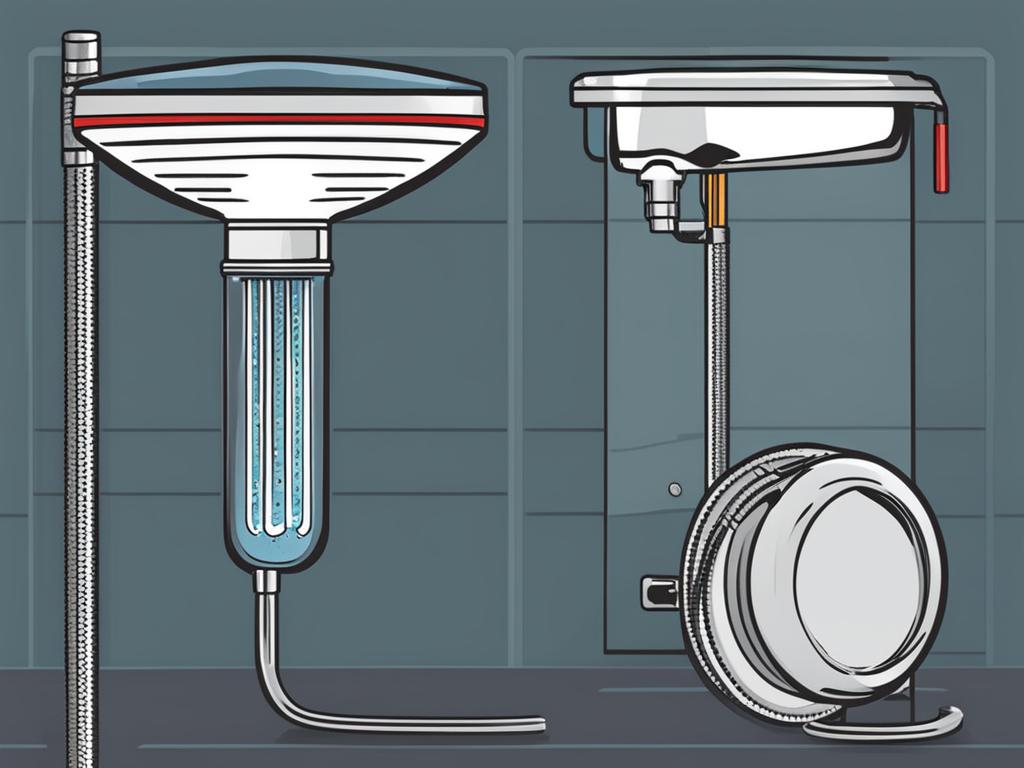
When it comes to conserving water, federal water-saving mandates play a pivotal role. You might be aware that these regulations cap showerhead water flow at 2.5 gallons per minute to help reduce waste and promote efficiency. This measure is a part of a broader set of environmental standards for showers, aiming to lessen our ecological footprint.
The showerhead regulations are a cornerstone of water flow legislation, yet not all fixtures are equal in complying. Differences in performance often stem from the age of showerheads or whether they have been modified. Meanwhile, modern showers that conform to or go beyond these regulations can significantly lower water consumption, thereby aiding environmental efforts and reducing utility bills.
- Standard Federal Flow Rate: 2.5 gallons per minute
- Modern Low-Flow Options: Rates can go as low as 1.5 gallons per minute
- Impact on Consumption: The lower the rate, the greater the savings
- Compliance Challenges: Older or modified showers may not meet regulations
Are you making the most of these regulations? By opting for compliant showerheads, you not only adhere to federal guidelines but also contribute to nationwide efforts in water conservation. Upgrading to fixtures with even lower flow rates is a smart choice for amplifying your environmental impact and optimizing water use in your household.
The Problem with Low-Flow Shower Fixtures
While Low-flow shower fixtures present a promising solution for water-saving implementation, they’re not a panacea without their own set of complexities. One of the primary issues with low-flow fixtures is that not all tenants are welcoming of these changes. Low-flow fixture issues can arise when these fixtures are perceived as providing an inferior shower experience, leading to tenant tampering problems. In some cases, the very measures meant to conserve water are removed or altered, defeating their purpose and undermining the environmental efforts.
Combatting Tenant Tampering to Ensure Water Conservation
Your role in promoting environmental stewardship doesn’t have to be undercut by the challenges of tampering. The key is to select fixtures that are tamper-proof, while still providing an acceptable shower experience. For example, innovative solutions like tamper-proof shower regulators are designed to be less accessible and therefore, less prone to tampering. These specially designed devices can be a linchpin in your water conservation strategy, ensuring the steadfastness of your efforts.
Investing in Tamper-Proof Water-Saving Devices
Investing in devices like The Water Scrooge, which are not easily accessible for tenants, can safeguard your water-saving efforts. This kind of device typically installs behind the shower wall and regulates the water flow to as low as 1.75 gallons per minute. Combining these regulators with a compatible high-performance showerhead provides an eco-friendly showering experience that meets tenants’ expectations. In doing so, you’re not just ensuring sustainability; you’re also protecting your investment in water saving, which will yield long-term financial benefits and contribute to a greener future.
FAQ
How many gallons of water does an average American shower use?
On average, a shower in the United States uses about 17.2 gallons of water and lasts for approximately 8.2 minutes, with a flow rate of 2.1 gallons per minute.
What role do property managers play in managing water consumption?
Property managers are vital in overseeing water use, especially in multi-family buildings where costs can accumulate due to the cumulative effect of all tenants’ water usage. They can implement conservation measures and influence behaviors to manage and reduce overall water consumption.
Why is it important to be aware of the heated water expense in showers?
Since showers are a primary user of hot water—about 65% of the water used by Americans is heated—awareness is crucial. Heating water significantly adds to energy expenses, and with water utility bills on the rise, it becomes essential to understand these costs for both environmental and financial reasons.
How can you calculate the water usage based on different shower lengths?
You can calculate water usage by multiplying the flow rate (gallons per minute) by the duration of the shower. For example, using a 2.1 gpm showerhead for 8.2 minutes would result in about 17.2 gallons used. Longer showers or higher flow rates will lead to increased consumption.
Does the cost of hot water influence utility bills significantly?
Yes, heating water for showers can consume a lot of energy, which contributes to higher utility bills. Given that showers are the biggest hot water consumers in most households, managing hot water use is key to controlling energy costs.
How can property owners evaluate the cost of water gallons used in showers?
Property owners can assess the cost by reviewing their water bills to determine the price per gallon and combining this figure with the average water usage. Additionally, incorporating the energy required to heat the water using tools like an energy cost calculator will provide a more comprehensive understanding of the expenses involved.
What is the financial impact of lengthy showers on water and energy bills?
Lengthy showers lead to increased water use, which in turn raises both water and energy bills due to the additional heating required. With the average shower water use per person amounting to over 120 gallons weekly, this can create a substantial financial burden over time.
What are the benefits of installing low-flow showerheads for property owners?
Low-flow showerheads can significantly decrease water flow, leading to reduced consumption and savings on utility bills. They also help property owners enhance their reputation for ecological responsibility and contribute to environmental sustainability.
Can educational efforts on water savings have a significant impact?
While education alone may have a limited impact, it can raise awareness among tenants about the importance of water conservation and encourage them to adopt more water-savvy behaviors.
Why is it important to comply with showerhead regulations?
Federal regulations limit showerheads to a maximum flow rate of 2.5 gallons per minute to standardize and reduce water usage. Compliance is essential for conserving water and ensuring that showers are as energy and water-efficient as possible.
How can property owners combat tenant tampering of water-saving devices?
Property owners can invest in tamper-proof technologies like The Water Scrooge, which is concealed behind the shower wall and regulates flow, to prevent tenants from altering fixtures and ensure that water conservation efforts remain effective.
What makes investing in tamper-proof water-saving devices a wise choice for property owners?
Tamper-proof devices prevent unauthorized adjustments that could negate water-saving efforts, ensuring that the installed conservation measures continue to provide savings on water usage over the long term.
Leave a Reply
You must be logged in to post a comment.