

As you reach for a glass of water, you might wonder about the safety and health implications tied to the type of water you drink. Have you considered drinking distilled water? Commonly known for its role in laboratory and industrial settings, distilled water is often overlooked as a drinking water option. Yet its safety and purity make it a contender in the array of choices you have for hydration. Distilled water’s preparation strips it not only of impurities but also of essential minerals, leading to a unique set of health considerations.
To ensure your peace of mind, let’s dive into the core of what distilled water is all about, examining the health effects of distilled water and its role in everyday distilled water consumption. Whether you’re concerned about contaminants or seeking the purest form of water available, understanding the ins and outs of distilled water can lead to a well-informed choice for your health and palate.
Key Takeaways
- Distilled water is considered safe for consumption, presenting no significant health risks when part of a balanced diet.
- The lack of minerals in distilled water means it doesn’t contribute to your daily intake of calcium and magnesium.
- While it may taste flatter than tap water, distilled water’s purity could be beneficial in certain situations where tap water quality is compromised.
- Dispelling myths: distilled water neither acts as a detox agent nor does it leach minerals from the body considerably.
- Choosing distilled water for drinking is a personal preference and should align with your dietary needs and local water quality.
The Essence of Distilled Water
When you pour yourself a glass of water, have you ever pondered the journey it took to reach that state of crystal-clear purity? Let’s delve into the nature of distilled water, a form of pure H2O achieved through meticulous processing.
What is Distilled Water?
Distilled water is often referred to as the purest form of water. It’s the result of an ancient yet still essential water distillation process, where all the impurities that usually accompany drinking water are stripped away. This rigorous method removes more than just a handful of contaminants; it clears away virtually all substances to reward you with nothing but pure H2O.
The Distillation Process: Boiling to Purity
The journey to obtaining distilled water begins with a simple boil. Water is heated until it turns into steam, leaving behind most of its unwelcome companions, such as heavy metals, organic compounds, and various dissolved salts and solids. Through steam condensation water purification, the steam is then cooled and transitions back to liquid form. But this isn’t just any water – this is water in its most unblemished state, boasting a 99.9% purity level free of almost all contaminants. In a world constantly seeking purity, distilled water sets a gold standard.
Understanding the process behind distilled water is more than just scientific curiosity—it’s about knowing what you consume and how it can contribute to your health. A glass of distilled water isn’t just a drink; it’s a testament to human ingenuity and the relentless pursuit of purity.
Distinguishing Between Distilled and Tap Water
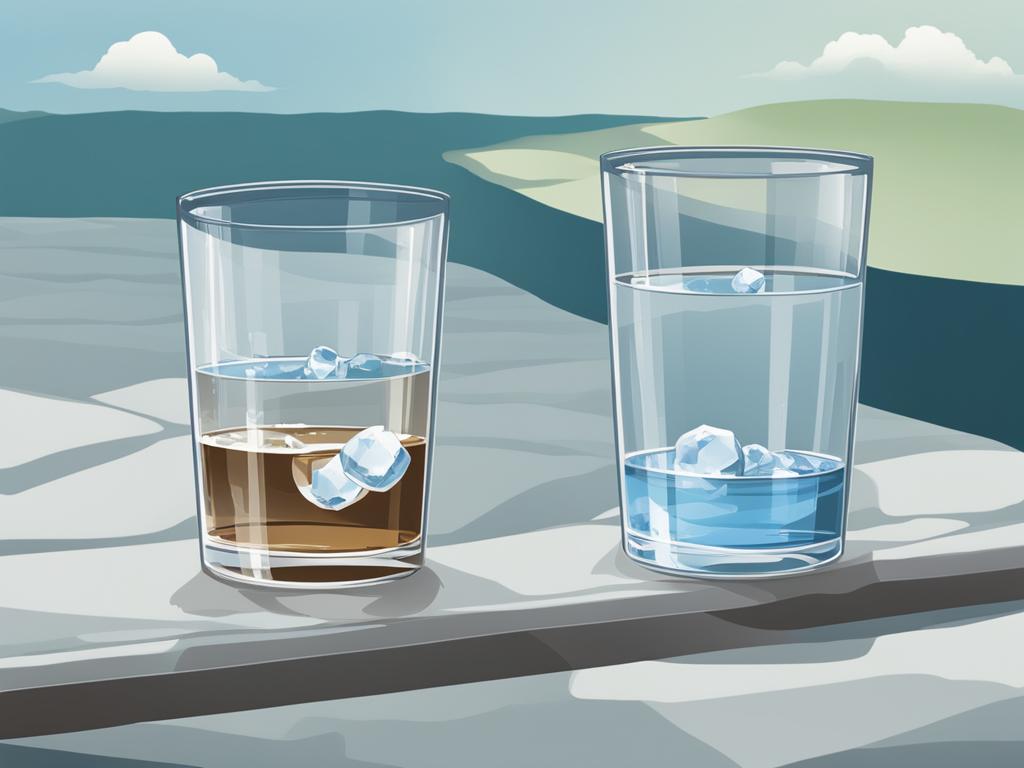
When it comes to hydrating, the choice between distilled and tap water is more significant than you might think. On one hand, distilled water offers purity unparalleled by tap variants, while on the other, tap water brings with it a blend of natural minerals and potential additives mandated by national water safety standards. Understanding their differences can help you make an informed decision about your water consumption.
Taste and Mineral Content Comparison
By undergoing an extensive purification process, distilled water is devoid of the mineral content in water that characteristically influences the taste of tap water, leading to a distinct, more neutral flavor profile. It’s essential to weigh the absence of naturally occurring minerals, such as calcium and magnesium, that not only provide nutritional benefits but also contribute to the sensory experience of drinking water.
Conversely, tap water may include a variety of dissolved minerals which not only health and taste, but also fulfill a portion of your daily mineral intake needs. The mineral content in tap water can vary greatly depending on geographic location and the source of the water. Here’s a glance at the typical mineral content found in both distilled and tap water:
| Mineral | Tap Water Content | Distilled Water Content |
|---|---|---|
| Calcium | Variable amounts* | None |
| Magnesium | Variable amounts* | None |
| Sodium | Variable amounts* | None |
| Fluoride | Usually added | None |
*Actual quantities vary based on local water supply and treatments
Safety Standards for Drinking Water
Regardless of your choice between distilled vs tap water, both must adhere to rigorous water safety standards to ensure they are fit for consumption. Tap water is regulated by the Environmental Protection Agency (EPA) to meet strict safety guidelines that govern the limits of contaminants and bacteria. Distilled water, while not typically regulated in the same manner, achieves purity through the distillation process, resulting in water that’s free from virtually all impurities, including harmful chemicals and microbes.
However, while distilled water may appeal as the safest choice, especially when considering contamination issues, safety standards for tap water are designed to keep it within consumable limits, often making it equally safe to drink. If faced with water that falls below these standards, opting for distilled water can serve as a prudent alternative.
Choosing between distilled and tap water might come down to personal preference, location, and sensitivity to taste. Understanding the nuances of each can empower you to make choices that align with your taste preferences and health considerations.
Debunking Myths: The Health Implications of Distilled Water
When it comes to understanding the health implications of drinking distilled water, a myriad of myths and misconceptions can lead to confusion. Dispelling these myths is crucial in appreciating the real effects of distilled water on our health.
A Closer Look at Mineral Intake from Water
You might have heard that drinking distilled water can deprive your body of essential minerals. However, most of our necessary mineral intake comes from the foods we eat, not the water we drink. Foods such as fruits, vegetables, nuts, and whole grains are rich in the minerals that water often lacks. Consider this contrast between common mineral sources:
| Mineral | Food Sources | Quantity in Distilled Water (mg/L) |
|---|---|---|
| Calcium | Dairy products, leafy greens | 0 |
| Magnesium | Nuts, whole grains | 0 |
| Potassium | Bananas, avocados | 0 |
| Sodium | Table salt, processed foods | 0 |
As you can see, the absence of minerals in distilled water should not be a concern as long as you maintain a balanced and varied diet.
Does Distilled Water Detoxify Your Body?
Another widespread belief is that distilled water acts as a detoxifying agent in the body. Detoxification, however, is primarily taken care of by your liver and kidneys. Our bodies are well-equipped to filter out toxins without depending on the type of water we consume. While distilled water is pure H2O without contaminants or minerals, it doesn’t enhance the body’s natural detoxification processes.
“Drinking distilled water is not harmful, and it does not detoxify your body. Most of the minerals your body needs come from the food you consume, not the water you drink.” – The Mayo Clinic
Understanding these facts helps clear the mist around the distilled water myths and supports informed decisions about your water consumption.
Understanding the Differences: Distilled Water vs Purified Water
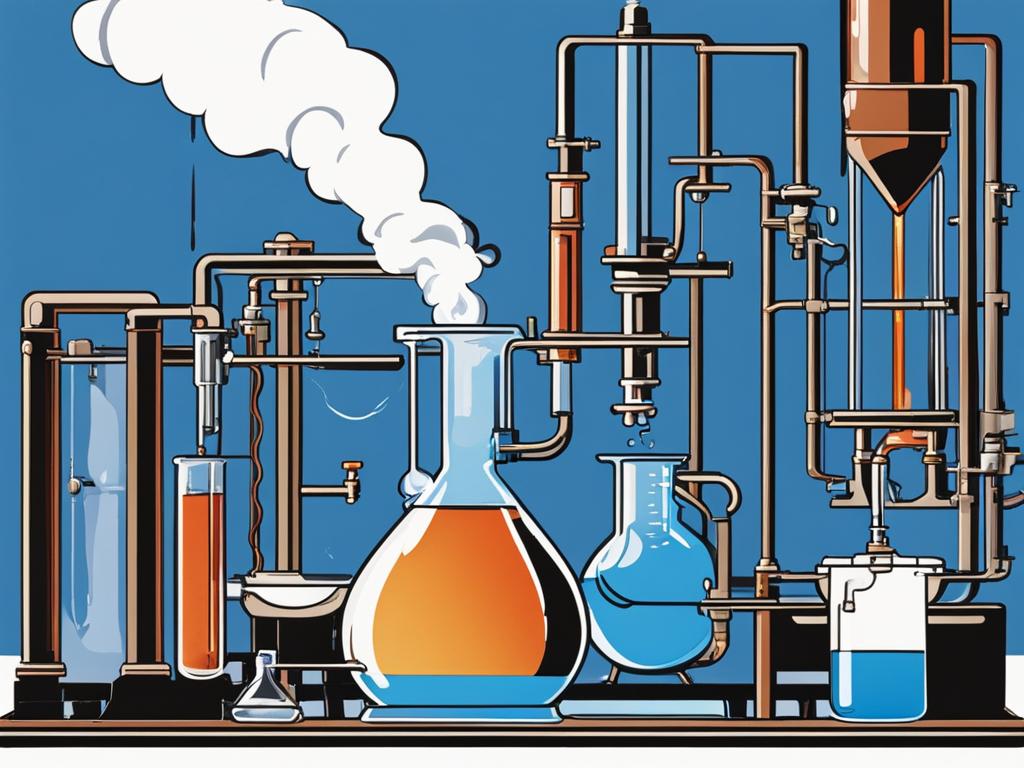
When exploring the various methods of water purification, it’s essential to recognize the unique properties that distinguish distilled water purification from other popular processes, such as reverse osmosis and the deionization process. While all aim to deliver safe, clean water, the techniques they employ differ significantly in terms of their end products.
Purification Processes Defined
The quest for purity in water leads to several advanced purification techniques. Reverse osmosis forces water through filter membranes, capturing unwanted molecules and particles, and is frequently used for both industrial and residential purposes. Deionization, on the other hand, employs ion-exchange resins to remove ionic impurities, making it a common choice for crafting ultra-pure water in laboratories.
Where Does Distilled Water Stand?
As a counterpart, distilled water purification is a method where water is boiled to steam and then condensed back into liquid form. This leads to the removal of both contaminants and vital minerals—a distinguishing factor that separates it from methods like reverse osmosis, which may allow some minerals to remain.
Let’s examine the characteristics and outcomes of these purification processes more closely:
| Method | Contaminants Removed | Minerals Retained | Common Usage |
|---|---|---|---|
| Reverse Osmosis | Yes (chemicals, bacteria, viruses) | Some | Home filtering systems, industrial processes |
| Deionization Process | Yes (ionic impurities) | No | Lab work, pharmaceutical manufacturing |
| Distilled Water Purification | Yes (nearly all contaminants) | No | Medical purposes, culinary applications |
Each method plays a pivotal role in ensuring that water meets the requisite standards for its intended use. If you’re searching for water in its purest form, perhaps for applications where mineral presence is unwanted, distilled water is the ideal choice. Remember that for daily consumption, the presence of minerals in water can contribute to your overall dietary needs, which is where alternative purified waters might offer more balance.
Can You Drink Distilled Water

As you ponder the question, “is distilled water potable,” it’s crucial to understand the safety and implications of drinking distilled water. Typically, distilled water is free of contaminants and pollutants, making it a safe choice, particularly if your local water supply is compromised.
Yet, one question looms large: does the absence of minerals in distilled water render it unsuitable for those who rely on their water supply for essential minerals and electrolytes? Let’s explore this further.
While considering distilled water for consumption, there are specific scenarios where it may indeed be beneficial:
- When traveling to areas where water quality is uncertain
- During emergency situations where the tap water has been compromised
- As a preferred option for those sensitive to waterborne contaminants
However, it’s also important to weigh potential drawbacks:
Although distilled water is potable, it lacks in minerals like calcium and magnesium, which play pivotal roles in our overall health.
With these considerations in mind, we’ve compiled a comparison chart to help you make an informed decision about whether to opt for distilled water or not:
| Criteria | Distilled Water | Tap Water |
|---|---|---|
| Mineral Content | None | Varies by location |
| Purity Level | High | Depends on local treatment |
| Suitability for Daily Consumption | Good for short-term or specific uses | Typically preferred for daily use |
| Electrolytes | None | Present |
| Flavor | Flat, due to no minerals | Can vary, often has distinct taste due to minerals |
To conclude, distilled water is indeed potable and can be consumed safely. Yet, be mindful of your dietary needs, particularly if they include mineral and electrolyte replacement.
The Industrial and Domestic Roles of Distilled Water

When considering distilled water uses, one often overlooks the extensive applications it holds outside of mere consumption. Its role in various industries arises from the absence of minerals, which can have detrimental effects when present. Whether it’s in industrial settings or right at your home, distilled water proves to be immensely versatile.
At a commercial scale, industrial water application of distilled water includes critical processes such as in the production of electronics, pharmaceuticals, and even in the automotive industry where distilled water serves as an integral component of cooling systems to prevent scaling and corrosion.
Distilled water at home has its advantages as well. Whether it’s for ensuring that your iron produces crisp, clean clothes without mineral build-up, or providing your plants with pure water that’s free of chemicals, distilled water is the go-to for those who understand the importance of maintaining product longevity and promoting a healthy environment.
| Use Case | Reason for Using Distilled Water |
|---|---|
| Medical Sterilization | Prevents mineral deposits on surgical instruments |
| High-Precision Laboratory Work | Ensures accuracy without contamination |
| Automotive Cooling Systems | Avoids scaling and corrosion over time |
| CPAP Machines | Prevents mineral dust from harming the user’s airways |
| Household Appliances (e.g., Irons) | Extends appliance life and improves effectiveness |
| Watering Plants | Eliminates the risk of chemical build-up in soil |
This just skims the surface of how distilled water is integrated into your world. Its utility is not limited to the examples provided; it permeates through countless other applications, many of which contribute to safeguarding and enhancing quality in products and processes you encounter daily.
Considering the Pros and Cons of Drinking Distilled Water
When you’re navigating the world of hydration options, the choice to drink distilled water comes with its own set of unique advantages and considerations. Let’s delve into what makes this type of water distinct and how it might impact your health.
Assessing the Health Benefits
One of the primary benefits of distilled water is its level of purity. Through the process of distillation, water is boiled into vapor and then condensed back into liquid form, leaving most impurities behind. This can provide you with a cleaner form of hydration, free from harmful chemicals and potential waterborne pathogens that sometimes lurk in untreated water sources. For those of you concerned about the drinking water health risks associated with contaminants, distilled water offers a sense of security.
Potential Negative Side Effects
However, distilled water isn’t without its drawbacks. Due to its lack of minerals and electrolytes, consuming distilled water exclusively could potentially lead to a decrease in the intake of these essential nutrients. Since electrolytes like sodium, potassium, and magnesium are vital for various bodily functions, drinking electrolyte-free water may not be the best choice for everyone, particularly for those individuals engaged in high-intensity physical activities or those already managing certain health issues.
Moreover, the very purity that makes distilled water appealing can also be a disadvantage. Without any dissolved substances, distilled water can absorb substances from the environment, including any chemicals from the containers in which it is stored, which may offset some of its purity benefits. It’s vital to store your distilled water in appropriate containers to mitigate this risk.
In summary, distilled water is a double-edged sword—offering exceptional purity yet lacking in essential minerals. As with any health decision, it’s about weighing the pros and cons and figuring out what works best for your lifestyle and wellness goals.
Navigating the Use of Distilled Water in Medical and Scientific Settings
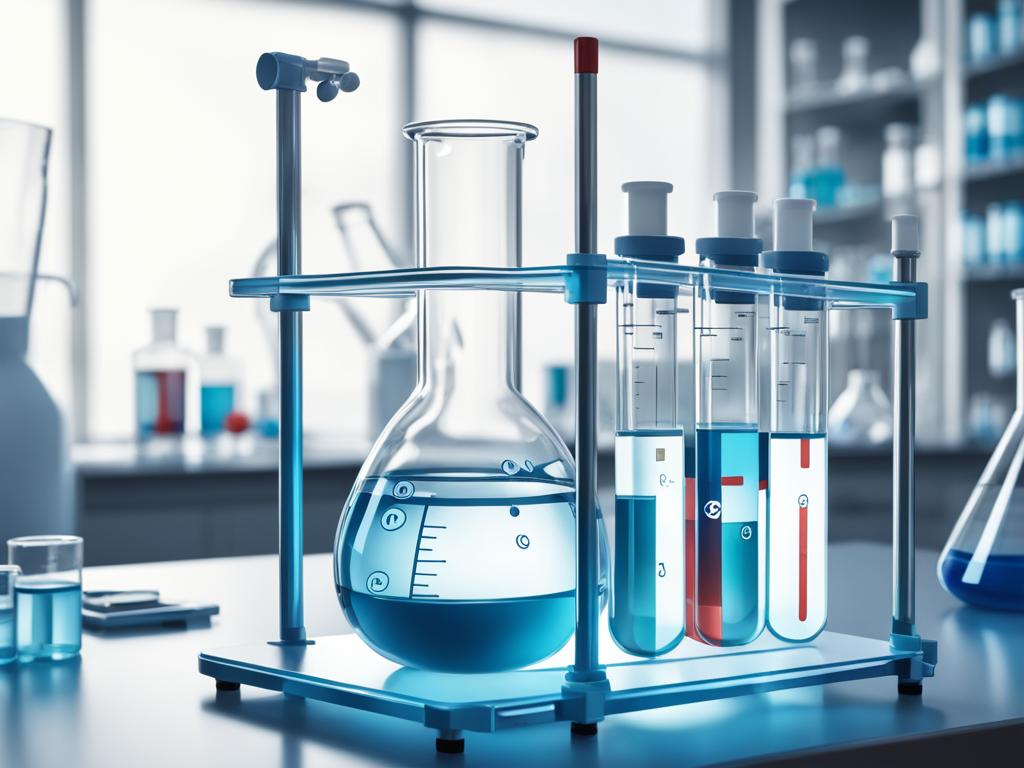
The significance of distilled water in medicine and its scientific use cannot be overstated. In realms where precision and sterility are imperative, distilled water serves as a keystone for a multitude of procedures. Its role as medical-grade water is essential, supporting activities that range from the sterilization of medical instruments to being the solvent in the preparation of various drugs and solutions.
Why exactly does distilled water play such an indispensable part in healthcare and laboratory settings? The answer lies in its unparalleled purity. Without any minerals or contaminants, distilled water ensures that no unwanted chemical reactions occur, which could potentially compromise clinical results or patient safety.
Let’s delve deeper into the specific functions distilled water serves in these critical fields:
| Application | Purpose | Beneficial Aspect |
|---|---|---|
| Sterilization of Instruments | Eliminating microbial life to prepare for medical procedures | Prevents residue that could harbor bacteria |
| Solution Preparation | Creating injections, reagents, and diagnostic fluids | Guarantees the absence of interfering ions |
| Lab Testing & Research | Conducting experiments and analyzing samples | Ensures accuracy and consistency in test results |
| Cleaning Medical Equipment | Safeguarding tools used in patient care | Minimizes deposits and stains on delicate instruments |
Considering your engagement with healthcare practices or scientific research, understanding the substantial role of distilled water might shape how you approach your own work. Whether you’re an industry professional or simply intrigued by the meticulous nature of medical and laboratory environments, it’s clear that the purity of water is more than a detail—it’s the foundation upon which the integrity of some of the most critical work depends.
How the Taste and Quality of Distilled Water Compares to Other Waters
When you sip a glass of distilled water, you’re experiencing the purest form of H2O. The unique traits of distilled water flavor are often subject to discussion, as it lacks the minerals that typically add a subtle zest to your glass of water. Understanding how these factors contribute to the sensory experience can be quite revealing.
Flavor Profile: Missing Minerals?
The absence of mineral content in water types is palpable, particularly so with distilled water. Without minerals like calcium, magnesium, and sodium, which are present in tap and mineral waters, distilled water has a characteristic flat or bland taste. Some connoisseurs even say that distilled water can highlight the flavor of foods and beverages it’s paired with, due to its neutrality.
Comparing Purity Levels Across Water Types
Water purity comparison is where distilled water really stands out. Because of its rigorous distillation process, it removes not only contaminants and impurities but also strips away any naturally occurring minerals. This renders distilled water in its nearly mineral-free state, known for its high purity level compared to spring or mineral water varieties.
If you’re curious about how different water types rank in terms of both mineral content and purity, consider the following comparison:
| Water Type | Mineral Content | Purity Level |
|---|---|---|
| Distilled Water | Nearly None | Highest |
| Spring Water | Varies based on source | Moderate to High |
| Mineral Water | High | Moderate |
| Tap Water | Moderate | Low to Moderate |
Remember, the choice of water not only affects your palate but also your overall health. Water that’s high in mineral content may offer nutritional benefits, while the unmatched purity of distilled water can be crucial in specific health and dietary contexts. Whichever you choose, staying informed ensures that your water selection aligns with your wellness goals and lifestyle preferences.
Conclusion
When it comes to selecting the ideal type of water for your consumption, the choice is deeply personal and hinges upon a myriad of factors unique to your lifestyle and health needs. Assessing whether distilled water aligns with your hydration requirements involves a careful consideration of its impact on health and how it measures up against your local water quality and personal taste preferences.
Is Distilled Water the Right Choice for You?
Making the water drinking choice– notably, opting for distilled water- is a judicious process. If your local water supply carries with it the burden of contaminants, or perhaps if you find yourself in need of reliably pure water in a medical or scientific capacity, distilled water may present a highly beneficial option. However, you should balance this against the need for natural minerals and electrolytes, which distilled water does not supply. Particularly for those of you who might not receive ample minerals from dietary sources, or athletes needing to replenish electrolytes, a different water choice may be more apt.
Key Takeaways on Drinking Distilled Water
The distilled water conclusion is not a blanket endorsement or dismissal, but rather a nuanced understanding that distilled water serves particular needs and scenarios. Health advice on water consumption typically promotes a balanced intake of minerals, which distilled water does not provide. Yet, in situations where purity and absence of contaminants are paramount, distilled water shines. Weighing the pros and cons, considering the potential for contaminants from storage containers, and understanding the implications for dental health are all essential steps to making an informed and healthy water consumption decision.
FAQ
Is drinking distilled water safe for your health?
Yes, drinking distilled water is considered safe as part of a balanced diet. It lacks minerals like calcium and magnesium, but these can be obtained from food.
What exactly is distilled water?
Distilled water is produced by boiling water and then condensing the steam back into a liquid. This process removes 99.9% of impurities and minerals, resulting in pure H2O.
How does the taste and mineral content of distilled water compare to tap water?
Distilled water tastes flatter because it’s devoid of minerals that enhance the flavor, unlike tap water, which usually contains minerals and added fluoride.
Are there health implications associated with mineral intake from distilled water?
Distilled water itself does not provide significant minerals. Essential minerals are primarily acquired through dietary sources and not through water consumption alone.
Does distilled water help detoxify your body?
Contrary to some myths, distilled water does not significantly detoxify the body. Detoxification is a complex process handled by various body systems.
How is distilled water different from other forms of purified water?
Distilled water undergoes a process that removes both contaminants and minerals, while other methods like reverse osmosis and deionization typically preserve some mineral content.
Can you drink distilled water?
Yes, distilled water is potable and generally safe to drink. It can be a preferable option when tap water is contaminated with harmful pollutants.
What are the common uses of distilled water in industrial and domestic settings?
Distilled water is used for medical instrument sterilization, in laboratories, in automobiles, with CPAP devices, and for household activities like ironing and watering plants.
What are the benefits of drinking distilled water?
The main benefit of drinking distilled water is its high purity level, which reduces exposure to certain chemicals and pathogens. It also provides pure hydration without any additives.
Are there any negative side effects to drinking distilled water?
Potential downsides include the absence of taste-enhancing minerals, a possible contribution to nutrient deficiencies, and a lack of electrolytes for those who may need them, such as athletes.
How is distilled water used in a medical and scientific context?
In medical and scientific settings, distilled water’s high purity is essential for sterilizing instruments, preparing for medical procedures, and ensuring accurate lab test results.
How do the flavor and purity of distilled water compare to other types of water like spring or mineral water?
Distilled water is often described as tasting flat because it lacks minerals that contribute to the taste found in spring or mineral waters. Its purity level is typically much higher than other water forms.
Leave a Reply
You must be logged in to post a comment.