

Ever wondered why your pasta always seems to dance around at a consistent frenzy when you’ve got the heat cranked up? This is because you’ve hit the water’s boiling temperature, a fascinating natural phenomenon that’s both a staple in the kitchen and a cornerstone in scientific experimentation. At sea level, the normal boiling point occurs when the oppressive force of the atmosphere relents, equating to the rebellious vapor pressure of heated water. You’re witnessing vaporization in spectacular action at exactly 212°F (100°C), the temperature where water becomes vapor under sea-level atmospheric pressure. It’s an elegant, albeit steamy, display of physics that dictates how and when water decides to take its gaseous form.
Understanding the boiling point isn’t just for those donning white lab coats; it’s knowledge that serves you every time you step into the kitchen. Whether you’re a culinary enthusiast eager to fine-tune your boiling skills or a curious mind keen on the quirks of physics, grasping this concept will elevate your thermal ventures with H2O.
Key Takeaways
- The boiling point is a key determinant for various cooking techniques and scientific studies alike.
- At the normal boiling point, the water’s vapor pressure is in harmony with sea-level atmospheric pressure, paving the way for vaporization.
- Water boils at 212°F (100°C) under standard atmospheric conditions, marking a crucial temperature for recipes and experiments.
- Knowledge of the boiling temperature plays a pivotal role in achieving culinary perfection and understanding thermal dynamics.
- A grip on these basics will enable you to adjust your boiling practices to accommodate for differences in elevation and atmospheric pressure.
Understanding the Boiling Point Phenomenon
When you’re trying to unravel the mysteries of cooking or simply making a cup of tea, comprehending the forces at play during the boiling of water is fundamental. The boiling point, however, is not solely limited to the kitchen – it’s a critical concept in various scientific and industrial processes, all of which involve the delicate balance between vapor pressure and heat transformation.
Definition of Boiling Point
Simply put, the boiling point definition is the temperature at which a liquid’s vapor pressure matches the atmospheric pressure around it, allowing the liquid to form gas rapidly. At sea level, water boasts a stable boiling point of 212°F (100°C), a figure that not only cooks swear by but also scientists and engineers.
Vaporization and Vapor Pressure Dynamics
Let’s dive a bit deeper into the relationship between vaporization and vapor pressure. Imagine water molecules, all heated up, moving more aggressively as you crank up the temperature. These molecules create pressure against their gaseous ceiling, which we know as vapor pressure. As you continue to apply heat, the melee between water vapor and atmospheric pressure intensifies until the former triumphs, leading to the enthralling spectacle of boiling water.
It’s a captivating show of heat transformation—from the gentle warmth of a hot spring to the fierce bubbling cauldron atop your stove, all orchestrated by a set of physical laws that are as precise as they are unforgiving. The key takeaway is the marvelous coordination it takes between heat, pressure, and state change to produce that rolling boil that marks the pinnacle of vaporization.
Factors Influencing Water’s Boiling Temperature

When you’re filling up a pot to boil water, have you ever considered how the environment around you can affect the time it takes to heat up to a rolling boil? The relationship between atmospheric pressure and the boiling temperature of water is not only a topic of scientific curiosity but also has practical implications in your daily life, especially when it comes to cooking.
The Role of Atmospheric Pressure
Atmospheric pressure plays a significant role in determining the boiling temperature of water. If you’ve ever noticed that water boils faster on a mountain top than at the beach, you’ve witnessed atmospheric pressure in action. Essentially, the higher the pressure exerted by the air on the water’s surface, the more energy the water molecules need to break free and become vapor, which increases the boiling temperature.
Altitude Adjustments to Boiling Point
Now, let’s address how altitude plays into this equation. As you ascend higher above sea level, atmospheric pressure declines, resulting in a decrease in boiling temperature. This means that in high-altitude locations, your pasta might take a bit longer to cook because the water begins to boil at temperatures lower than the 212°F you’re accustomed to at sea level.
| Altitude (feet above sea level) | Atmospheric Pressure (millibars) | Boiling Temperature (°F) |
|---|---|---|
| 0 (Sea Level) | 1013.25 | 212 |
| 1,000 | 898.76 | 210 |
| 2,000 | 794.00 | 208 |
| 5,000 | 540.48 | 203 |
| 10,000 | 264.36 | 193 |
For those of you residing or visiting higher altitudes, it’s essential to account for these changes when you’re following a recipe. Understanding the intricate dance between atmospheric pressure, altitude, and boiling temperature will help you ensure that your culinary creations come out perfectly every time, without underdone pasta or overcooked vegetables.
What is the Boiling Temperature of Water?
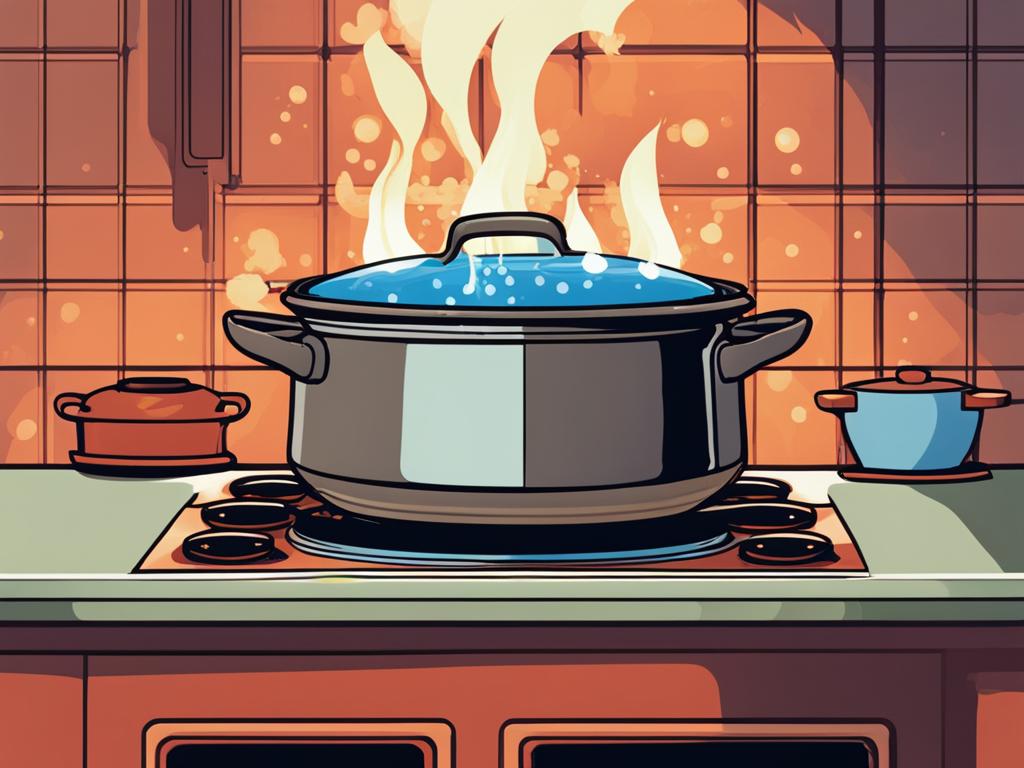
Have you ever wondered why recipes often specify that water should reach a “rolling boil”? That’s because the water boiling point is crucial for both cooking and scientific applications. At sea-level, the standard boiling temperature is at 212°F (100°C), a figure deeply ingrained in the culinary world and scientific studies alike.
Understanding the water boiling point is not just for scientists; it’s important for your everyday life, from making the perfect cup of tea to ensuring that your pasta is cooked al dente. The magic of this temperature is when water’s vapor pressure is equal to the atmospheric pressure surrounding it, allowing it to turn from liquid to gas.
- Boiling water for making pasta or blanching vegetables? You’d wait for the thermometer to hit 212°F (100°C).
- Looking to sterilize utensils or baby bottles? Again, achieving that sea-level water boil ensures effective cleaning.
It’s a simple but significant scientific fact: the standard boiling temperature serves as your baseline for countless recipes and even for disinfection purposes, thanks to its ability to eliminate most bacteria and pathogens found in water.
Remember, if you’re residing at or near sea-level, the unwavering vigil of your thermometer at 212°F (100°C) is the green light for all your boiling endeavors – a culinary checkpoint that’s been guiding cooks and scientists for centuries.
Thermal Exploration: Heating Water to a Boil

Embarking on the journey of heating water, each degree climbs through distinct stages. Each phase carries its own indicators, guiding you in culinary endeavors or simply understanding the transformation from tepid to tumultuous.
The Quiver Phase of Water Heating
The initiation of this thermal symphony begins with the quiver phase, where water temperature ranges between 140 to 170°F. Here, you’ll observe small bubbles starting to form, attaching like silver pearls against the sides and bottom of the pan. It’s a whisper of what’s to come, a gentle easing into the realm of heating, before the crescendo of bubbles becomes the dominant force.
From Sub-simmer to Full Simmer
The narrative then progresses to the sub-simmer phase. Operating between 170 to 195°F, this phase sees an increase in bubble production. They rise in a steady stream, inching closer to the surface, speaking to the building tension in the unseen depths of liquid space. As the heat intensifies, pushing the limits of the water temperature range to the brink of 195 to 212°F, a full simmer boldly takes the stage. In a vigorous display, bubbles now break the surface, and at the pivotal moment of 212°F, they evolve into a robust, rolling boil that’s essential for many cooking processes.
Boiling Point Variations at Different Altitudes

Embarking on a culinary journey in the mountains or living at high elevations can introduce you to the unique challenges of high altitude cooking. It might puzzle you why your favorite recipes take longer to cook or why your pasta is consistently undercooked. The secret to these kitchen conundrums lies in the water boiling variations encountered at higher landscapes.
High Altitude Cooking Challenges
As you ascend to greater heights, the atmospheric pressure drops. This decline in pressure causes water to reach its boiling point at lower temperatures. At sea level, the boiling point of water is a steady 212°F (100°C), but for every 500 feet of elevation gain, it drops roughly by 1°F. These variations mean that boiling water at high altitudes might not have enough heat to cook food through, leading to unevenly cooked meals and prolonged preparation times.
Role of a Pressure Cooker in Cooking at Altitude
Introducing the pressure cooker, a game-changer for chefs and home cooks braving the high altitude environment. By securing an airtight seal, the pressure cooker traps steam and increases the internal pressure. This rise in pressure allows water to boil at higher temperatures, closer to the coveted 212°F. The pressure cooking benefits are manifold—it cuts down cooking time considerably and ensures that food is cooked evenly and thoroughly, regardless of altitude. Say goodbye to the frustration of undercooked beans or grains with this essential piece of high-altitude kitchen equipment.
Remember, altitude should not dictate the limits of your culinary repertoire. Understanding the thermal dynamics of your environment equips you to make the necessary adjustments to deliver delectable results every time you set foot in the kitchen, no matter the altitude.
The Science of Vapor Pressure and Boiling
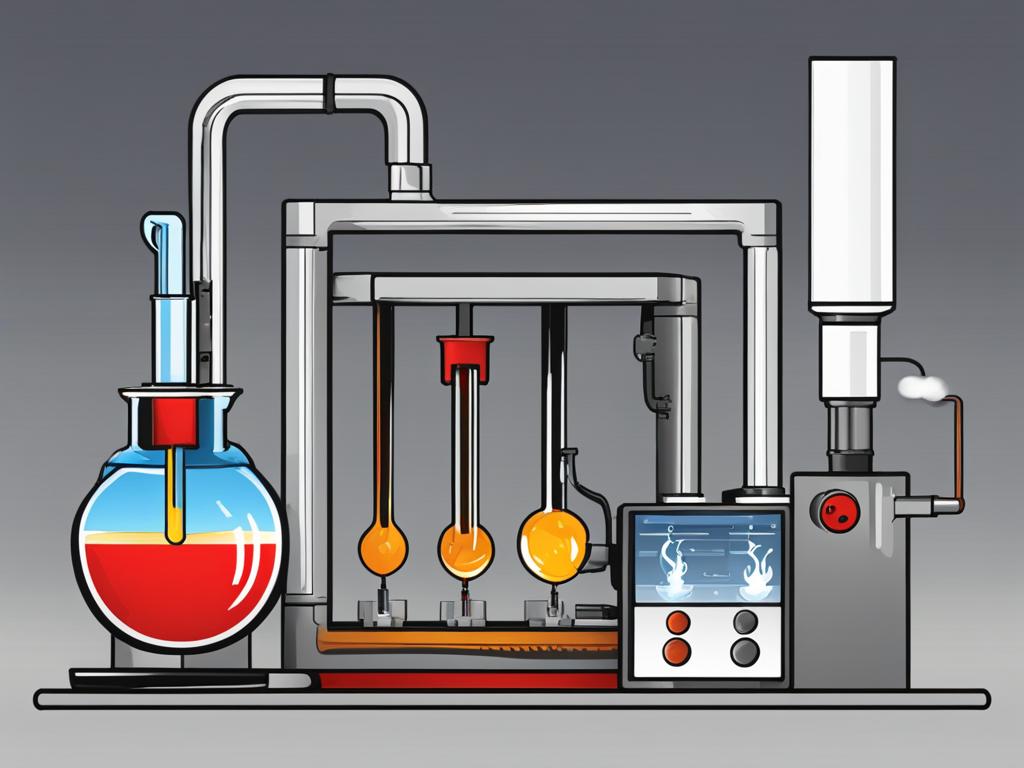
When you’re trying to understand the science of boiling water, a key concept to grasp is vapor pressure understanding. In simple terms, vapor pressure is the force that a liquid’s vapor exerts when it’s in a state of equilibrium with its own liquid form. This might sound technical, but it plays a critical role in the everyday act of boiling a pot of water.
In the science of boiling water, increasing the temperature of the liquid increases its vapor pressure. It’s like turning up the volume on your favorite song—the higher the volume, the more you feel the music. With vapor pressure, as you turn up the heat, the intensity of the pressure grows until it reaches the point where it can overpower the surrounding atmospheric pressure. That’s when boiling happens, and you see those lively bubbles rising to the surface and breaking free as steam.
But why does water boil at different temperatures depending on where you are? If you’ve ever boiled water while camping in the mountains, you might have noticed it happens faster than when you’re at the beach. That’s due to the atmospheric pressure being lower at higher altitudes. So the vapor pressure doesn’t have to work as hard to match the surrounding pressure—this occurs at a lower temperature.
- Vapor Pressure increases with temperature
- Boiling occurs when Vapor Pressure equals Atmospheric Pressure
- At higher altitudes, lower Atmospheric Pressure means water boils at a lower temperature
Remember, whether you’re a culinary enthusiast or a science buff, knowing this concept helps demystify why recipes often require adjustments for altitude. It’s not just about the time—it’s about the pressure too.
Analyzing Boiling Myths and Facts
Dispelling common misconceptions is crucial when it comes to the science of boiling water. Equipping yourself with boiling water facts, rather than myths, can improve your culinary practices and understanding of basic physics. Let’s delve into some common beliefs and clarify what actually impacts the boiling process.
Does Cold Water Boil Faster?
A peculiar myth you might have encountered is the idea that cold water boils faster than hot water. It’s easy to be misled by anecdotal experiences, but in reality, the laws of physics refute this claim. To boil, water must reach 212°F at sea level, irrespective of whether it starts cold or hot. The time it takes to reach the boiling point is directly related to the starting temperature, so naturally, warmer water reaches boiling faster than cold.
Effect of Salt on Boiling Point
Another nugget of kitchen lore is the effect of salt on boiling water. It’s often said that adding salt to your pot will make the water boil quicker. However, when examining boiling water facts, the truth is that salt can slightly elevate the boiling point of water, yet the change is exceptionally small and hardly impactful in standard cooking. What’s really occurring when you add salt is the creation of nucleation sites, which makes it easier for bubbles to form, giving the illusion of boiling faster due to increased bubble activity.
| Myth/Fact | Explanation | Culinary Impact |
|---|---|---|
| Cold Water Boils Faster (Myth) | Water must reach 212°F; starting temperature determines the time taken to reach boiling point. | No benefit to starting with cold water for quicker boiling. |
| Salt Effects Boiling (Fact with caveats) | Adding salt raises boiling point slightly; main effect is better bubble formation. | Minimally alters boiling point; may slightly improve boiling appearance and seasoning. |
Understanding these boiling water myths and facts ensures you’re armed with the right knowledge for efficient cooking. Remember, when it comes to boiling water – the science is clear, so let’s not let old wives’ tales lead us astray. Next time you set a pot on the stove, remember these salt effect on boiling insights for a better culinary experience.
Practical Tips for Cooking with Boiling Water
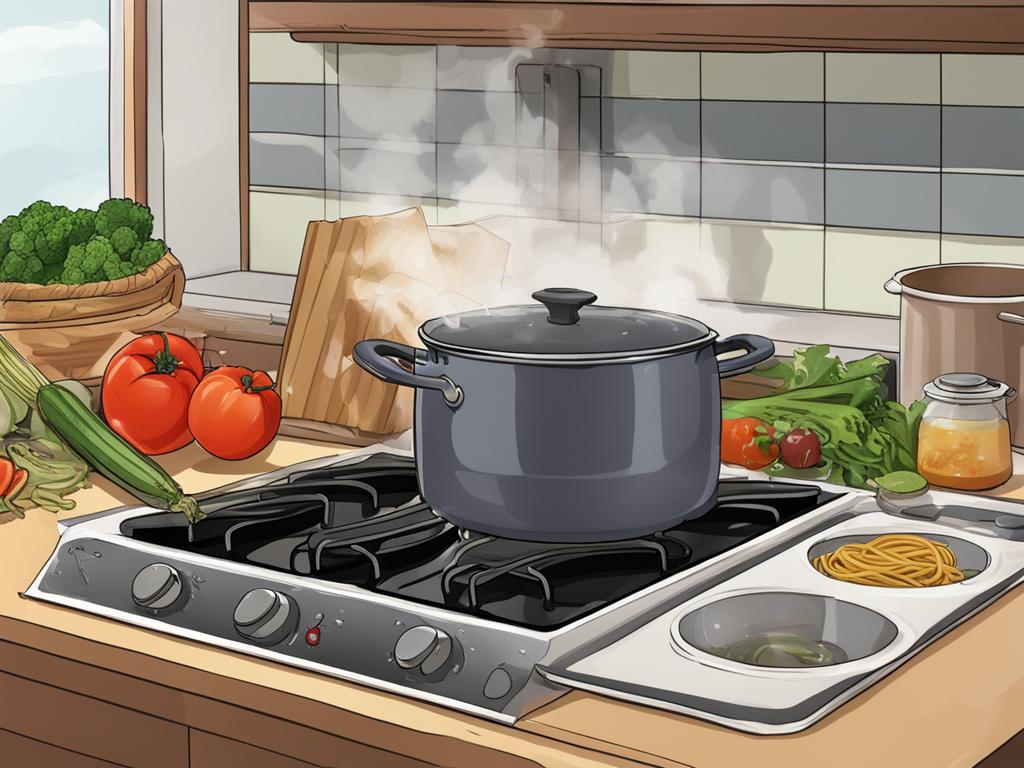
Mastering the art of cooking with boiling water is essential for both amateur chefs and culinary enthusiasts alike. The act of bringing water to a boil seems straightforward, yet the subtle differences in temperatures can impact the texture and taste of your food. For example, while poaching temperatures require a gentle environment not exceeding 170°F, fully boiling water is needed to properly cook grains and pasta.
Choosing the Right Temperature for Different Foods
Delicate foods like fish and eggs need lower temperatures, where the water is hot enough to cook, but not so vigorous as to break them apart. Whether you’re poaching, steaming, or simply trying to achieve that perfectly al dente pasta, temperature control is key. Here are some boiling water tips to ensure your dishes turn out just right:
| Food Item | Desired Temperature | Boiling Characteristics |
|---|---|---|
| Poached Eggs | 145-160°F | Gentle, barely simmering with minimal movement |
| Pasta | Rolling Boil – 212°F | Rapid, turbulent bubbles for even cooking |
| Steamed Vegetables | 185-195°F | Steady, robust simmer with constant steam |
| Melting Chocolate | 115-120°F | Barely simmering water, ideally using a double boiler |
Adjustments for Perfect Poached Eggs and Pasta
When it comes to poached eggs, achieving the perfect balance of tender whites and runny yolks can be tricky. It’s essential to maintain a temperature range between 145 to 160°F, where the water is hot enough to set the eggs but gentle enough to prevent them from falling apart.
For pasta, bring the water to a rolling boil – this is 212°F of pure kinetic energy that ensures each strand or piece is cooked uniformly. Be sure to stir occasionally to prevent sticking and check for doneness a minute or two before the recommended cooking time. Your pasta should be al dente, holding its shape but soft enough to bite without resistance.
Utilizing these temperatures and techniques will elevate your cooking game, leading to more consistent and appealing dishes. So next time you’re in the kitchen, remember these boiling water tips for success in all your culinary ventures.
The Material Impact: Boiling in Various Vessels
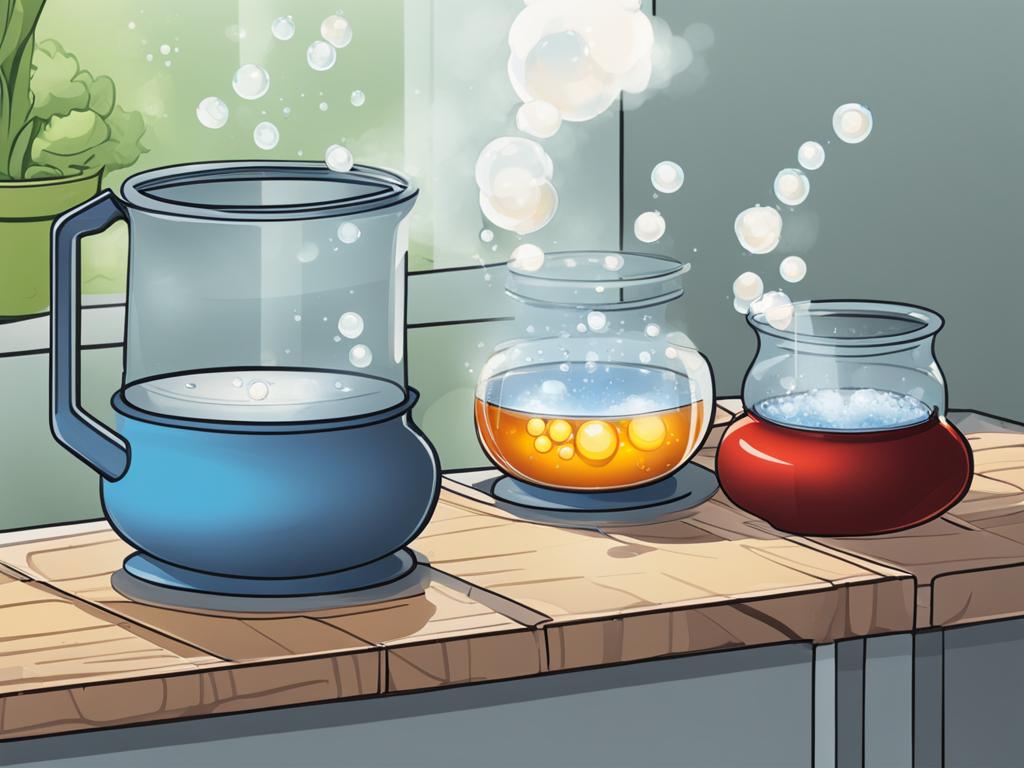
When you’re boiling water for your favorite recipes, have you ever considered how the material of your cooking vessel could affect the outcome? It’s not just about the size and shape; the very substance that your pot or kettle is made from can have a significant influence on water boiling temperatures. From stainless steel to glass and ceramic, each material interacts with heat and water molecules differently, which can lead to variations in when those bubbles start to dance.
Let’s delve into how different materials stack up when you’re heating up water. We’ve boiled down the facts (pun intended) to give you a clear view of the material impact on boiling. Did you know that metal vessels typically conduct heat more efficiently and can shorten your waiting time for that rolling boil? Or that glass pots, while slower to heat up, may provide a more even heat distribution? Below is a table that summarily compares various common boiling water vessels based on material:
| Material | Conductivity | Time to Boil | Temperature Consistency |
|---|---|---|---|
| Stainless Steel | High | Short | Variable |
| Aluminum | Very High | Very Short | Variable |
| Cast Iron | Low | Longer | Even |
| Copper | Extremely High | Shortest | Variable |
| Glass | Low | Longer | Even |
As you can see, materials such as copper offer one of the fastest ways to get water boiling, while glass can take a bit longer but provides greater temperature consistency, which might be crucial for delicate culinary applications. Make sure to factor this in next time you’re deciding which pot to pull out of the cabinet.
In conclusion, the interplay between the materials of the boiling water vessels and the water itself is not only a matter of chemistry but also one of practicality in cooking. So, next time you decide to boil water, take a moment to consider your vessel’s material—it’s not just a container; it’s a key player in your cooking process.
How to Adjust Your Cooking for the Boiling Point

When you’re cooking at different elevations, the boiling point of water isn’t a constant—it changes with altitude, which can affect your dishes. To keep your culinary creations on track, you may need to make some adjustments.
Understanding Your Elevation
To ensure your recipes turn out as intended, begin by identifying the elevation where you are cooking. This knowledge is pivotal for adjusting cooking elevation techniques, as the boiling point of water decreases by roughly 1.8°F (1°C) for every 1,000 feet (approximately 305 meters) above sea level.
Reacting to Pressure Changes in Recipes
When high altitude enters the mix, it throws a wrench into your cooking duration and temperatures due to the pressure changes. Dishes that rely on the boiling point, like pastas and stews, may taste off if you don’t consider these boiling point adjustments. For precision baking, like soufflés and breads, reacting to pressure changes is even more critical for the desired rise and texture.
| Elevation (feet) | Approximate Boiling Point (°F/°C) | Adjustment Recommendation |
|---|---|---|
| Sea Level (0) | 212°F / 100°C | No adjustment needed |
| 3,000 | 206°F / 96.7°C | Increase cooking time slightly |
| 5,000 | 203°F / 95°C | Increase cooking time or temperature for water-based cooking |
| 7,000 | 198.4°F / 92°C | Significant adjustments needed for baking and boiling |
| 10,000 | 193°F / 89.5°C | May need to use a pressure cooker |
Remember to keep an eye on your dishes and make adjustments as needed. With practice, you’ll find the perfect balance to adapt your cooking methods to the elevation and pressure changes of your environment.
Conclusion
As we wrap up our exploration into the boiling temperature of water, it’s clear that the standard 212°F (100°C) at sea level is more than a mere data point—it is a fundamental benchmark influenced by a variety of dynamic factors. Your altitude, the surrounding atmospheric pressure, and even the choice of your cooking vessel play pivotal roles in determining the precise boiling point of water.
In the realm of cooking and boiling point summary, these insights can sharpen your culinary skills, allowing you to adjust your techniques to suit environmental conditions. This knowledge transcends the kitchen, extending its utility to scientific studies where accuracy in understanding phase changes and heat transfer is critical.
In summary, while water boiling temperature conclusions might initially seem straightforward, delving into the underlying principles reveals a complex interplay of variables. Armed with this information, you’re well-equipped to achieve the outcomes you desire, be it in preparing a flawless dish or conducting meticulous scientific experiments. Remember, a good grasp of these principles ensures precision in both your pot and your project.
FAQ
What is the boiling temperature of water at sea level?
At sea level, the boiling temperature of water is 212°F (100°C) when its vapor pressure is equal to the atmospheric pressure.
How does altitude affect the boiling point of water?
Because atmospheric pressure decreases with altitude, water will boil at a lower temperature the higher you go. This can affect cooking times and temperatures.
What is the definition of a liquid’s boiling point?
A liquid’s boiling point is the temperature at which its vapor pressure is equal to the surrounding atmospheric pressure, allowing it to vaporize into gas.
What is vapor pressure and how does it relate to boiling?
Vapor pressure is the force exerted by the vapor of a liquid when it is in equilibrium with its liquid form. As a liquid is heated, the vapor pressure increases, and it will boil once it equals the atmospheric pressure.
What are the phases of water heating before it reaches a boil?
Before boiling, water enters a “quiver” phase between 140 to 170°F with small bubbles forming at the bottom. From 170 to 195°F, it’s the sub-simmer phase, and then a full simmer from 195 to 212°F before reaching a full rolling boil.
Does adding salt to water make it boil faster?
While adding salt to water does increase its boiling point marginally, it does not boil faster. However, the salt can create nucleation sites, making it seem like water reaches boiling more quickly.
Why is it necessary to adjust cooking techniques at higher altitudes?
Higher elevations have lower atmospheric pressure, causing water to boil at lower temperatures. This impacts cooking times and can affect the texture and doneness of foods, hence the need for adjustments.
Can the material of the cooking vessel affect boiling temperature?
Yes, the boiling temperature can be impacted by the vessel’s material as different materials can cause water to stick to the sides and bottom, thereby influencing the temperature at which bubbles form and escape as steam.
Is it true that cold water boils faster than hot water?
No, this is a myth. Water must reach the same boiling point of 212°F at sea level to boil, whether it starts cold or warm. The initial temperature does not affect the boiling speed.
How do pressure cookers help with high altitude cooking?
Pressure cookers combat reduced atmospheric pressure at higher altitudes by increasing the internal pressure. This enables water to boil at temperatures closer to sea-level boiling point, achieving proper cooking conditions.
What temperatures are ideal for poaching versus simmering when cooking?
Gentle poaching is ideal between 140 to 170°F, while a full simmer, suitable for steaming and melting chocolate, occurs from 195 to 212°F.
How can I find out the elevation of my location for cooking?
Elevation data can be obtained through various sources, such as topographic maps, GPS devices, smartphones, or visiting a local government website with geographic information.
Leave a Reply
You must be logged in to post a comment.