
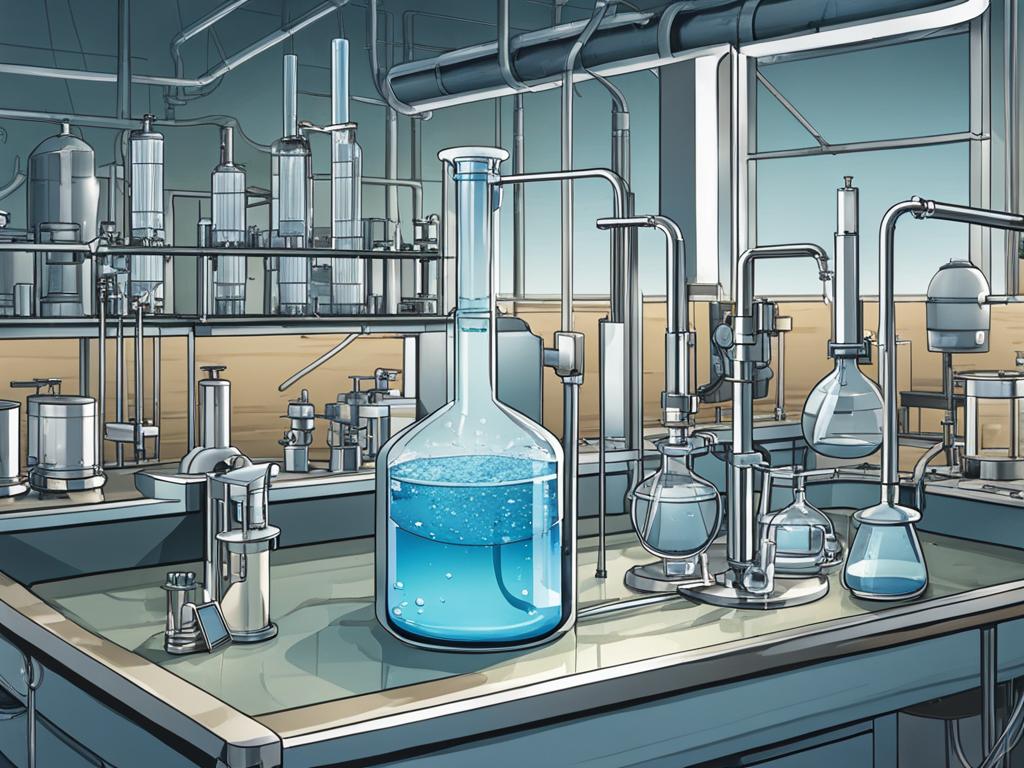
Have you ever wondered what deionized water is and why it’s so pivotal in countless industries? To satisfy your curiosity, deionized water is the result of an advanced water purification process that strips water of all its ions, leaving it pure and charge-free. The benefits of deionized water are manifold, making it an integral component in realms such as medical, biotechnology, and microelectronics. As a savvy consumer or business owner, grasping the uses of deionized water and its pivotal role in water filtration systems can significantly impact your daily operations, ensuring you’re at the cutting edge of purity and efficiency.
Whether you’re exploring the idea of implementing deionized water systems or just keen on understanding this powerful substance, you’re in the right place. Unlock the potential of water in its purest form and discover how it could elevate your quality of life or operational standards.
Key Takeaways
- Deionized water is a type of purified water free from all ions, making it a neutral substance.
- The process of water purification to create deionized water is critical for industries that demand high purity levels.
- Understanding the benefits of deionized water helps you appreciate its value in medical, pharmaceutical, and technological applications.
- Exploring the uses of deionized water can lead to better water filtration choices at home and work.
- Knowledge of deionized water is essential for industries where cleanliness and the prevention of contamination are non-negotiable.
The Creation Process of Deionized Water
When you delve into the intricacies of the water deionization process, you’ll find a fascinating journey where science transforms one of our most familiar resources—water—into a highly purified water state. Let’s explore how this transformative change manifests, bringing about the impeccably clean water essential for various applications.
How Electrically Charged Resins Work
Imagine passing water through a maze of minuscule, electrically charged beads—that’s essentially what happens inside a deionization unit. These beads, known as ion-exchange resins, are key players in the water purification stage. They effectively grab hold of dissolved salts within water, swapping them out for hydrogen and hydroxide ions to generate uncontaminated H2O. The physical and chemical allure of these resins, with their ion-attracting capabilities, makes them an indispensable tool in producing purified water.
Conventional Water Transformation
What starts off as conventional tap water, brimming with various dissolved ions, can be transformed through these resins into what scientists refer to as a ‘true water blank’. This isn’t just a fancy term—it’s a critical form of water that is void of interfering substances, providing a clean slate for any added ingredients and assuming their chemistry without a hitch. This degree of purity is paramount in fields where even the slightest of mineral presence can significantly influence outcomes.
Comparison to Other Purification Methods
While the quest for purified water isn’t new, the way deionization completes it is quite distinct compared to other methods. Here’s a comparative evaluation to showcase exactly how:
| Purification Method | Process | Removes Minerals | Removes Organics/Microbes |
|---|---|---|---|
| Distillation | Boiling water into vapor, then condensing | Most | Some |
| Reverse Osmosis | Water forced through a semipermeable membrane | Many | Some |
| Deionization | Electrically charged resins attract and remove ions | Almost all | No |
Note that while both deionized and distilled water can be seen as twins in purity, they have their differences. Deionization specifically targets mineral ions, making it a specialist in its field—ideal for scenarios where the precise absence of ions is non-negotiable.
Understanding the dynamics of the water deionization process not only heightens our appreciation for this form of water treatment but also clarifies why industries opt for deionized over simply purified or distilled water. So, whether it’s for preparing a laboratory reagent or rinsing microchips, the result is water that’s truly uncompromised, ready to contribute to scientific precision and industrial excellence.
What is Deionized Water and Why Is It Important?
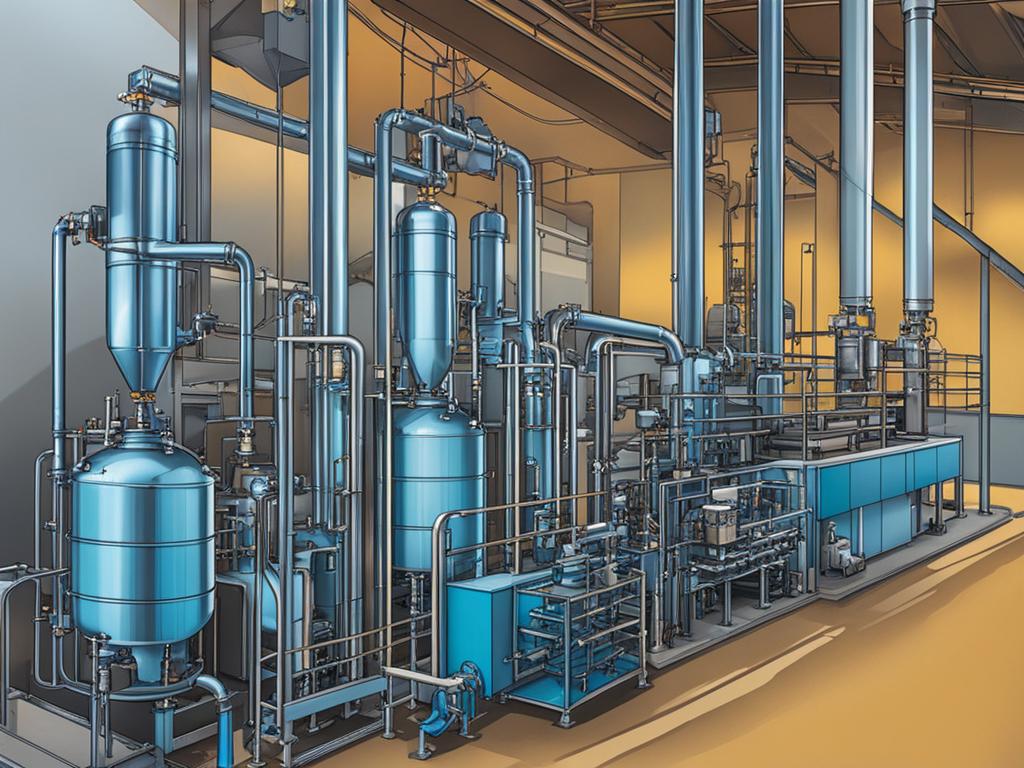
When you think of water, purity might be one of the first qualities that come to mind. However, not all water is created equal, which is where the importance of deionized water stands out. Deionized water is meticulously crafted through ion removal, a process that strips water of its mineral ions like sodium, calcium, and many others. The result is water that meets the high standards of water purity essential for many pure water applications.
Imagine water as a blank canvas; any presence of ions can taint its purity, impacting reactions in sensitive environments. Deionized water’s role extends beyond just an ingredient – it’s a necessity for accurate results and product safety. This is particularly true in the medical sector, where the slightest impurity could compromise the integrity of health products.
- Electronics Industry: Prevents metal ion deposition that could lead to faulty circuitry.
- Pharmaceuticals: Serves as a solvent, ensuring no ion contamination alters medicinal compositions.
- Scientific Research: Provides a controlled environment for experiments, free from ionic variables.
By removing ions, deionized water prevents scaling, facilitates controlled chemical reactions, and maintains the chemical integrity of solutions it is part of.
| Pure Water Type | Ion Presence | Common Uses |
|---|---|---|
| Deionized Water | Removed | Lab testing, pharmaceuticals, cleaning electronics |
| Distilled Water | Minimal | Medical devices, steam irons, aquariums |
| Reverse Osmosis Water | Significantly Reduced | Drinking water, food preparation, brewing |
Now, why does deionized water’s lack of ions matter to you? In industries from health care to technology, it paves the way for innovation and safety. Without it, the consistency and reliability of critical applications could be jeopardized.
Common Applications of Deionized Water in Industry
When it comes to versatility in industrial applications, deionized water stands out for its array of uses. Often unnoticed, this high-purity water is a critical component in several sectors due to its ability to enhance product quality and ensure safety in manufacturing processes. Let’s delve into the specific roles it plays in diverse industries.
Medicine and Pharmaceuticals
In the medical industry, the purity of ingredients is non-negotiable. Deionized water uses extend to the formulation of medicines and the compounding of pharmaceutical products, where it acts as a solvent, ensuring no unwanted reactions disrupt the potency or stability of health products. For injectables and various solutions, deionized water serves as the foundation for creating products that are safe for patient use.
Microelectronics and Glass Manufacturing
Have you ever wondered how the devices you rely on daily are produced with such precision? In microelectronics, deionized water is indispensable for cleaning and rinsing components. It prevents the deposition of minerals that could otherwise compromise the functionality of delicate circuits. Similarly, in glass manufacturing, the absence of impurities is crucial to produce clear, defect-free products. Deionized water plays a pivotal role in avoiding streaks or residues that would tarnish the finished goods.
Biotech and Sterilization Processes
Sterilization processes in the biotech sphere cannot tolerate any form of contamination. Here, deionized water is used for both the preparation of specimens and the sterilization of equipment. It ensures that neither minerals nor bacteria are present to contaminate sensitive biological samples. In biotechnology’s ever-advancing field, the integrity of deionized water’s sterile quality is a cornerstone for research and development.
Whether it’s for the creation of medical devices, the perfection of cutting-edge technology, or ensuring the hygiene standards in biotech labs, deionized water is a silent yet integral contributor to industry innovations. Your understanding of these applications underscores not only the importance of this resource but also the significant role it plays in the technological and health advancements that impact our daily lives.
Distinctive Properties and Composition of Deionized Water
When considering the deionized water properties, it’s essential to understand that the process of deionization removes the charged ions, creating a type of water that is remarkably pure. This makes the composition of deionized water unique among other forms of purified water. Below is a closer look at how these characteristics translate into an unmatched resource within multiple industries.
Deionized water is often preferred in applications requiring high purity levels as it does not contain ions such as sodium, calcium, or iron. These absences prevent mineral buildup, which is particularly valuable in scenarios where the slightest contamination could compromise product quality. The result is a highly purified water with characteristics tailored to support the precision and safety required in sensitive environments. Let’s delve into the table below to appreciate its impressive composition.
| Quality of Water | Deionized Water | Standard Tap Water |
|---|---|---|
| Mineral Content | None | Varies (Calcium, Magnesium, etc.) |
| Conductivity | Very Low | Relatively High |
| Application Suitability | Laboratories, Pharmaceuticals, Electronics | General Use (Drinking, Cooking, Bathing) |
| Risk of Mineral Buildup | Minimal | Significant Over Time |
| Bacteria Content | Bacteria-free (Post-deionization treatment) | May contain bacteria unless treated |
The table demonstrates how the unique composition of deionized water offers advantages such as reduced electrical conductivity and complete absence of mineral content, factors critical in ensuring that industrial or research processes are uncontaminated. Moreover, the exceptional characteristics like its suitability for high-tech industries further outline why deionized water is a staple in environments where product integrity and safety are critical.
As you process this information, remember the significant edge that deionized water provides. Whether it’s used in pharmaceutical preparations, critical lab analyses, or maintaining the operational integrity of complex electronics, its unmatched purity is not just an asset but a necessity. So, the next time you encounter the term deionized water, you’ll know the depth of its quality and why it’s chosen for its remarkable properties and composition.
Deionized Water in Medical Product Manufacturing

When you step into the world of medical product manufacturing, the emphasis on product and health product safety is paramount. One of the critical components ensuring this safety is deionized water. This specialized water is imperative in creating solutions such as “water for injection”, where the utmost chemical accuracy is required.
The deionized water benefits are numerous, especially when it plays a role as the foundational element in the synthesis of injectable solutions like saline and various pharmaceuticals. The rigorous standards of purity in water for injection serve not just for efficacy but also to eliminate the chance of introducing potential contaminants into the patient’s body.
Consider the consequences if deionized water were not used; the incidence of contamination with detrimental impurities, or metals, could increase the chance of adverse health effects significantly. Thus, deionized water is not just a component, but a guardian of health within medical product manufacturing.
| Aspect | Benefit of Deionized Water | Risk Without Deionized Water |
|---|---|---|
| Purity Level | Extremely high, suitable for sensitive applications | Potential for contamination leading to compromised safety |
| Chemical Accuracy | Allows precise formulations for safe patient use | Risk of incorrect dosages and chemical imbalances |
| Safety Standards | Meets stringent requirements for health products | Possible adverse reactions and health effects |
So, as you can see, deionized water serves as a silent yet essential protagonist in the backdrop of medical product manufacturing, ensuring every drop of the product injected into patients aligns with the highest standards of safety and efficacy.
A Closer Look at Deionized Water’s Purity

When considering the highest standards for purity in water, your thoughts might immediately turn to deionized water. This ultra-pure form of water, stripped of its ions, plays an indispensable role in various critical applications, especially within industries that require the utmost chemical precision and consistency. Let’s dive into why deionized water is often referred to as a true water blank and how its unique chemical makeup ensures the consistency necessary for sensitive processes.
Understanding True Water Blank
Imagine a blank canvas, unmarred and ready to take on any color that’s brushed onto it; this is the concept of a true water blank. Deionized water is the perfect embodiment of this idea because it contains no ions to disrupt or change the composition of substances added to it. In environments such as laboratories or pharmaceutical production, where even the slightest impurity can affect the outcome, the use of a true water blank is non-negotiable. But what makes deionized water so reliable in maintaining chemical consistency? The answer lies in its meticulous purification process.
Ensuring Chemical Consistency with Deionized Water
The hallmark of deionized water is its chemical consistency. Without any dissolved minerals to contend with, it serves as an inert starting point for sensitive formulations. This is particularly vital in fields such as medicine, where the consequences of chemical inconsistency are not merely a matter of product quality, but of patient safety. Let’s consider the implications: in medical diagnostics, reagents must interact with samples without any external variables influencing the results. Here, the deionized water purity guarantees that the only reactions occurring are the ones that are intended—nothing more, nothing less.
The Advantages of Deionized Water for Industrial Use

The myriad benefits of deionized water make it a staple in an expansive range of industrial contexts. Perhaps most impressive is its non-corrosive quality, which plays a critical role in preventing the accumulation of minerals on expensive equipment. This aspect alone can save industries considerable sums in maintenance and replacement costs. Furthermore, the purification advantages of deionized water position it as a superior choice for roles that extend beyond simple coolant or lubricant applications.
Deionized water’s unmatched purity also enables its widespread use in fields such as cosmetics, food processing, and the production of medicines. These industrial uses benefit from water that is free from contaminants that could otherwise compromise the safety and efficacy of products. It is fascinating to note that certain health experts support occasional consumption of deionized water for its potential detoxifying effects, though it is emphasized that this should occur under professional supervision.
- Non-corrosive nature beneficial for machinery
- Optimal as a high-purity solvent in manufacturing
- Crucial in pharmaceuticals for creating contaminant-free products
- Supported for detoxification uses by health professionals (with caution)
In summary, your understanding of the impactful qualities of deionized water can lead to more informed decisions in product manufacturing and process optimization. From preventing costly mineral buildup to ensuring the production of high-purity goods, the industrial uses of deionized water are extensive and valuable.
The Debate: Balancing Benefits and Risks of Deionized Water
When it comes to deionized water, the conversation often shifts between its impressive industrial prowess and the potential health implications for you, the end consumer. It’s critical to dissect the benefits of deionized water and weigh them against the inherent risks to understand how to safely incorporate this type of water into your daily life.
Exploring Short-term Health Benefits
One of the touted health benefits of deionized water involves its ability to act as a detoxifying agent. By virtue of its ion-free nature, it can bind to toxic substances and help to flush them from your body, offering a form of a cleansing routine. However, this should be approached with caution, and preferably under the guidance of a health professional, to mitigate any unintended consequences.
Addressing the Potential Health Risks
The risks of deionized water are equally notable. A lack of essential minerals in deionized water means that, if consumed, it could potentially extract minerals like calcium and magnesium from your body, which are vital for health. Moreover, the fact that deionized water can absorb metals from plumbing systems makes its direct consumption a concern. Thus, recognizing the significance of the safe use of deionized water is paramount when considering it for any potential health benefits.
Ultimately, while the industrial applications of deionized water are virtually indispensable, its role in personal health requires a judicious and informed approach. Being well-versed with the facts will ensure you make decisions that contribute positively to your wellness journey while navigating the dynamic landscape of water consumption.
Guidelines for Safe Consumption and Use of Deionized Water

When it comes to safe deionized water consumption, understanding the intricacies of water purity is key. Deionized water is highly purified and lacks the mineral ions found in tap water, making it safe for a variety of uses including some types of consumption. However, not all deionized water is created equal, and certain safety measures must be considered before you make drinking deionized water a part of your daily routine. Here are essential water safety tips to keep in mind:
- Ensure that the deionized water is certified and labeled for drinking purposes.
- Consider a bottleless water system with multi-stage filtration to guarantee purity.
- Regularly maintain and replace filters in your water purification system to prevent contamination.
In addition, implementing a structured approach to your water consumption can ensure the highest safety standards. Below is a comparative table that outlines different purification stages and their significance in providing safe deionized water.
| Stage | Purpose | Contaminants Removed |
|---|---|---|
| 1. Sediment Filtration | To remove physical impurities such as dust and rust | Sediments, Rust, Large Particles |
| 2. Carbon Filtration | To eliminate chlorine and volatile organic compounds | Chlorine, Pesticides, Herbicides, VOCs |
| 3. Reverse Osmosis | To reduce dissolved minerals and metals | Heavy Metals, Fluoride, Dissolved Salts |
| 4. Deionization | To remove lingering ions for ultimate purity | Residual Ions, Trace Minerals |
| 5. Ultraviolet Sterilization | To destroy bacteria and viruses that may persist | Microorganisms, Bacteria, Viruses |
As you consider integrating deionized water into your lifestyle, remember that while it’s important for various industrial and medical applications, constant vigilance in safety and quality ensures that you’re drinking water that is beneficial, not detrimental, to your health. Opt for systems that supply deionized water specifically processed for safe consumption, and when in doubt, consult water safety experts.
Technological Advancements in Deionization Processes
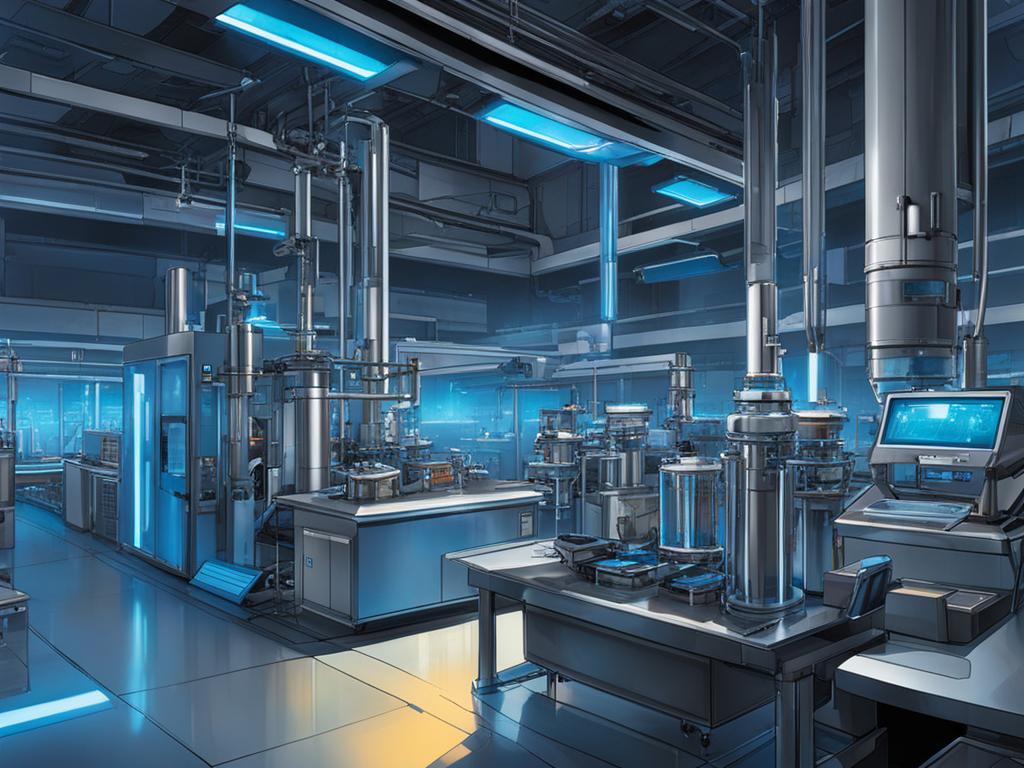
Keeping pace with the constantly evolving water filtration advancements, today’s deionization technology has made significant strides, cementing its critical role in our pursuit of ultra-pure water. Novel purification processes have emerged, catering to a wide spectrum of industrial requirements, reinforcing the relentless innovation in this field.
Among these, co-current and counter-current deionization methods have showcased dramatic improvements in efficiency and cost-effectiveness. With co-current deionization, you’ve observed the simultaneous descent of water and regenerants through the ion-exchange resins, while counter-current deionization leverages opposing flows, capitalizing on contact efficiency and reducing chemical use.
Mixed bed deionization sits at the pinnacle of purity, merging anion and cation resins into a single, comprehensive unit. This amalgamation facilitates the production of exceptionally high-purity water, utilized in sectors where even trace contaminants must be barred.
Electro-deionization combines traditional ion-exchange technology with electrical current, efficiently removing ions without the need for chemical regenerants. This not only means cleaner water but also represents a more environmentally friendly approach to water purification. It highlights a crucial development in deionization procedures, promising a sustainable future for this essential service.
With the introduction of specialized anion resins, even the notorious gram-negative bacteria are effectively filtered out, showcasing the exceptional span of technological advancement that deionization processes have achieved.
“Staying at the forefront of deionization technology not only means cleaner, purer water but signals a commitment to environmental sustainability and public health.”
Let’s have a quick look at how the main types of deionization technologies differ and where they might be applied:
| Technology | Process | Efficiency | Purity Level | Environmental Impact |
|---|---|---|---|---|
| Co-current Deionization | Water and regenerants move in the same direction | Standard | High | Moderate |
| Counter-current Deionization | Opposing flows of water and regenerants | High | Very High | Reduced |
| Mixed Bed Deionization | Combination of anion and cation resins | Standard | Highest | Low |
| Electro-deionization | Ion-exchange with electrical current | Very High | Ultra-Pure | Minimal |
In conclusion, the advancements in deionization processes reflect an exciting era in water purification, with ever-improving systems that offer unparalleled water purity and eco-friendly solutions. Through committed research and development, we can anticipate even more innovative breakthroughs in the future of water treatment techniques.
Understanding the Differences: Deionized Water vs. Distilled Water

When it comes to water purification, the terms deionized and distilled water are often tossed around interchangeably. However, as you delve into the world of pure water comparison, it’s important to understand that deionized vs distilled water have significant water purification differences. Let’s explore these distinctions to help you make an informed decision for your specific needs.
Distillation is one of the oldest forms of water purification. The process involves heating water until it becomes steam. As the steam rises, it leaves behind impurities and contaminants. The steam is then cooled and returns to a liquid state, becoming distilled water. The simplicity of this method has stood the test of time, yet it’s not without its shortcomings; certain volatile organic compounds could potentially carry over with the steam.
Conversely, deionization is a more complex process that uses specially-manufactured ion exchange resins to remove mineral ions, such as sodium, calcium, and iron from water. This results in a highly purified form of water—deionized water—that matches or even exceeds the purity of distilled water in some cases.
For your visual understanding, here’s a comparison of the two:
| Criteria | Deionized Water | Distilled Water |
|---|---|---|
| Purity | Often higher, as it removes more ions | High, but may contain volatile organic compounds |
| Method | Passed through ion exchange materials | Heated to create steam and then condensed |
| Uses | Laboratories, pharmaceuticals, automotive, cosmetics | Medical applications, cooking, humidifiers |
| Cost to Produce | Generally more cost-effective | Higher energy consumption |
As you weave through these facts, remember that while both serve the purpose of creating pure water, your application may dictate which type is more suitable. Whether you’re in an industrial setting or considering it for home use, keep these differences in mind as you make your pure water comparison.
In closing, don’t let the semblance between deionized and distilled water deter you from recognizing their unique attributes. With a clear understanding of deionized vs distilled water, you’re now better equipped to decide which type of water purification differences cater to the requirements of your specific situation. In the end, the quest for pure water comparison guides you to a choice that can impact your health, the environment, and the effectiveness of your applications.
Conclusion
As we wrap up our discussion on the pivotal role of deionized water, it’s important to recognize its unwaivering significance across various sectors. The future of deionized water is promising, with innovative strides in advancements in water filtration enhancing its already critical role, especially in fields that can tolerate nothing less than the highest purity levels. From healthcare to tech manufacturing, deionized water is not just a benefit but a necessity, and its evolution is something to watch closely.
Monitoring Advancements in Deionization
The landscape of water purification technology is constantly shifting, and staying abreast of these changes is crucial. With each breakthrough—whether it’s in the efficiency of ion-exchange resins or the precision of filtration systems—you can depend on the fact that maintaining water purity will always be at the forefront of these advancements. These enhancements promise to further optimize the deionization process, bolstering its accessibility and effectiveness.
The Future of Deionized Water in Various Industries
Looking forward, the integration of deionized water into diverse industries is projected to grow extensively. Consider the rapid developments in the pharmaceutical and biotech sectors, where the slightest impurity can have monumental implications. Here, deionized water’s role is not up for debate—it’s an irreplaceable resource that is set to become even more entrenched in industrial practices as standards for purity and cleanliness continue to soar.
Ensuring Quality and Purity for Consumers
For you, as consumers and industry stakeholders, the integrity of deionized water means more than just its application in manufacturing. It’s about the reassurance that comes with uncompromising standards for health and safety. Rest assured, as advancements in water filtration progress, your well-being remains the priority. Companies and regulatory bodies are dedicated to delivering deionized water that meets your needs for quality while upholding rigorous purity criteria.
FAQ
What is deionized water?
Deionized water is a type of purified water that has had all of its mineral ions removed, such as sodium, calcium, and iron, resulting in a high purity level and no electrical charge. It is commonly used in industries where the utmost water purity is required.
How is deionized water created?
Deionized water is produced by filtering water through electrically charged resins. These resins attract and bind salts, removing them from the water. This ion-exchange process transforms conventional water into a “true water blank” which then can be used in various applications.
What distinguishes deionized water from distilled water?
Although similar in purity level, deionized water and distilled water are produced by different processes. Deionization removes mineral ions through various stages, typically without removing all organic substances or microbes, while distillation involves boiling water to produce vapor which is then condensed back into water, leaving behind many impurities in the process.
Why is deionized water important in medical and pharmaceutical industries?
In these sectors, the purity of water is critical to ensure the chemical integrity of health products. Deionized water is crucial for preparing “water for injection” and other precise solutions, like saline, which must be free from harmful contaminants to be safe for patient use.
Are there industrial uses for deionized water beyond medical applications?
Absolutely, deionized water has a plethora of uses across various industries. It’s indispensable in microelectronics and glass manufacturing where it prevents residue that affects product quality, and it’s also crucial in biotech for sterilization processes, ensuring a sterile medium free from residuals.
Can you consume deionized water?
Technically, deionized water is safe to drink. However, it’s important to ensure that the deionized water is 100% safe for consumption, as it could potentially absorb minerals from the body and attract contaminants. Multi-stage filtration systems can provide safe, pure deionized water for drinking.
What are the potential health risks of deionized water?
Deionized water lacks minerals which can lead to the depletion of essential minerals in the body if consumed. Additionally, due to its high purity, it can absorb metal contaminants from pipes, so it should be consumed with caution and under appropriate circumstances.
What technological advancements exist in deionization processes?
There are several innovative methods within deionization technology including co-current and counter-current deionization, and mixed bed deionization. These processes enhance the efficiency and efficacy of deionization, with some such as electro-deionization able to even remove gram-negative bacteria.
What benefits does deionized water offer for industrial use?
Deionized water is prized for its non-corrosive properties, preventing salt buildup on machinery, and acting as a superior lubricant and coolant. It’s also essential in the manufacturing of cosmetics, foods, and medicines due to its high purity, which prevents the alteration of product mixtures.
How does deionized water contribute to ensuring chemical consistency in products?
Deionized water serves as a “true water blank,” meaning it does not alter the chemistry of substances added to it. This is particularly important in the medical industry where even minor chemical variances can result in severe health implications.
Leave a Reply
You must be logged in to post a comment.