

Have you ever paused to consider the exact weight of water in a gallon when you’re filling up your pitcher or aquarium? Sure, you know it’s heavy, but knowing the gallon of water weight can play a crucial part in tasks ranging from cooking to the sciences. Typically, you’d find that a gallon’s weight isn’t just an arbitrary number; it’s a precise measurement that reflects your day-to-day activities. In the United States, a gallon of liquid bliss weighs in at around 8.33 pounds or 3.78 kilograms, provided the water stands at a comfy 70°F or 21°C. Temperature, however, plays the role of a heavyweight in the boxing ring, tipping the scales ever so slightly as it fluctuates, affecting water’s density and consequently, the gallon weight measurement.
Isn’t it fascinating how a degree here or there could alter what you thought was just a static number? If the thermometer dips to 39.2ºF (4ºC) – which is water’s density sweet spot – that same gallon nudges upward to 8.345 pounds. But let the heat rise to 200ºF, and your gallon sheds weight to approximately 8.04 pounds. When you’re sifting through the details of your recipes or speculating the logistics for transport, this water weight wisdom is not just a trivia tidbit—it’s a necessity.
Key Takeaways
- The standard US gallon of water has an exact weight of approximately 8.33 pounds (3.78 kilograms) at 70°F (21°C).
- Water’s density changes with temperature, directly impacting the gallon’s weight.
- Exact weight knowledge is essential for precision in fields like culinary arts and scientific research.
- A gallon’s weight decreases with rising temperature due to water’s expansion and reduced density.
- For most accurate weight assessments, consider the temperature at which the water is being measured.
Understanding Water’s Weight and Its Importance
When it comes to the significance of water weight, the numbers are more than a mere curiosity; they serve a purpose across varying domains. Have you ever pondered why water weight is a staple figure in scientific and culinary circles, or why commercial industries pay mind to the importance of water’s weight? The answer is intrinsic to water’s unique physical properties.
Water density is the silent orchestrator of the weight variation we observe. Dependent largely on temperature, the density of water fluctuates, thereby influencing the weight of a given volume. It’s a topic that burgeons the attention of those involved in meticulous measurements. Precision is not just a fancy term; it’s a requirement for careful calculations in an array of practical applications.
In the culinary world, knowing the exact water weight summons the difference between a disastrous dish and a palatable masterpiece. If you’re a chef or a baking enthusiast, the weight of the water directly correlates to the outcome of your recipe. Similarly, in scientific research, the water weight measurements can be the linchpin in experimental accuracy.
In matters of transportation, estimates on capacity and shipping costs could go awry without a proper grasp of this weight. It illustrates just how pivotal a seemingly mundane figure can be across professions and daily undertakings.
The table below underscores the relationship between water’s temperature and its density, providing a schematic for understanding why precise measurements are non-negotiable:
| Temperature (°F) | Water Density (g/cm3) |
|---|---|
| 32 | 0.99987 |
| 39.2 | 1.00000 |
| 60.8 | 0.99907 |
| 86 | 0.99669 |
What’s evident from the table is a small leap in temperature can have a tangible effect on water’s density; this interplay helps us understand the complexity behind the water weight significance. With the knowledge firmly in hand, you’re better prepared to navigate the sciences and the subtleties of daily life.
The measure of water’s weight is integral to our lives, quietly critical in more scenarios than we might assume. For the ardent scientist, the passionate cook, or the business magnate, acknowledging the significance and managing the practicalities of water’s weight is nothing short of essential.
Defining the Gallon: Variations Across Borders

When you’re measuring out your ingredients for a much-anticipated recipe or calculating how much paint you’ll need for your next project, understanding the difference between the US gallon and the UK gallon is crucial. In the world of volume measurements, a gallon can mean two different things depending on where you are. To help clarify this measurement variation, let’s delve into the specifics of each type of gallon and what they equate to in fluid ounces and liters.
In the United States, a single gallon equates to 128 fluid ounces, or precisely 3.785 liters. But don’t get caught out when discussing gallons with your British friends; the UK imperial gallon is a larger unit, containing 160 fluid ounces or 4.546 liters. This measurement variation may not seem like much at first glance, but it can significantly impact your calculations and outcomes.
| Measurement | US Gallon | UK Gallon |
|---|---|---|
| Fluid ounces | 128 oz | 160 oz |
| Liters | 3.785 L | 4.546 L |
| Weight of Water* | ≈ 8.34 lbs | ≈ 10.02 lbs |
*Assuming the water is measured at 62 °F (17 °C), the values are approximate and may vary with temperature.
Whether you’re involved in cooking, scientific experiments, or international trade, it’s beneficial to understand this distinction. Imagine doubling a recipe that calls for a gallon of liquid and accidentally using the UK measure instead of the US one; the result would be an extra quart of liquid in your mixture!
Being savvy about measurement variations between the US gallon and UK gallon, along with their conversions to fluid ounces and liters, ensures that you stay precise in your endeavors, avoid confusion, and keep your measurements right on the mark.
How Much Does a Gallon of Water Weigh?
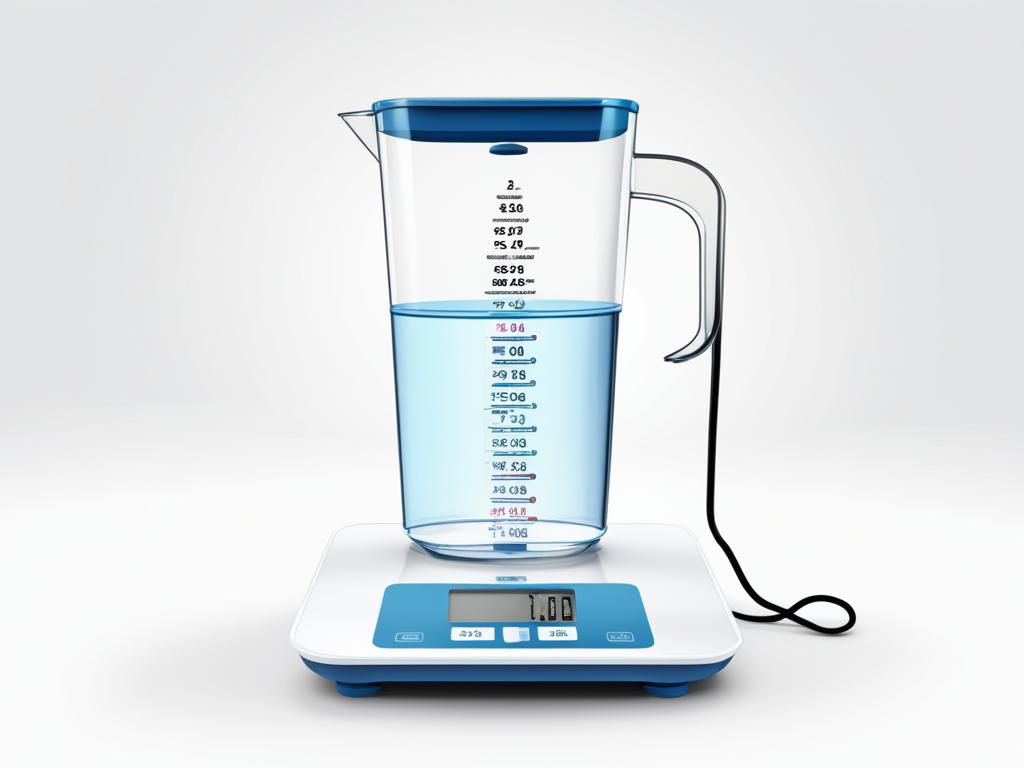
Have you ever wondered about the gallon of water weight when carrying a jug from the grocery store or filling a container at home? Knowing this weight is not just for the curious mind; it’s practical for everyday use. A standard US gallon of water weighs approximately 8.34 pounds or 3.78 kilograms at 62 °F (17 °C). However, it’s important to remember that the weight isn’t set in stone.
Temperature plays a part in the slight fluctuation you might notice. A gallon’s weight varies with the ambient temperature because water density changes with temperature. It might seem like trivia until you’re calculating the weight for a backpacking trip, or ensuring your vehicle isn’t overloaded. In those cases, understanding water’s weight in pounds and kilograms takes on a whole new importance.
“The more you know about water’s weight, the better prepared you are for all life’s adventures.”
Whether you’re a science enthusiast or just someone trying to manage your daily water intake, the weight of water can also affect your calculations. From nutritionists to chemists, getting the numbers right could mean a world of difference in the outcomes. So next time you lift that gallon, remember the precision that goes into quantifying something as simple as water.
| Temperature (°F) | Weight in Pounds | Weight in Kilograms |
|---|---|---|
| 32 | 8.345 lbs | 3.785 kg |
| 62 | 8.34 lbs | 3.78 kg |
| 212 | 8.04 lbs | 3.648 kg |
To bridge your knowledge with your everyday experiences, here’s an easy takeaway: when you’re mixing solutions or preparing that perfect pot of coffee, you’ll have a greater appreciation and understanding of the quantity of water you’re dealing with. Armed with the knowledge of a gallon of water’s weight in pounds and kilograms, you’ll have one less mystery in your day and one more fact in your arsenal.
The Factors That Influence a Gallon of Water’s Weight
When you’re looking to understand the weight of water, a number of environmental factors play a crucial role. Notably, water mass can undergo changes due to various elements that can either increase or decrease the overall weight. Variations in water state change, for instance, are largely influenced by temperature. As temperature rises or drops, the density and, consequently, the weight of water is altered. This is crucial to keep in mind in processes where precise measurements matter.
It’s fascinating to note the atmospheric impact on the weight of water, especially under extreme conditions. While it might seem like pressure changes would have a negligible effect, the truth is, atmospheric pressure can and does contribute to variations in water weight. This is more pronounced in scenarios that are not part of our day-to-day life, such as deep-sea environments where the water pressure is immense, or at high altitudes where the pressure is significantly lower. These conditions can lead to a measurable difference in water mass.
The behavior of water just before it transitions to ice is particularly intriguing. In a rare display of physical properties, water expands, becoming less dense as it nears the freezing point. This anomaly explains the phenomenon of ice floating on water – the solid form of water is actually less dense than its liquid counterpart.
In addition to temperature and atmospheric pressure, it’s important to recognize that the salinity and content of water can also influence its weight. Freshwater and saltwater will weigh differently due to their varying densities. When precise calculations are required, considering these environmental factors becomes essential to ensure accuracy whether you’re in a laboratory setting or loading cargo for transportation.
- Temperature variations cause water to expand or contract.
- Atmospheric pressures can alter water density, particularly under extreme conditions.
- Water lessens in density when approaching its freezing point.
- Salinity levels have a direct effect on water weight and density.
Understanding how each of these factors influences water’s weight can significantly impact various sectors, from culinary arts where the input of ingredients must be precise, to scientific research that depends on exact measurements for valid results. While the changes may be subtle, they underscore the complexity and responsiveness of water to its surrounding environment, making it a subject worth your attention.
Temperature’s Impact on the Weight of Water
When you’re filling your kettle or adding a splash of water to a recipe, the temperature of the water might not be something you consider having a significant effect. However, the water temperature effect on its weight is a scientific fact that can have a variety of practical temperature implications in everyday scenarios and professional fields alike. Let’s dive into the molecular dance that dictates this phenomenon.
The Science of Water Expansion and Contraction
Understanding the molecular movement within water due to temperature changes is imperative. As the temperature rises, water molecules increase their kinetic energy, moving more briskly and creating more distance between each other. This expansion results in a decrease in water density, and consequently, hot water weighs less than cold water. On the flip side, cooling water down causes molecules to slow their movement and huddle closer together, causing contraction, thus making the water denser and heavier.
Practical Examples of Temperature’s Effect
Consider practical scenarios such as cooking or brewing beverages. If a recipe requires a precise measurement of water by weight, not taking into account the hot water vs. cold water weight can affect the outcome. This is especially true in baking, where precision is instrumental – the weight of water can alter hydration levels in dough significantly. Therefore, an awareness of the real-world temperature impact on water is a valuable piece of knowledge for professionals and enthusiasts in culinary and brewing industries, ensuring that their crafts meet the highest standards of quality.
| Temperature | Water Weight (per pint) | Density (g/cm3) |
|---|---|---|
| 32°F (0°C) | 1.043 lb | 0.99987 |
| 39.2°F (4°C) – Maximum Density | 1.043 lb | 1.00000 |
| 70°F (21°C) | 1.042 lb | 0.99802 |
| 212°F (100°C) | 1.036 lb | 0.95865 |
This table outlines the weight differences you would encounter at varying temperatures. Whether you are a scientific researcher, a culinary expert, or simply curious about the attributes of water, this knowledge could be the key to your next successful project. Bear in mind the expansion and contraction of water, and you’ll unlock a new perspective on something as deceptively simple as water weight.
Volume to Weight Conversion: Making Sense of Metrics

When you’re dealing with recipes or need to convert water volume to weight for your next DIY project, understanding the basics of metric conversion can save you time and ensure accuracy. Fortunately, the metric system is based on units that scale up or down by ten, making calculations straightforward and predictable. For instance, 1 liter of water has a mass close to 1 kilogram, which is equivalent to about 2.2 pounds. However, temperature can affect water density, so for precision tasks, it’s recommended to use a water weight calculator.
Let’s look at a practical example of how easy it is to convert with the metric system. If you’re filling a 25-liter aquarium and need to know the weight, understanding that 1 liter of water equates approximately to 1 kilogram helps you swiftly calculate that your aquarium will weigh about 25 kilograms, or roughly 55 pounds. Such conversions are essential, especially when ensuring that structures can safely support the weight.
Below is a handy conversion chart that can assist you in converting different volumes of water into weight. Whether you are working on a science project or planning logistics, this chart simplifies the process, taking into account the nearly universal approximation under most conditions that 1 liter of water equals 1 kilogram in weight.
| Volume (liters) | Weight (kilograms) | Weight (pounds) |
|---|---|---|
| 0.5 | 0.5 | 1.1 |
| 1 | 1 | 2.2 |
| 5 | 5 | 11 |
| 10 | 10 | 22 |
| 20 | 20 | 44 |
| 50 | 50 | 110 |
| 100 | 100 | 220 |
For your daily needs, this direct water volume conversion chart is a valuable resource. It’s also an excellent example of the elegance of metric conversion, allowing seamlessness in switching between units of volume and weight. With this guide, you’ll be able to handle conversions like a pro, making your work more efficient and your measurements more precise.
The Significance of Water Density in Weight Measurement

When you’re dealing with water density, you’re addressing a fundamental concept that directly impacts weight measurement. Not only does this density affect weight, but the interaction between density and temperature shapes how water behaves in different conditions. Imagine pouring a glass of water on a warm day and noticing it feels lighter than the same glass on a cold night. This isn’t a trick of the mind but the result of the intriguing density-temperature relationship.
The standard density of water, which is around 1 kilogram per liter at an optimal temperature of 39.2°F (4°C), is a cornerstone in precise weight measurements. However, as temperatures increase or decrease, water particles react accordingly, expanding or contracting and, thus, altering water’s density. Whether you’re a scientist calculating the conditions for an experiment or simply trying to gauge the amount of water to store for an excursion, understanding this relationship is crucial to obtaining accurate measurements.
Keep in mind, the density of water is what determines a gallon’s weight, and fluctuations in temperature can lead to significant variances in that weight.
To illustrate, consider this—the same volume of water can weigh differently depending on whether it’s at boiling temperature or just above freezing. This isn’t merely a piece of trivia but a pivotal factor that applies to fields ranging from marine biology, where water density affects buoyancy, to culinary arts, where accurate ingredient proportions make or break a recipe.
This is why many industries rely on detailed charts and sophisticated tools to account for these variations in density and temperature. For example, in the world of engineering, small miscalculations can lead to structural weaknesses, or in commercial shipping, improper load calculations can cause wasteful fuel consumption due to the transportation of inaccurately measured volumes of water.
- Water is most dense and heaviest at 39.2°F (4°C)
- As water temperature increases, its density decreases, making it lighter
- Accurate weight measurement depends on considering the density-temperature relationship
In essence, by acknowledging the inherent link between water density, weight measurement, and temperature, you’re equipped to navigate the complexities of working with one of our most vital resources—water—in its many forms and uses.
Quick Reference Chart: Water Weight by Volume
Whether you’re setting up a new aquarium, engaging in home brewing, or tracking your water intake, understanding the relationship between volume and weight is crucial. To help you with this, we’ve compiled a water weight reference chart that simplifies the volume-to-weight conversion process. Below, you’ll find the water weight conversion table, which lays out common volumes and their corresponding weights, making it easier for you to gauge the amount of water you’re dealing with across different scenarios and temperatures.
| Volume | Weight at 32°F (0°C) | Weight at 70°F (21°C) | Weight at 212°F (100°C) |
|---|---|---|---|
| 1 teaspoon | 0.17 ounces | 0.16 ounces | 0.15 ounces |
| 1 cup | 8.35 ounces | 8.32 ounces | 8.04 ounces |
| 1 quart | 2.09 pounds | 2.08 pounds | 2.01 pounds |
| 1 gallon | 8.34 pounds | 8.33 pounds | 8.04 pounds |
Use this chart as a quick reference for your daily needs. Keep in mind that precise measurements can be critical, especially in activities like home brewing, where the balance of ingredients affects the quality of your final product. For those tracking their water consumption for health and fitness, this table can also aid in estimating the weight of water to ensure proper hydration levels. Remember, as temperature swings, so does the density and weight of water, making it imperative to use the correct figures for your specific circumstances.
Conclusion
Armed with accurate water weight knowledge, you possess a vital tool that’s applicable in various scenarios from your kitchen to a laboratory. The importance of accurate water measurement cannot be overstated, as it has direct implications on the efficacy and precision of both daily tasks and specialized operations. Whether you’re measuring out ingredients for a recipe or calculating distribution for a scientific venture, understanding how a gallon of water’s weight changes under different conditions is key.
Your awareness of practical water weight applications elevates your engagements in cooking, provides the assurance of proper hydration, and contributes to the rigor of scientific methodology. It serves as a bridge between the simplicity of home solutions and the complexity of industrial systems. Grasping the concept of how temperature and volume can affect the density and, subsequently, the weight of water, you’ll find yourself better equipped for a host of real-world applications.
In summary, the journey through understanding water’s weight characteristics underscores the crucial role it plays across various facets of life. Remember, whether you’re reaching for a water weight calculator or using a mnemonic device like “a pint’s a pound, the world round,” the ability to measure accurately is a skill that transcends beyond numbers, influencing outcomes in cooking, nutrition, commercial practices, and scientific research.
FAQ
What is the exact weight of a gallon of water?
The exact weight of a US gallon of water at 70°F (21°C) is approximately 8.33 pounds or 3.78 kilograms. However, the weight can vary slightly with temperature changes due to water’s density.
Why is understanding water’s weight so important?
Knowing the weight of water is important for a variety of applications, including cooking precise recipes, conducting scientific research, and executing commercial transactions.
How does the US gallon differ from the UK gallon?
A US gallon is defined as 128 fluid ounces or 3.785 liters, whereas a UK gallon is larger at 160 fluid ounces or 4.546 liters. This means an imperial gallon of water will weigh more than a US gallon.
Does temperature impact the weight of water?
Yes, as water’s temperature increases, it expands and becomes less dense, which decreases its weight. Conversely, colder water is denser and therefore weighs more.
How do environmental factors influence a gallon of water’s weight?
Factors like temperature and atmospheric pressure can affect the density and thus the weight of water. For instance, water is denser and heavier at lower temperatures, and atmospheric pressure can have an impact under extreme conditions.
Can you provide practical examples of how temperature affects water’s weight?
In practical terms, a pint of cold water will weigh more than a pint of hot water due to differences in density caused by temperature. This is important in activities such as brewing or cooking where precise measurements are crucial.
How do you convert water volume to weight?
To convert water volume to weight, you can use the simple metric relation where 1 liter of water typically weighs 1 kilogram, or use a water weight calculator for more specific or temperature-sensitive conversions.
Why is water density significant in determining water’s weight?
Water density, which changes with temperature, is crucial for calculating the precise weight of water. This is important for accurate weight measurements in scientific studies and when dealing with substantial volumes of water.
Where can I find a water weight reference chart?
You can usually find a water weight reference chart online or in scientific textbooks. These charts offer weights corresponding to various volumes and temperatures, which can be helpful for quick estimates without complex calculations.
How can knowledge of water weight be applied in everyday situations?
Understanding the weight of water can be applied in daily activities such as ensuring proper hydration, cooking with accurate measurements, setting up aquariums, or even in more professional settings like scientific experiments or industrial processes.
Leave a Reply
You must be logged in to post a comment.