

When faced with the choice between deionized water and distilled water, it’s essential to consider the water purity you need for your specific application. Whether you’re in a scientific lab, a pharmaceutical plant, or simply exploring the most effective water treatment methods for your home, there’s a clear distinction that needs to be made. Deionized water is renowned for its mineral-free qualities due to its ionic removal process, while distilled water boasts high purity levels through a more traditional boiling and condensing technique.
Grasping the finer points of both options will not only satisfy your curiosity but will empower you to make a well-informed decision based on efficiency, economics, and suitability. Perhaps it’s the cost-effective and speedy production of deionized water or the exceptional purity that can be achieved with distilled water that will guide your choice. In understanding their unique properties and processes, you can ensure that your decision aligns perfectly with your needs.
Key Takeaways
- Deionized water is effective for removing mineral salts through an ion-removal process.
- Distilled water is highly pure, as it undergoes a rigorous process of boiling and steam condensation to leave impurities behind.
- The initial quality of the source water affects the final purity level of both deionized and distilled water.
- Cost and efficiency are critical factors to consider when choosing the right water treatment method for your needs.
- While both types of water have a place in various applications, understanding their production and purity differences is key for an informed choice.
- SPECIALIZED usage dictates which type of purified water is preferable, impacting not just results but also operational costs.
Understanding the Purity of Deionized vs Distilled Water
When you’re evaluating water treatment methods for various applications, understanding the purity levels achieved through both deionization and distillation is fundamental. Pure water signifies the absence of water impurities, something both methods strive to provide. However, the processes cater to removing different types of contaminants. Deionization is highly efficient for mineral salts removal, as it exclusively targets charged non-organic particles. In contrast, distillation is known for a broader range of impurity removal, being effective against minerals, certain chemicals, and bacteria.
Despite its comprehensive approach, distillation can face challenges with volatile organics and certain other contaminants that may vaporize alongside the steam. To combat this, the pretreatment of water plays a critical role. Techniques such as reverse osmosis enhance the water treatment purity levels for both deionized and distilled water. This step is crucial for preparing the water for subsequent uses that require the highest purity standards, such as in laboratories and in the pharmaceutical industry.
| Purity Aspect | Deionized Water | Distilled Water |
|---|---|---|
| Removal of mineral salts | Highly effective | Effective |
| Removal of non-volatile impurities | Effective | Highly effective |
| Removal of volatile organics | Not applicable | Limited effectiveness |
| Energy consumption | Lower | Higher |
| Pre-treatment necessity | Beneficial | Essential |
As you ponder the optimal choice for your needs, remember that deionized water may be more cost-effective and environmentally friendly due to its lower energy demands. For situations requiring removal of a broader spectrum of contaminants, distilled water could be the better alternative, especially after pre-treatment processes further enhance its purity. Each method has its strengths and ideal use cases, so your decision should align with the specific purity requirements of your intended application.
The Deionization Process Explained

As you dive deeper into the world of water purification, you’ll find that the deionization process stands out for its capacity to produce highly pure water. Essential to this process are the ion-exchange resins, which are specialized mediums designed to remove unwanted mineral ions from your water supply. But what makes these resins so effective, and how do they interact with other water prefiltration methods to ensure the best results? Let’s break down these components and see how they work together to combat water contaminants.
Using Ion-Exchange Resins
Ion-exchange resins are pivotal in the deionization process, acting as agents that trap and exchange different ions present in the water. These resins are categorized into two types: cation and anion. Cation exchangers will attract positive ions (like calcium and magnesium), while anion exchangers target negative ions (such as chloride and sulfate). When in contact with the water needing purification, these resins exchange their hydrogen (H+) and hydroxide (OH-) ions with the offending mineral ions, facilitating mineral ion removal and eventually creating pure water (H2O).
Combination with Pre-filtration Methods
Of course, ion-exchange is just one step in an effective filtration process. Pre-filtration methods, such as reverse osmosis (RO) and physical or carbon filters, set the stage for deionization by tackling a wide spectrum of water contaminants early on. This is where RO/DI systems come into play, offering a more robust solution by combining both reverse osmosis and deionization methods.
Reverse osmosis is particularly effective at removing larger particles and many types of dissolved contaminants. By passing the water through a semi-permeable membrane, it reduces the load on the ion-exchange resins, allowing them to work more efficiently and last longer between regeneration cycles. Filters are also used to capture any organic and particulate matter. Such comprehensive water prefiltration ensures that when the water reaches the ion-exchange resins, the majority of impurities have already been addressed, paving the way for high-purity deionized water production.
Distillation: An Age-Old Method for Pure Water
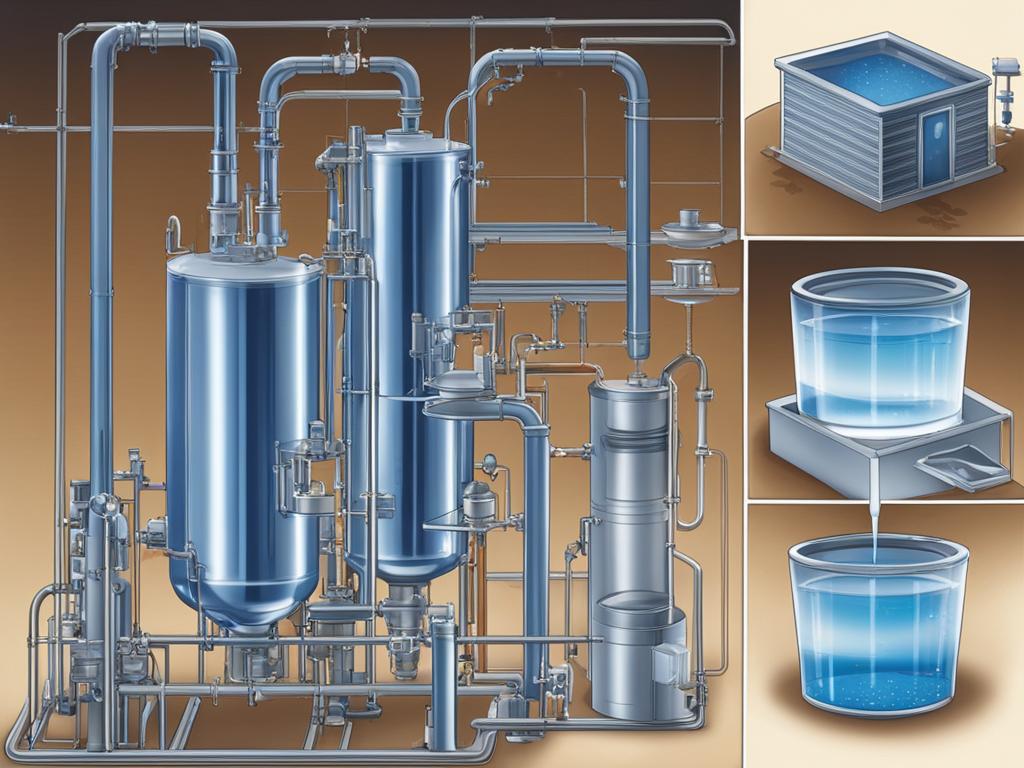
For centuries, the quest for purity in water has led humanity to develop a range of techniques, with water distillation standing out as a timeless solution. Guided by simplicity and effectiveness, distillation harnesses the fundamental principles of steam condensation and impurities removal to produce clean water. If you’ve ever wondered about the secrets behind this method, you’re about to discover how this age-old practice continues to deliver laboratory-grade water to this day.
The Basics of Water Distillation
The basic distillation process remains largely unchanged: water is heated until it turns into steam, which then travels to a cooler region where it reverts back to its liquid form, leaving behind non-volatile impurities. This method is particularly effective because most contaminants have a higher boiling point than water, preventing them from evaporating. The result is water that’s remarkably free from minerals, bacteria, and other unwanted substances.
Multiple Distillation for Increased Purity
For applications demanding an even higher standard of purity, such as those in scientific research labs, double distilled water or triple distilled water becomes essential. These types are created by performing the distillation process multiple times. Each cycle of boiling and condensation further lowers the concentration of any leftover contaminants, inching closer to absolute purity that’s crucial for sensitive experiments.
| Type of Distilled Water | Conductivity (µS/cm) | Common Use |
|---|---|---|
| Single Distilled Water | 1-10 | General laboratory tasks |
| Double Distilled Water | 0.1-1 | Analytical work and high-purity tasks |
| Triple Distilled Water | Less than 0.1 | Ultra-sensitive research and instrumentation calibration |
Whether you need pure water for professional or personal use, understanding the distillation process can help ensure that you’re choosing the right type of water for your needs. Keep in mind that the quality of double or triple distilled water is unparalleled, making them the go-to choices for achieving precision in any application where water purity is paramount.
Analyzing the Cost-Efficiency of Deionized Versus Distilled Water
When you’re evaluating water treatment costs, it’s important to understand the financial implications of your choice between deionized and distilled water. Consider deionized water affordability as it is often highlighted for its cost advantages over distilled water production expenses. Deionization systems can provide you with a swift and energy-conserving alternative to the more traditional and energy-intensive distillation process.
Let’s delve into a practical cost comparison to shed light on the real-world implications of selecting a water purification method. Deionized water systems not only reduce energy consumption due to their operational efficiency but also contribute to long-term savings with the capability for on-site resin regeneration—a process that extends the lifecycle of the purification medium without incurring frequent replacement costs.
- Speed of Process: Deionization is significantly faster, sidestepping the need for the boiling and condensation stages that define distillation.
- Energy Use: Deionization consumes less energy, translating to lower utility bills, making it a greener choice for your enterprise.
- Maintenance and Regeneration: Mixed bed resin systems used in deionization can be regenerated on-site, offering a reduction in the frequency and cost of resin replacement.
Distilled water, while potentially attaining a similar level of purity over time, requires a considerable amount of heat and a sterile setup. The expenses associated with energy use and the need for a clean environment can add up, especially for operations at scale.
To form a comprehensive view, reach out to local suppliers and compare the costs associated with implementing either system in your context. Factoring in the size of your operation, frequency of water use, and the specific requirements of your industry will provide a clearer financial landscape for decision-making. Remember, the right choice blends efficiency, affordability, and compliance with your quality standards.
Deionized Water vs Distilled

The debate between the use of deionized and distilled water is not only about purity but also about application specifics within laboratory and industrial settings. Understanding the unique properties of each can guide you in making the right selection for your needs, whether it be for high precision in scientific research or the operational requirements of manufacturing processes.
Laboratory Applications: The Quest for High Purity
Within the realm of scientific research, laboratory water must often meet stringent criteria for purity. The quest for high purity water has led many to choose distilled water, especially following adequate filtration to remove any possible contaminants. Notably, distilled water is renowned for lacking bacteria and pathogens, ensuring that sensitive laboratory experiments remain uncompromised.
However, deionized water is not to be overlooked, as it also plays a pivotal role in labs and the pharmaceutical industry. These areas benefit from its purity, especially where applications do not demand the extreme purity levels that distilled water offers.
Industrial and Manufacturing Uses: Conductivity Concerns
In industries that rely heavily on the use of manufacturing water treatment, the choice of water type is critical due to its potential effects on production and machine maintenance. Deionized water is highly valued for its low conductivity water properties, making it an excellent resource for any setting that includes machinery and cooling processes. Its role in maintaining the integrity of equipment and preventing electrical issues cannot be overstated.
The importance of water purity extends beyond just maintenance; it directly impacts the longevity of important components. In the automotive and other technological sectors, the use of deionized water as a coolant is crucial, as it contributes to the durability and performance of motors, positioning itself as an indispensable component across various industries.
Regardless of your sector, understanding the distinctions between laboratory water, high purity water, and their industrial water uses can lead to more informed and efficient practices, ultimately benefiting both your scientific research and your manufacturing processes.
The Debate: Safe Consumption and Health Implications
When it comes to what’s in your glass, the safety and health implications of drinking water are topics of paramount importance. As we examine the daily use of deionized and distilled water, it’s critical to consider not just the drinking water safety, but also the health effects of demineralized water. Let’s explore the role that mineral content in water plays in our overall well-being and the potential consequences of consuming water devoid of these vital nutrients.
Deionized and Distilled Water for Daily Use
Although deionized water consumption and distilled water use are prevalent in technical and industrial applications, they are not commonly recommended for regular drinking purposes. This is because the processes of deionization and distillation remove minerals that are essential to the body’s functions, which can be a disadvantage when these types of water are chosen as primary sources of hydration.
Effect of Mineral Removal on Health
The debate over using deionized or distilled water as drinking water hinges on their inherent lack of essential minerals. Regular consumption of such water might contribute to mineral deficiencies in individuals, leading to a range of health concerns. Expert bodies like Culligan of Ontario suggest that while these waters may be technically safe to consume, they could potentially lead to an imbalance in mineral intake which is vital for many bodily functions.
| Mineral | Function in Body | Found in Tap Water | Present in Deionized/ Distilled Water |
|---|---|---|---|
| Calcium | Bone health, cardiovascular function | Yes | No |
| Magnesium | Muscle and nerve function, heart rhythm | Yes | No |
| Sodium | Fluid balance, nerve transmission | Yes | No |
| Potassium | Cell function, blood pressure regulation | Yes | No |
The relationship between water quality for health and the absence of minerals highlights the importance of considering different water sources for drinking. If you rely exclusively on deionized or distilled water for hydration, introducing a balanced intake of minerals through diet or mineral supplements may be required to maintain optimal health.
Technological Advancements in Water Production and Application
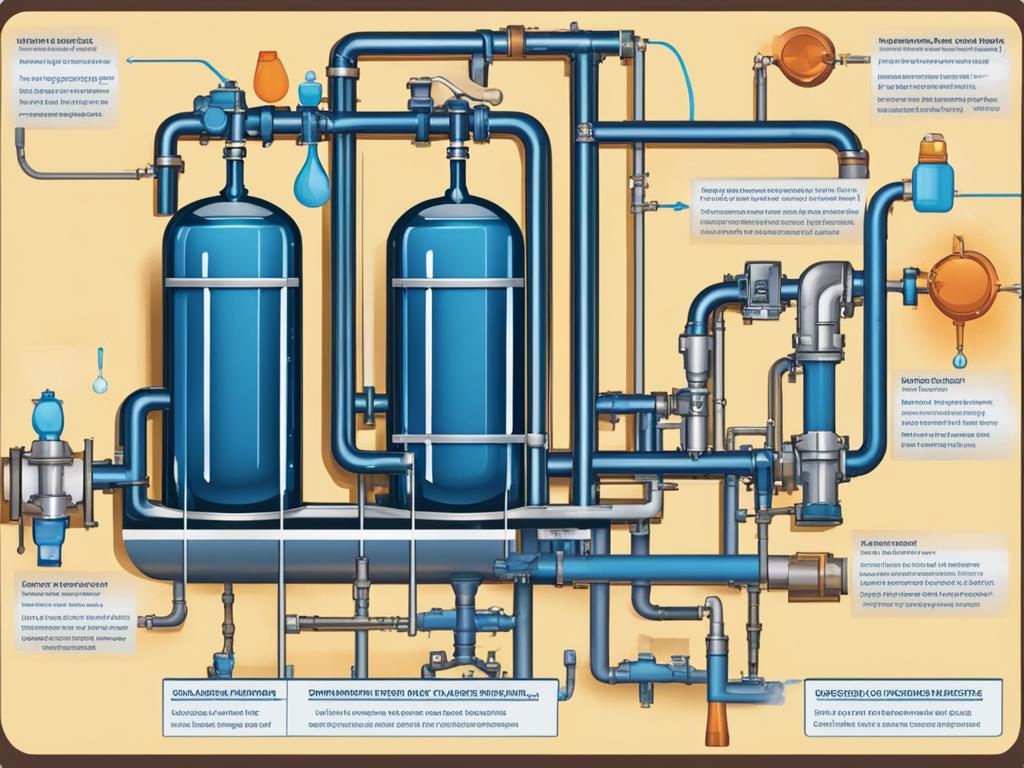
As we delve into the remarkable progress of water purification innovations, it becomes apparent the profound impact these advances have on industries and environmental sustainability. The ongoing development of ion-exchange resin technology is a testament to the evolving quest for deionization efficiency, aiming to simplify the way we obtain high-purity water.
Improvements in Deionization Techniques
Recent technological breakthroughs have significantly enhanced the longevity and efficiency of ion-exchange resins. These resins now have the capacity to treat larger volumes of water with fewer regeneration cycles, epitomizing the strides made in water purification innovations. Not only does this translate into cost savings, but it also heralds a new era of environmental consciousness by reducing waste and improving the reuse rate of materials.
New Frontiers for Deionized Water Use
The unparalleled purity of deionized water makes it the lifeblood of high-stakes applications within advanced industries. In the realm of nanotechnology and electronics manufacturing, the demand for water free from any contaminants is non-negotiable. The cleaning of micro-scaled devices and the production of high-tech components rely on the supreme quality of deionized water.
Moreover, the integration of deionized water systems with more traditional purification methods like reverse osmosis signals a trend towards versatile and universal applications. This synergy caters to the demanding needs of high-purity water applications, ensuring that cutting-edge production facilities have access to the most refined water quality for their groundbreaking work.
| Technological Innovation | Impact on Deionization | Benefits in Industry |
|---|---|---|
| Advanced Ion-Exchange Resins | Greater treatment capacity and less frequent regeneration | Cost reduction and sustainability in water production |
| Enhanced Regeneration Processes | Allows multiple reuse of resins; decreases environmental footprint | Long-term economic and ecological gains |
| Cross-industry Applications | Integration with existing purification technology | Adaptability and multidisciplinary use, especially in nanotechnology and electronics |
Embrace the innovative landscape where deionized water in advanced industries paves the way for technological marvels. Keeping pace with these advancements, you stand on the threshold of an era defined by radical improvements in water purity and application—an era that promises to reshape our world and how we interact with the most essential resource: water.
Selecting the Optimal Water Treatment for Your Needs
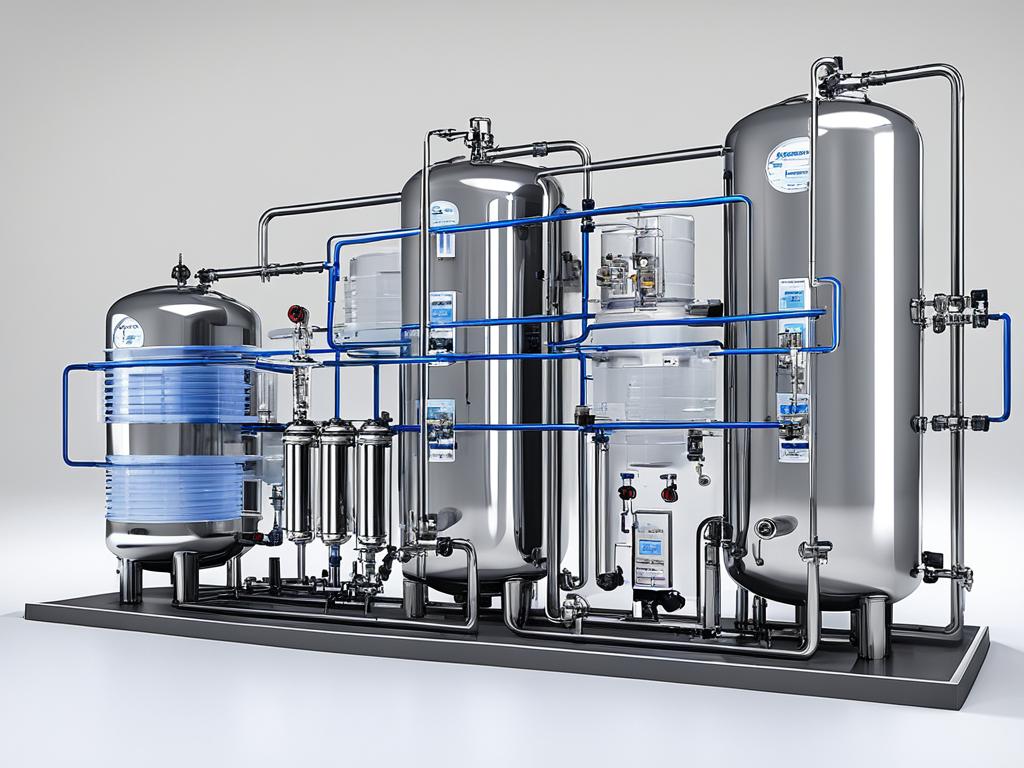
Embarking on the journey to ensure your home or business has access to high-quality water demands careful consideration of your specific needs. Whether you require water treatment for homes or commercial water purification, recognizing the differences in applications for deionized and distilled water is crucial. Let’s delve into how both personal and commercial needs can determine the best water treatment solution.
Personal vs Commercial Applications of Deionized and Distilled Water
For personal use, homeowners commonly focus on systems that provide safe and clean water for daily activities such as cooking and cleaning. Here, the emphasis is on convenience and cost-effectiveness, with solutions like basic filtration or point-of-use systems. In contrast, commercial entities grapple with more complex demands. Industries ranging from pharmaceuticals to electronics manufacturing require deionized water suppliers capable of delivering water with exacting standards of purity and consistency.
Establishing a Relationship with a Trusted Water Treatment Provider
Securing a consistent water supply of high-quality water is a cornerstone for businesses that can’t afford interruptions due to water issues. This is why aligning with trusted water treatment providers isn’t just a matter of supply, it’s the foundation of your business’s reliability. These providers offer not only custom water treatment systems designed to meet stringent industry standards but also support for unforeseen circumstances.
| Requirement | Home Solutions | Commercial Solutions |
|---|---|---|
| Purity Level | Basic Filtration | Advanced Deionization |
| Volume | Low to Medium | High to Very High |
| Cost | Cost-Effective | Custom, Depending on Scale |
| Maintenance | Minimal | Regular and Specialized |
| Specialty | Softening, Taste | Precision, Consistency |
In conclusion, when determining the right water treatment solution, consider your unique situation – is it for a personal residence or a commercial enterprise? By understanding the applications and choosing a provider that ensures a high level of service and product quality, you can rest assured that your water treatment needs will be met effectively and efficiently.
Conclusion
Delving into the realms of deionized and distilled water might seem daunting, but your knowledge of their distinct purification processes, levels of purity, production costs, and practical applications equips you with the insight to make informed water treatment decisions. As you consider your options for choosing between deionized and distilled water, weigh the nuanced benefits and limitations each method presents. For those in lab settings, or those requiring exacting water purity standards, distilled water may present the best choice. Conversely, industries seeking cost-effectiveness without sacrificing quality might turn towards deionized water solutions.
Your understanding of water purity final thoughts is not just an academic exercise but a practical guide to securing the health and efficiency of your operations or research. Meticulous attention to the type of water you use underlines your commitment to precision, whether it’s for intricate laboratory work, manufacturing, or other professional or personal requirements. The complexities of water treatment are manifold, but your newfound clarity enables you to align your choices with your specific needs, ensuring your projects’ outcomes are as pristine as the water you select.
Ultimately, your informed choice transcends mere selection; it is a testament to your dedication to exceptional standards and judicious, sustainable practices. Whether you’re nurturing scientific innovation or optimizing industrial processes, let your informed decisions lead the way to a future where excellence and purity are not merely aspirations but realities you consistently achieve.
FAQ
What is the main difference between deionized water and distilled water?
The main difference lies in their purification processes. Deionized water is treated to remove mineral ions, while distilled water is purified by boiling the water and collecting the steam, which gets rid of a variety of impurities.
Is there a difference in purity levels between deionized and distilled water?
Yes, distilled water can sometimes be more pure depending on the water source and the process used. However, deionized water is often preferred for certain applications due to its cost-effectiveness and efficiency at removing mineral salts.
How does the deionization process work?
Deionization uses ion-exchange resins that replace positive and negative mineral ions in the water with hydrogen and hydroxide ions, which combine to form pure water (H2O).
What role does pre-filtration play in the deionization process?
Pre-filtration methods, such as using physical, carbon, and reverse osmosis membranes, are important for removing organic and other contaminants before the deionization stage, which enhances the efficiency and purity of the deionized water produced.
Can distillation remove all types of impurities from water?
Distillation is quite effective at removing a wide range of impurities, including minerals, chemicals, and bacteria. However, it may not completely eliminate volatile organic compounds and certain other contaminants without additional treatments.
Why might deionized water be more cost-efficient than distilled water?
Deionized water is often more cost-efficient because the process requires less time and energy compared to the distillation process, which involves boiling water and can be quite energy-intensive.
In laboratory settings, when might distilled water be preferred over deionized water?
Distilled water may be preferred in sensitive laboratory applications where the highest level of purity is required, as it can be free of bacteria and pathogens after filtration and multiple distillation processes.
Is it safe to drink deionized or distilled water?
Both deionized and distilled waters are safe for consumption; however, they lack naturally-occurring minerals, which may not make them the best choice for daily intake compared to mineral-rich water sources.
What technological advancements have been made in the field of deionization?
Technological progress has led to more effective ion-exchange resins, longer-lasting performance, and improved regeneration processes, making deionization more cost-effective and sustainable.
How do I choose between deionized and distilled water for my specific needs?
Understanding the differences in purity, production processes, costs, and specific applications of each will guide you in making an informed decision that suits your personal, laboratory, or industrial requirements.
For personal use, where can individuals find deionized water?
Individuals can purchase deionized water from retail suppliers for personal use, such as for automotive purposes, health equipment, or other specific needs that require high-purity water.
What should businesses consider when selecting a water treatment supplier?
Businesses should look for water treatment providers that offer reliable quality and consistent supply, as well as emergency services and expertise, which are essential for maintaining smooth operations in sectors that depend on high-purity water.
Leave a Reply
You must be logged in to post a comment.