

When you’re considering the options for pure hydration, distilled water often stands out as a unique choice. Its production process goes beyond standard filtration, boiling water to a steam that’s then condensed back to liquid form, removing over 99.9% of minerals and impurities. This level of purity not only defines its role in promoting health but also makes it a versatile solution for home use. Whether you’re thinking about what’s best to drink, cook with, or use in your appliances, understanding distilled water benefits is essential to making informed decisions for your lifestyle. Dive into the nitty-gritty of this pure water type and how it might fit into your daily routine.
Key Takeaways
- Experience exceptionally pure hydration with distilled water’s rigorous purification process.
- Discover the health savvy choice of distilled water, devoid of common contaminants and additives.
- Explore the practical purity of distilled water in home use, from cooking to appliance maintenance.
- Benefit from the distilled water’s minimal impurity composition for a cleaner living environment.
- Grasp the understanding of how distilled water could influence your overall wellness and daily habits.
The Fundamentals of Distilled Water
Embarking on an exploration of the purest form of hydration, distilled water stands out for its pristine qualities and water purification excellence. You might have heard about distilled water and its widespread use, but understanding its fundamentals is essential for discerning its benefits over tap and bottled alternatives. Distilled water serves as a cornerstone of drinking water quality, comprising a special subset of purified water, and sets itself apart by the rigorous process it undergoes to ensure every sip holds the promise of purity.
Definition and Production Process
The essence of distilled water lies in its formation. Imagine the journey water takes when it’s heated to a boil; the steam rising is captured and then cooled down, a transformation from gas to a liquid that collects into the vessels of purity. This is how distilled water is born. Through this meticulous process, water sheds its impurities and any dissolved substances, emerging as the epitome of pure water, so much so that it adheres to the stringent standards of the Environmental Protection Agency, clocking in at less than 10 parts per million of total dissolved solids.
Comparing Distilled Water to Tap and Bottled Water
When you juxtapose distilled water against its tap and bottled counterparts, the contrasts become stark. Tap water, while relatively safe to drink, often carries traces of minerals and additives such as fluoride customized for your dental health, while bottled water might arrive from majestic springs or undergoes filtration to enhance taste and quality. However, neither can claim the sheer purity of distilled water. This degree of purification places distilled in a league of its own, often lauded above standard drinking water quality due to its near-complete absence of any substances that plagued its previous state.
Witness below how distilled water squares up against the commonly used tap and bottled waters:
| Water Type | Total Dissolved Solids | Common Additives | Purification Process | Flavor Profile |
|---|---|---|---|---|
| Distilled Water | None | Boiling and Condensation | Neutral/Flat | |
| Tap Water | Varies by locality | Fluoride, Chlorine | Filtration, Chemical Treatment | Varies, often Mineral-like |
| Bottled Water | Varies by brand | None to minimal, some have added electrolytes for taste | Filtration, Reverse Osmosis, Spring Source | Varies, often crisp |
Through this table, you can observe the stark differences between distilled vs tap water and bottled varieties. The profound absence of common additives and an extremely low count of dissolved solids are what render distilled water its unparalleled purity, while its taste, devoid of the flavorful minerals found in tap and bottled waters, caters to those who seek purity above all else in their hydration choices.
The Distillation Technique: From Boiling to Condensation
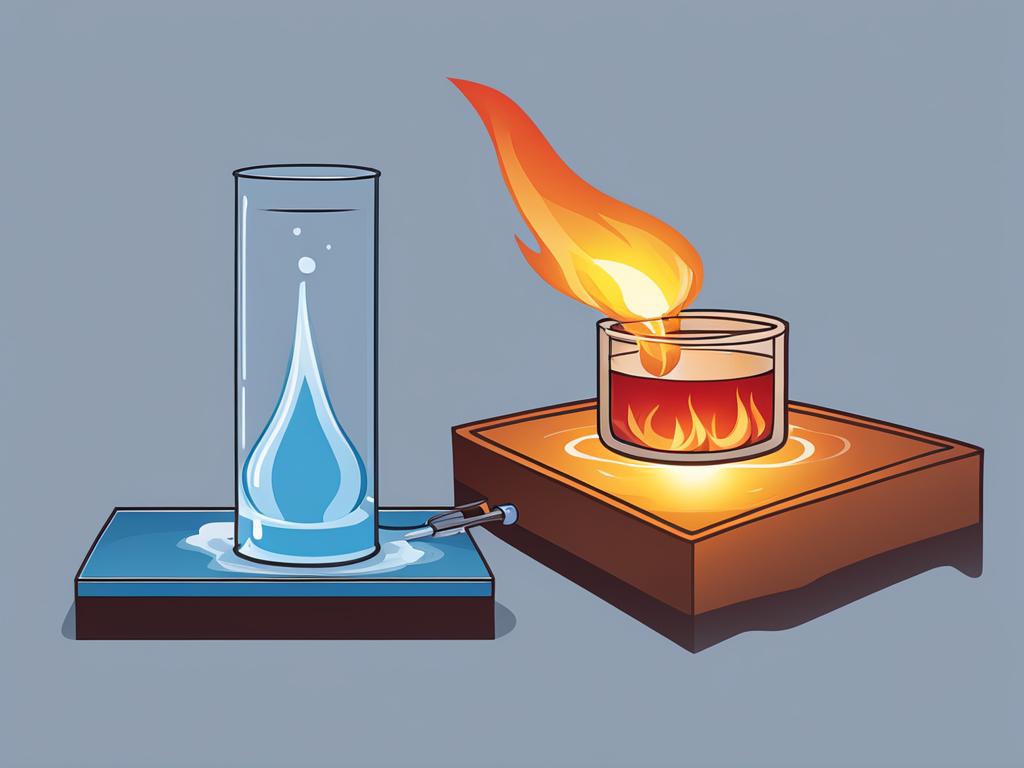
Embarking on a journey through the distillation process, you dive into a time-honored practice that turns ordinary water into a near-perfect version of purity. Beginning with a vigorous boil, water transforms into steam, riding upwards and leaving behind a trail of contaminants and impurities that cannot take to the air. This pivotal step in water purification methods is more than science; it is an art form perfected over millennia.
The steam that rises is the very essence of purification, carrying with it the promise of cleanliness. It then encounters a cooler surface, where it gracefully reverts to water. This collected liquid is distinguished from its former self, now referred to as distilled water, and is the epitome of steam water purification. As you marvel at this simplicity, remember that each drop has been on a voyage through heat and transformation, ensuring your safety and wellbeing.
In practice, the method evokes sheer ingenuity, one that taps into the cycle of nature—evaporation and condensation—to essentially recreate rain in a controlled environment. By harnessing this cycle, modern distillation units have amplified the effectiveness of this ancient technique, allowing it to find its way into homes and industries as a reliable source of pure water.
Purity Spotlight: What Makes Distilled Water Different

When you’re looking to quench your thirst with the purest form of water, distilled water stands out due to its high degree of purification. The process that makes distilled water—the distillation method—separates it from the rest of the purified water family. But why exactly does this matter, and how does it affect you?
Removal of Minerals and Contaminants
Through the distillation process, all minerals are removed, rendering distilled water completely demineralized. Unlike regular tap water or even most bottled waters, distilled water provides a unique beverage experience due to its lack of mineral content. The absence of these minerals ensures that distilled water meets your need for a contaminant-free hydration option. It precisely caters to various applications where any level of impurity could be detrimental, such as in certain medical procedures or in delicate machinery.
Distinguishing Between Distilled and Purified Water
Distilled water, often confused with purified water, actually surpasses the level of purification found in typical filtered or purified water. While most purified waters focus on eliminating chemicals and pathogens, distilled water achieves a superior level of purity, often described as distilled water purity, by its almost nonexistent total dissolved solids and minimal electrical conductivity.
| Type of Water | Total Dissolved Solids (TDS) | Electrical Conductivity | Typical Uses |
|---|---|---|---|
| Tap Water | 50 – 400 PPM | Medium to High | Cooking, Drinking |
| Bottled Water | Varies | Varies | Drinking, Travel |
| Filtered Water | Depends on filter | Low to Medium | Drinking, Cooking |
| Distilled Water | Very Low | Medical Use, Appliance Maintenance |
In view of this comprehensive explanation, you can appreciate why distilled water is such a prized form of hydration—especially in scenarios where demineralized water and contaminant-free conditions are critical for success. This level of distilled water purity is what makes it a versatile and invaluable resource beyond just quenching your thirst.
The Debate About Drinking Distilled Water
The discourse on whether drinking distilled water offers tangible health benefits continues to make waves in the water debate. Proponents suggest it’s a purer choice that can help detoxify the body, while skeptics argue there’s no substantive proof that it’s healthier than its mineral-rich counterparts. Central to this conversation is an analysis of distilled water’s makeup—or lack thereof—and how it shapes the argument from both sides.
Arguments supporting distilled water often cite its purity as a significant advantage, especially in areas where tap water may be unsafe or heavily contaminated. Yet, the flip side of this purity is the absence of minerals, which some believe can result in mineral deficiency. However, this claim is frequently contested as the majority of the minerals our bodies need are derived from our diet rather than our drinking water. Let’s take a closer look at the points of consideration set forth by each side in the following table:
| Aspect | Distilled Water Advocates | Skeptics’ Viewpoints |
|---|---|---|
| Purity | Free from contaminants and potential toxins, making it a safe option | Lack of essential minerals that could be beneficial to health |
| Health | May aid in the body’s natural detoxification processes | Limited evidence supporting any unique health benefits over regular water |
| Mineral Intake | Humans primarily get necessary minerals from food, not water | Drinking mineral water can contribute to the overall mineral intake |
| Safety | Ideal in regions with questionable water safety standards | Properly regulated tap water is considered safe for consumption in many areas |
| Taste | Neutral taste, which may be preferred by some | Lack of natural minerals results in a flat taste |
Ultimately, the decision to choose distilled water over other types should be informed by an understanding of the local water quality, personal health requirements, and a preference for taste. It’s worth considering the practicality and necessity before you make distilled water your primary choice for hydration.
What is Distilled Water: Clarifying Common Myths

When you hear about distilled water, the information can often be sprinkled with myths. Let’s set the record straight with factual information. Despite rumors, the health impacts of drinking distilled water are minimal, especially with a well-rounded diet.
Many people worry that drinking distilled water can either beneficially detox the body or conversely, strip essential minerals. To help you separate fact from fiction, here’s a myth-busting table:
| Myth | Fact |
|---|---|
| Distilled water depletion | While distilled water lacks certain minerals like calcium and magnesium, a balanced diet ensures you won’t suffer deficiencies. |
| Distilled water’s health benefits | Distilled water is as hydrating as tap or mineral water, but it’s the absence of impurities and contaminants that’s its real benefit. |
| Taste equals quality | Despite its less flavorful taste due to the absence of minerals, the purity of distilled water doesn’t compromise its quality for consumption. |
| Distilled water causes health problems | There’s no evidence to suggest that drinking distilled water leads to health issues. |
It’s clear that distilled water myths often exaggerate or misconstrue the actual health impacts of this form of hydration. As you decide what’s best for your consumption, remember that while the taste may differ, the safety and quality of distilled water remain unchallenged when considered alongside a nutritious diet.
Health Considerations: Benefits and Potential Risks

When considering the health effects of distilled water, it’s important to weigh both the benefits and the potential risks that come with consuming water that lacks minerals. While the process of distillation ensures the purity of water, it does remove essential minerals, which are vital for your health. Below we explore the nutritional implications of this lack as well as a comparative analysis with mineral water.
Nutritional Implications of a Lack of Minerals
The absence of minerals in distilled water has raised questions about its impact on the body’s mineral intake. Fortunately, studies indicate that mineral deficiencies are unlikely for those with access to a well-rounded diet. However, for individuals with dietary restrictions or those who rely heavily on water as a mineral source, alternatives might be necessary for maintaining optimal health.
Comparative Analysis: Distilled Water vs. Mineral Water
In contrast, mineral water, being rich in calcium, magnesium, and other minerals, can complement your diet and play a significant role in maintaining water for health. It’s associated with numerous health benefits, such as improved cardiac function and prevention of certain diseases. Nonetheless, it’s essential to remember that most municipal water supplies are already safe for consumption and may contain similar beneficial minerals that are absent in distilled water.
Understanding the differences between distilled and mineral water can guide you to make the best choice for your hydration needs. Here’s a brief rundown of what each offers:
| Water Type | Features | Health Benefits |
|---|---|---|
| Distilled Water | Pure, mineral-free | Detoxification, Safe Hydration |
| Mineral Water | Natural minerals present | Supports cardiovascular health, May prevent certain ailments |
Your choice in water can be instrumental for your health. A balance between pure distilled water and beneficial minerals found in other water sources can help ensure you’re getting the hydration you need without compromising on essential nutrients.
Practical Applications of Distilled Water in Everyday Life
Distilled water isn’t just for quenching your thirst; it plays a crucial role in numerous day-to-day tasks. The purity of distilled water makes it indispensable in scenarios where mineral deposits can cause harm or affect performance. Let’s delve into some of the versatile distilled water uses that aid our daily lives, ensuring both efficiency and safety.
Household Uses: From Irons to CPAP Machines
When it comes to household appliances, distilled water is a hidden hero. Its absence of minerals is perfect for preventing the pesky scale build-up that often plagues devices like steam irons and humidifiers. For those who rely on CPAP machines for a good night’s sleep, distilled water is the recommended choice for preventing contamination and ensuring the machine functions effectively.
- Steam Irons: Prevents calcification, ensuring smoother operation and longer lifespan
- Humidifiers: Keeps the mist clean, preventing mineral dust from dispersing into the air
- CPAP Machines: Provides pure moisture without adding contaminants, aiding in respiratory health
The Role of Distilled Water in Medical and Laboratory Settings
In environments where precision is paramount, distilled water takes center stage. Its use is critical for medical applications where sterility and purity are non-negotiable. In the realm of laboratories, laboratory purity is a standard that cannot be compromised. Distilled water is used in everything from preparing medications to cleaning surgical instruments, to conducting precise scientific experiments.
Due to its high purity level, distilled water is often utilized in medical procedures to avoid introducing any foreign contaminants that could compromise patient safety.
This level of purity is also why it’s chosen for use in automotive cooling systems—where mineral deposits can lead to corrosion—and in the mixture of cosmetic products, where it helps maintain the intended composition and stability.
Your engagement with water purity significantly impacts the quality of various facets of life. Whether it’s the clothes you wear, the air you breathe at home, or the critical outcomes in the healthcare and scientific communities, the role of distilled water proves to be vast and invaluable.
Making Distilled Water at Home: A Step-by-Step Guide

Creating DIY distilled water in the comfort of your home is a simple and rewarding process. With a few household items, you can ensure access to pure water at home without the need for expensive equipment. Let’s walk through the process of home water distillation you can easily replicate for daily use.
Step 1: Gather a large pot, a heat-resistant glass or cup, and a lid for the pot. Ensure that the glass or cup is tall enough to capture sufficient water but does not touch the lid when it’s inverted.
Step 2: Fill the pot with water from your tap, just enough to avoid touching the bottom of the cup when placed inside the pot. Position the glass or cup centrally in the pot.
Step 3: Turn the lid upside down and cover the pot. This will create a surface for the steam to condense and direct the water droplets into the cup.
Step 4: Bring the water to a boil then reduce the heat to maintain a simmer. As water turns to steam and condenses on the lid, it will drip into the cup, leaving impurities behind.
Step 5: After approximately 20 minutes, turn off the heat and let the system cool before removing the cup filled with distilled water.
| Equipment Needed | Function |
|---|---|
| Large Pot | Holds the water to be distilled |
| Heat-Resistant Glass/Cup | Collects the condensed distilled water |
| Inverted Pot Lid | Provides surface for steam to condense |
By following these steps, you can enjoy the benefits of diy distilled water using simple home water distillation techniques. Remember, while the process is straightforward, safety is paramount. Use caution when handling boiling water and hot equipment.
The Lifespan of Distilled Water: Storage and Shelf Life

When thinking about storing distilled water, understanding the shelf life of distilled water is crucial. Unlike other beverages, unopened distilled water doesn’t go bad, and has an almost infinite lifespan, provided it’s kept in the right conditions. It’s this longevity and purity that makes distilled water an excellent choice for both household use and emergency preparedness.
Here are some handy water storage tips to ensure your distilled water remains pristine:
- Keep your distilled water away from direct sunlight, as UV rays can degrade the quality of the water over time.
- Store it in a cool, dry place to prevent any possible bacterial growth.
- Ensure the seal remains intact; once opened, the risk of contamination increases.
- Maintain hygiene practices when dispensing water to keep your water source pure.
Once you’ve opened your distilled water container, microbes are the main concern. These tiny critters can find a way to thrive, even without the usual buffet of minerals and nutrients to feast on. So, opening that cap changes the game — you’ll want to use or consume the water quickly to maintain its purified state. If you’re using it for devices or sensitive equipment, timely usage is equally important to harness the benefits of its purity.
Remember, proper storage and understanding of the shelf life of distilled water can ensure you maximize its usage while maintaining its purity.
Understanding the Taste: Why Distilled Water Tastes Different

When you take a sip of distilled water, its purity is present not only in its clear appearance but also in its distinctive taste—or rather, its lack thereof. The taste of distilled water often strikes as notably different, primarily because it’s devoid of the minerals that usually contribute to the flavor profile of your regular drinking water. Let’s delve into what impacts the taste and how our water taste preferences might play a role.
The Impact of Minerals on Water’s Flavor
Minerals like calcium, magnesium, and sodium are more than just essential nutrients; they also influence the sensory experience of drinking water. The presence of these minerals impacts the mineral impact on flavor, adding to the complexity and making the water more palatable to many. Distilled water, having been stripped of these minerals, presents a neutral canvas which might take time getting used to for those with preferences for mineralized water flavors.
Personal Preference and Adaptation to Distilled Water Taste
What’s also fascinating is how our palates can adapt over time, which means that the plain flavor of distilled water might become preferable for some. After all, the human body is remarkably adaptable, and our water taste preferences are no exception. Whether it’s for cooking, brewing coffee, or simply staying hydrated, distilled water can be a taste you grow to enjoy for its simplicity and purity.
| Water Type | Taste Profile | Common Minerals Present | Suitable for Brewing/Consumption |
|---|---|---|---|
| Distilled Water | Neutral, Flat | None | Yes, though preferred by few |
| Tap Water | Variable, can be Chlorinated or Mineral-rich | Calcium, Magnesium, Sodium | Widely used; taste preferred by many |
| Mineral Water | Refreshing, Slight Salinity | Varies by source; typically Higher Mineral Content | Yes, often sought for its taste and health benefits |
Conclusion
As we wrap up our exploration, the distilled water summary underscores its high purity levels devoid of minerals and impurities prevalent in sources like tap and spring water. Understanding the essence of hydration is pivotal, especially when considering the range of water choices available to you. While distilled water doesn’t pose a health risk when consumed, it also doesn’t supply the added mineral benefits some other water types offer. Its absence of flavor, a point of contention for some, doesn’t detract from its efficacy and desirability in specific settings where the utmost purity is paramount.
The water purity conclusion reflects a clear advantage for distilled water in fields where contaminant-free conditions are non-negotiable, such as in medical apparatus, precise laboratory experiments, and the maintenance of certain appliances. For everyday drinking, your choice to incorporate distilled water into your regimen might be influenced by regional water quality, dietary intake of minerals, or personal taste preferences. Above all, informed decisions about your hydration sources are essential for health and well-being.
Embracing a comprehensive hydration understanding will aid you in navigating the ongoing dialogue over distilled versus mineralized waters. Ultimately, the appropriateness of choosing distilled water rests with individual needs and the context of its use—be it for health reasons, practical applications, or simply a preference for the purest form of water achievable. Gleaning insights from this detailed walkthrough, you’re now better poised to make well-informed decisions concerning distilled water in your daily life.
FAQ
What exactly is distilled water?
Distilled water is water that has been purified through a process of boiling and condensation, which removes over 99.9% of its minerals and impurities. This process results in some of the purest water available for consumption.
How does distilled water differ from tap and bottled water?
Distilled water is free from the minerals and additives like fluoride commonly found in tap and bottled water. Unlike filtered water, which may still retain some dissolved substances, distilled water has less than 10 parts per million of total dissolved solids, categorizing it as extremely pure.
What is the process involved in making distilled water?
The traditional method involves boiling water to create vapor, which then condenses back into liquid form. This distilled water is collected separately, leaving behind any impurities or minerals that do not evaporate.
Is distilled water completely free of contaminants and minerals?
Yes, distilled water is significantly free of contaminants, salts, and organic materials due to the capture of only the boiling water’s steam in the distillation process. It typically has less than 1 PPM (part per million) of total dissolved solids and minimal electrical conductivity.
Can drinking distilled water lead to mineral deficiencies?
While distilled water lacks minerals like calcium, sodium, and magnesium, most of the essential minerals your body needs come from food, not water. As long as you maintain a balanced diet, the risk of developing mineral deficiencies from drinking distilled water is quite minimal.
What are the health benefits of drinking distilled water?
There are claims of health benefits such as distilled water acting as a detoxifying agent. However, the evidence to support such health benefits is not conclusive. The most apparent advantage is the absence of contaminants, which can help avoid the potential risks associated with drinking impure tap water in certain regions.
What are some myths associated with distilled water?
A common myth is that distilled water can leach minerals from your body; however, this is exaggerated. Distilled water is safe to drink, and as long as you have a balanced diet, it’s unlikely to cause mineral deficiencies.
Are there any nutritional concerns with drinking distilled water?
Even though distilled water doesn’t contain minerals, a well-rounded diet typically provides all the necessary minerals your body requires. On the other hand, mineral water can supply significant amounts of dietary minerals beneficial for certain health conditions, which distilled water cannot provide.
What are some practical uses for distilled water outside of drinking?
Distilled water is ideal for a variety of uses beyond consumption, including preventing scale buildup in home appliances, mixing with automotive coolant to prevent engine corrosion, and ensuring purity and consistency in cosmetics, medical, and lab equipment.
How can I make distilled water at home?
You can make distilled water by boiling tap water, then capturing the steam as it cools and re-condenses into liquid. This do-it-yourself process requires a heat source, a boil-safe container, and a method to collect the condensed steam separately from the original water.
What is the shelf life of distilled water?
Distilled water has an indefinite shelf life if unopened and stored away from direct sunlight. Once opened, it’s recommended to use the water quickly, as the absence of minerals does not prevent the growth of some types of microorganisms.
Why does distilled water taste different from tap or mineral water?
The lack of minerals in distilled water gives it a distinctively flat taste. Minerals like calcium, magnesium, and sodium in tap or mineral water contribute to their specific tastes. Personal preference determines whether one finds the taste of distilled water less flavorful, or if they may even prefer it for its purity.
Leave a Reply
You must be logged in to post a comment.